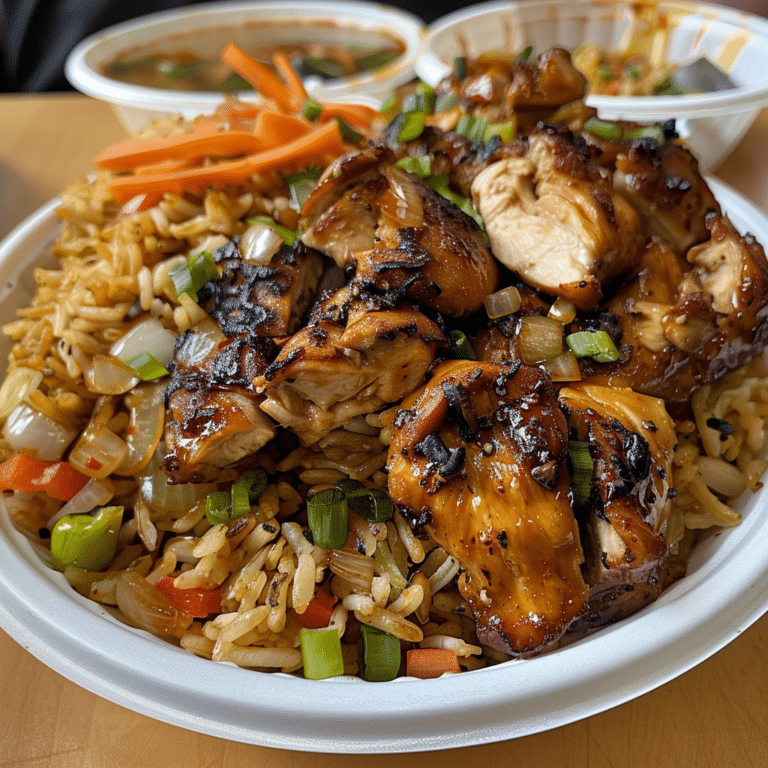
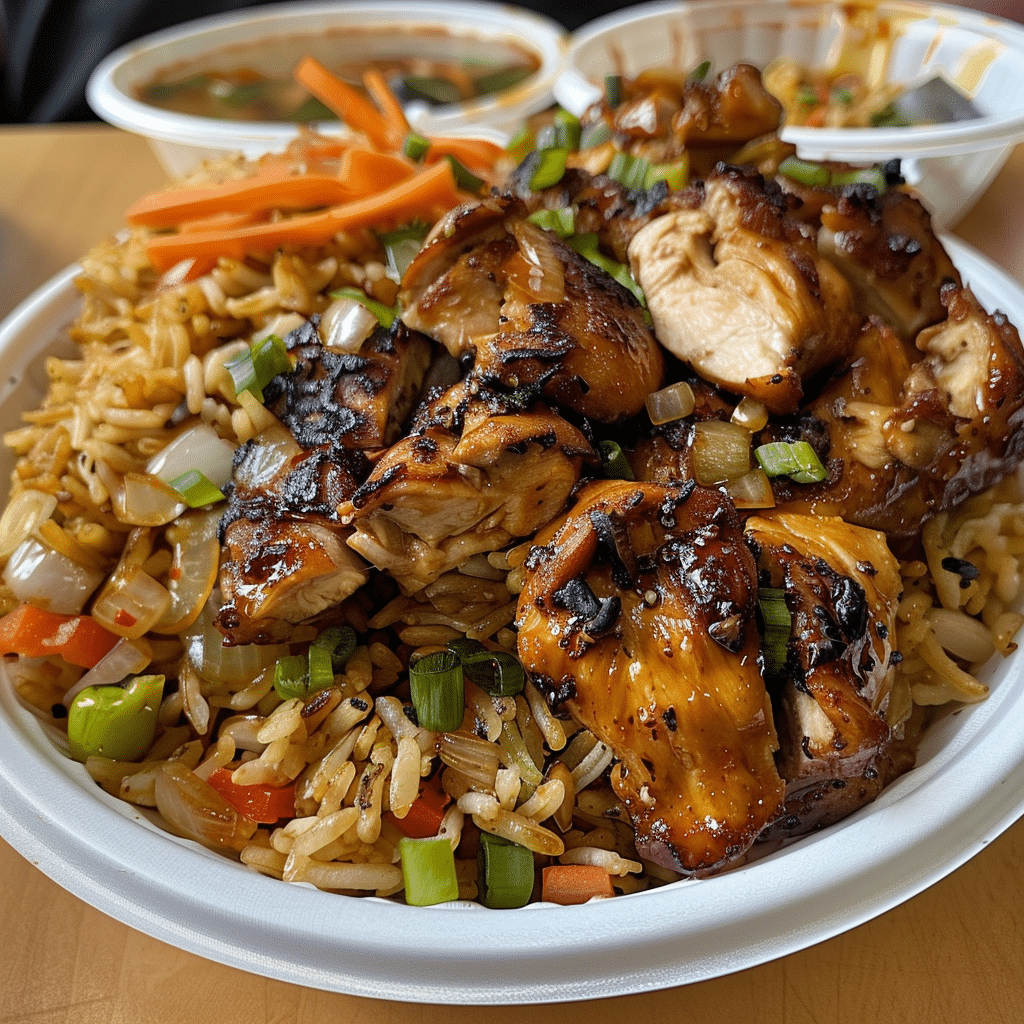
The skillet hisses like a tropical rainforest when scotch bonnet chiles and ginger meet searing heat. Toasted allspice and nutmeg bloom with caramelized warmth as coconut milk curdles into a rich, custard-like sauce. This isn’t just food—it’s the scent of sun-drenched islands condensed into every golden grain.
Caribbean chicken rice wears its heritage on its crispy skin and aromatic steam. The dish sings in layers: earthy spices kiss tender chicken, while rice soaks up the symphony of flavors. No need for a sidecast; everything from herbs to citrus lives in this one pan.
- Prep Time-15 minutes
- Cook Time-55 minutes
- Total Time-70 minutes
- Servings-4 generous dinners
- Difficulty-Intermediate
- Cuisine-Caribbean fusion
Why This Recipe Works: The Alchemy of Heat and Aroma
Caribbean chicken rice thrives on contradiction. Its golden crust forms through precise temperature control while maintaining bone-tender meat. The interplay between dry spices and wet coconut milk creates a sauce with deep, nutty undertones balanced by citrus brightness. Each bite is a revelation of layered textures—from crunchy edges to velvety rice.
The one-pan construction isn’t just practical. It’s culinary theater. As chicken simmers, fat renders naturally, browning rice to a toasty base. The slow infusion of flavors turns simple ingredients into a cultural artifact. This isn’t a dish that mimics the Caribbean—it breathes it.
The Cultural Soul of Caribbean Chicken Rice
This dish is a palimpsest of centuries—Maroon hunters marinated bird in fiery blends, while indentured workers brought curry spices that now nestle alongside native ginger. Every family claims it as their own, evolving it subtly through generations. In coastal villages, salted cod might appear; inland, plantains take center stage.
The one-pan philosophy originates from scarcity and creativity. Traders brought cast iron pots; cooks made them sing. By simmering all elements together, they preserved communal food traditions. Today, it’s a symbol of Caribbean resilience, where flavors outlast borders yet honor the island spirit.
The tropical spices aren’t random. Allspice bridges West Indian and Mexican traditions, while scotch bonnet chiles add a fiery, fruity twist absent in mainland recipes. Even the rice matters—Grenadian or Jamaican short-grain is ideal for absorbing the vibrant braising liquid.
The Elements of the Dish: Ingredients for Caribbean Chicken Rice
- 4 organic chicken leg quarters: The dark meat’s fat ensures juiciness without sacrificing flavor. Look for free-range birds with firm, unblemished skin.
- 2 tbsp sunflower oil: Neutral but high-smoke point. Replace with rendered coconut for extra tropical richness if available.
- 2 tbsp green seasoning: A blend of culantro, thyme, scotch bonnet, and lime. Freshly made versions punch hardest against dried alternatives.
- 1 cup jasmine rice: Aromatic and slightly sticky. Avoid basmati’s floral notes unless aiming for Trinidadian fusion.
- 1 cup water: Filtered for clarity. Some recipes use coconut water, though this may dilute the spice infusion.
- 1 400ml can full-fat coconut milk: First pour the thick cream to create a custard base. Low-fat versions compromise richness.
- 1 tbsp demerara sugar: Cane crystals add molasses depth. Its coarse texture improves caramelization control.
- 1 tsp nutmeg: Grated daily. Pre-grated loses potency and muddies the flavor profile.
- 1 tsp allspice: Either berries or ground. Ground works faster but berries offer better control over heat.
The Editor’s Guide to Sourcing
Chicken success begins at the butcher’s counter. Leg quarters from chickens with deep, well-bred musculature yield meat that tears gently but stays succulent. For green seasoning, seek fresh blends made within 48 hours to capture scotch bonnets’ full potency without scorching.
Coconut milk must read ‘full-fat’ on the can—anything less and the fat emulsification fails. Shake well while using, and always pour the thick layer first for maximum flavor concentration. Rice quality matters: avoid pre-cooked or parboiled varieties, which resist absorbing the bold spice base.
Spices should pass the ‘snap test.’ Whole nutmeg shavings crumble at light touch; if they’re powdery, they’re stale. For allspice, dark, almost blackened berries promise the deepest aroma. Toast them whole before grinding to unlock hidden oils and maximize flavor.
Don’t overlook citrus quality—hand-squeezed lime juice brightens the dish’s intensity. Look for organic oranges with thick, fragrant peels for zest. Even water choice impacts taste, as mineral content varies between regions. Filtered, spring, or bottled island water often provides the clean slate needed for bold flavors.
The Step-by-Step Masterclass
Preparing the Spice Base
Heat oil in a 5-quart Dutch oven until shimmering. Add 1 tbsp green seasoning and allspice berries. Toast 30 seconds—stop when the mixture begins to sing but avoids darkening. Add grated nutmeg and stir until fragrant. This forms your ‘flavor armor.’
Searing the Chicken
Position chicken skin-side down. Let sizzle undisturbed 5 minutes for maximum Maillard reaction. Flip carefully with tongs. Brown 3 minutes per side—visual cues: crust turns amber, releases cleanly, skin edges develop a slight ‘smoke ring’ hue.
Deglazing and Simmering
Pour in coconut milk first, then 1 cup water. Bring to a gentle boil—watch for separation; emulsify with a wooden spoon if needed. Cover and simmer 20 minutes. Rice base should reach 185°F (85°C) for optimal gelatinization and absorption.
Finishing the Pan
Uncover, add remaining green seasoning. Cook 10 minutes. Watch rice as it absorbs remaining liquid; when surface becomes dry with glossy beads, it’s done. Chicken is ready when thickest parts are opaque and juices run clear without overcooking.
The Kitchen Science: Flavor Transmutation in Action
Coconut milk and spices form a natural emulsion. The proteins in milk bind with spice essences during cooking, creating a custard-like texture. This is why separation occurs without proper stirring—keep fat and water columns unified.
Maillard reaction timing is critical: over-brown chicken and you’ll lose moisture; under-brown and spices bind weakly. The 5-minute direct-heat rule applies to most meats—adjust for skinless cuts by reducing time by 1 minute to avoid drying.
Rice absorbs 14-16% of its weight in coconut fat. This emulsification explains why it glistens with golden flecks even without stirring. Patience during simmering ensures even coating without breaking the delicate oil-protein bond.
Pro-Level Secrets
1. Use a heavy-cast pan to maintain even heat—this prevents hot spots that burn spices without caramelizing the chicken.
2. Test your green seasoning: it should cling to chicken without dripping. Adjust water in blender if too runny to ensure proper adherence.
3. Baste the chicken with rendered fat every 3 minutes during simmer. This redistributes flavors to create uniform depth.
4. For visual impact, finish with scallion ribbons. Thin, curved slices reflect natural curvature of islands, while white and green layers mimic tropical waters.
5. Control coconut milk evaporation—the liquid should reduce from 400ml to about 200ml during cooking. Monitor with a ladle if you’re impatient to test consistency.
6. Use a rice variety with 13-15% amylose—this range ensures proper fluffiness without overabsorbing spices.
Common Mistakes to Avoid
Problem: Rushing the sear – Why: Chicken remains gray – Solution: Patience yields golden crispness. If undercooked, transfer to fridge, reset pan, and try again.
Problem: Over-toasting spices – Why: Flavor turns burnt – Solution: Time it alongside a kitchen timer; stop at 30 seconds max unless adding fat.
Problem: Skimming coconut oil – Why: Loses flavor complexity – Solution: Spoon off excess during simmer, keeping a thin layer for spice binding.
Problem: Stirring rice aggressively – Why: Breaks emulsification – Solution: Use a folding motion to maintain rice coating while redistributing it gently.
Problem: Under-seasoning – Why: Spices in coconut milk can mellow – Solution: Add 10% extra seasoning if using non-traditional rice varieties like jasmine or sushi rice.
Creative Adaptations
| Substitution | Flavor Impact | Texture Note |
|---|---|---|
| Chicken breast only | Milder flavor profile | Less forgiving during simmer |
| Boneless thighs | More consistent tenderness | Less marrow-based richness |
| Vegetarian ‘chicken’ (tofu) | Acquires spice better when pressed | Requires pan-roasting for moisture retention |
| Goat meat | Enhances tropical earthiness | Necessitates 30-min extended cook |
Plating & Pairing
Let the dish stand 10 minutes for optimal rice firmness. Mound chicken and rice together to showcase texture contrast. Garnish with lime wheels and scallions for visual drama. Pair with chilled mango sorbet—its acidity cuts through richness without compromising the dish’s warmth.
Create ambiance with tiki torch-style lighting and wooden serving dishes. Non-alcoholic pairings include rum extract-infused coconut water or a mocktail made with passionfruit and hibiscus tea. Side with grilled plantains for a color-pop contrast that complements the dish’s golden hue.
Preservation Guide
| Storage Type | Duration | Maintaining Quality |
|---|---|---|
| Refrigerated | 3-4 days | Layer rice underneath chicken to prevent moisture loss |
| Frozen | Up to 2 months | Seal in parchment paper, then vacuum bag if possible |
| Reheating | 300°F (150°C) oven | Simmer in coconut milk until 180°F (82°C) before oven browning |
Questions from Our Kitchen
Can I use day-old rice?
Absolutely—but use less liquid in the recipe. Fresh rice absorbs 14% of its weight; day-old will reduce this by half. Monitor moisture levels closely during the final simmer phase.
What if I can’t find green seasoning?
Make your own by blending culantro, thyme, garlic, and lime zest. Alternatively, use 2 tbsp Caribbean jerk seasoning mixed with 1 tbsp lime juice and 3 chopped chives for similar depth.
How to scale this for 8 servings?
Use a 9-quart braiser. All measurements double, but increase coconut milk by 1.5 cups to prevent emulsification breakdown. Add a splash of lime juice in the final 5 minutes to maintain brightness.
Why does the rice become glossy?
The natural fat from coconut milk adheres to each grain through starch retrogradation. The final ‘dry’ stage after 55 minutes causes starch recrystallization for that signature sheen.
Can I meal prep portions?
Separate in fridge. Chicken keeps 2 days, rice up to 5. Reheat separately for best texture. If serving together, rewarm the chicken first to avoid moisture steaming the rice into a mushy state.
Caribbean chicken rice isn’t just a recipe—it’s an invitation to cook with purpose. Each pan hiss tells a story of adaptation and joy. Your dining room will become a tropical haven, all without leaving the stove. Grab your Dutch oven and let the island flavors sing through your fingertips.
Print
Caribbean Chicken Rice – A Tropical One-Pan Feast
- Total Time: 70
- Yield: 4 generous dinners 1x
- Diet: Halal
Description
A vibrant, one-pan dish with spicy Caribbean flavors, golden rice, and succulent chicken. The recipe layers toasted spices, caramelized sugars, and coconut milk into a custard-like sauce that blankets tender chicken and fragrant rice for a tropical feast.
Ingredients
4 organic chicken leg quarters
2 tbsp sunflower oil
2 scotch bonnet chiles, deseeded (see notes)
1 tbsp grated fresh ginger
1 tsp ground allspice
1/2 tsp ground nutmeg
1 cup coconut milk (full-fat)
1 1/2 cups short-grain rice (Jamaican or GRENADIAN variety)
1 small onion, halved
2 cloves garlic, halved
1 orange, zest and juice
1 sweet potato, cubed (2 cups)
1 tbsp brown sugar
1 tsp sea salt
1 tbsp chopped fresh thyme
1 tbsp lime juice
2 scallions, chopped (for garnish)
Instructions
Preheat oven to 375°F (190°C)
Heat oven-safe skillet over medium-high heat; add oil and sear chicken 4-5 minutes per side until golden, transfer to oven
Add scotch bonnet, ginger, allspice, nutmeg to skillet; toast 1-2 minutes
Deglaze with orange juice; stir in coconut milk and brown sugar to form sauce
Add rice, onion, garlic, sweet potato, salt, and thyme. Pour in 2 cups water to rice level
Bring to boil, cover, and bake 25-30 minutes until chicken is tender and rice is golden
Remove from oven, rest 10 minutes, fluff gently, and drizzle with lime
Notes
Scotch bonnet can be tough to handle; wear gloves when deseeding for milder heat
Freeze leftovers in airtight containers up to 3 months
For a drier rice finish, reduce baking time by 5 minutes
Substitute 1/2 cup coconut cream for extra richness
- Prep Time: 15
- Cook Time: 55
- Category: Dinner
- Method: Baking/Simmering
- Cuisine: Caribbean fusion
Nutrition
- Serving Size: 1.25 cups
- Calories: 480
- Sugar: 9g
- Sodium: 580mg
- Fat: 19g
- Saturated Fat: 10g
- Carbohydrates: 50g
- Fiber: 4g
- Protein: 32g
- Cholesterol: 90mg