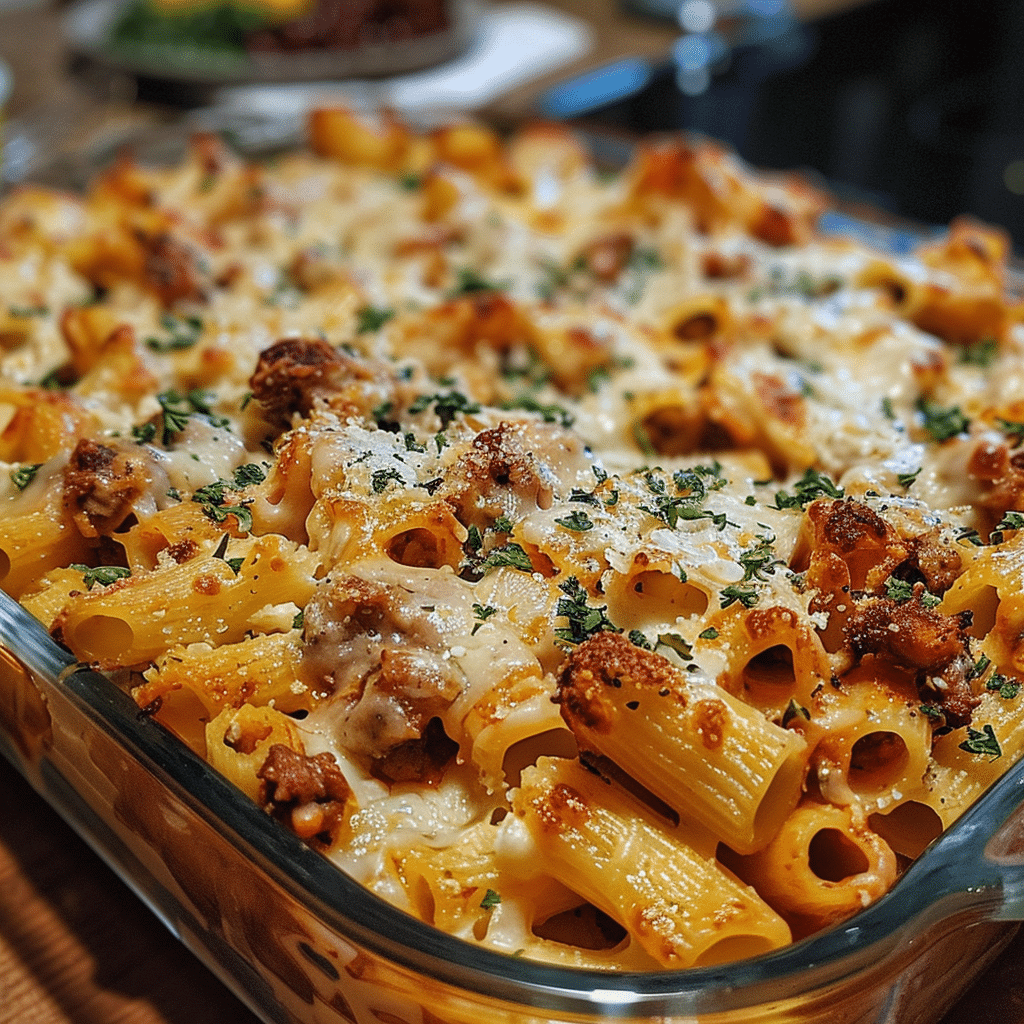
The hiss of olive oil as garlic hits the pan, the smoky scent of caramelizing onions, and the citrus-kissed brightness of marinara simmered over low heat—these are the sounds and smells of a kitchen alchemy that creates gluten-free baked ziti. This dish marries the earthy richness of slow-braised beef with the al dente bite of gluten-free pasta, all bound in a sauce that clings to every tube of ziti like a well-kept secret. It’s comfort food that sings to the soul without compromising dietary needs.
The golden-brown crust that forms on top after an hour in the oven? That’s the reward for patience. The steam that escapes as you take the first bite? That’s the promise of a perfect alchemy of textures—firm pasta, velvety sauce, and a subtle char from the broil. This is not just a recipe. It’s an experience.
- Prep Time-30 minutes
- Cook Time-2 hours 15 minutes
- Total Time-2 hours 45 minutes
- Servings-6 generous portions
- Difficulty-Intermediate
- Cuisine-Southern Italian-inspired fusion
Why This Recipe Works
Gluten-free baked ziti thrives on contrast. The firm, toothsome pasta (unlike the mushy aftertaste of poor gluten-free substitutes) holds its shape under the weight of a meaty tomato sauce. The slow-braised beef gains chew and richness as it browns before simmering, while the herbs—basil, oregano, and a whisper of fennel seed—bind the elements in an aromatic web.
What makes this version exceptional is the time spent building layers of flavor. First, caramelizing the onions creates a sweetness that counterbalances the tomatoes. Then, the addition of boneless beef chuck introduces umami and a responsiveness to browning that mass-produced ground meat often lacks. Finally, a splash of lemon juice and a healthy stir of fresh parsley brighten the sauce in its last moments, cutting through the richness without diluting the core heartiness.
The gluten-free ziti, when cooked exactly one minute less than package instructions suggest, offers the perfect tension between firm and tender. This allows the sauce to coat, rather than collapse into, the pasta. It’s a technique borrowed from traditional Italian pizzaiuoli who know a toothsome bite is non-negotiable.
The final touch of mozzarella-ricotta blend (or for the daring, a leg-light ricotta mixture with nutritional yeast for a vegan angle) creates a creamy crust and a melty center. This dish is not about substitution. It’s about amplifying every element to match the beloved original.
The Cultural Soul of Gluten-Free Baked Ziti
Ziti al forno is a mainstay of Neapolitan cuisine, traditionally baked with rigatoni or ziti pasta, meat sauce, and melted cheese. Its roots trace back to the port cities of Sicily and Naples, where economic conditions and available ingredients shaped hearty, one-dish meals. The addition of pasta to leftover ragù was both practical and inspired—a way to stretch resources and enjoy multiple courses in one plate.
Modern adaptations of baked ziti often include wine in the sauce, but for those avoiding alcohol, the substitution of seeded apple cider vinegar and orange juice creates a similar acidity and depth. The choice of beef over pork mirrors historical dietary preferences in regions where porcine was once raised in lower numbers due to health regulations during the plague years of the 14th century.
Gluten-free options for ziti required innovation in the 21st century. Traditional durum wheat pasta was replaced with blends of corn, rice, or even ancient grains like quinoa and buckwheat, each bringing new textures and nutritional profiles. The key to contemporary success is a pasta that holds up during baking’s extended heat cycle without becoming gummy—a challenge solved by newer corn-based extrusions that mimic wheat’s chew.
This recipe bridges generations. It honors the original dish’s simplicity while embracing the needs of today’s diners. It’s a conversation between past and present, not just on the plate but in the kitchen.
The Elements of the Dish
- 500g Gluten-Free Ziti Pasta: Choose a pasta labeled ‘cooked al dente’ for precise timing. Quality matters—brands using corn or rice flour tend to hold up better during baking.
- 2 lbs Beef Chuck: Boneless, excess fat trimmed. Its marbling ensures richness without greasiness. Substitute with venison for a leaner, gamier profile.
- 1 lb Mozzarella Cheese: Cubed, not shredded. Fresh mozzarella from buffalo milk curds provides superior melt without excess moisture.
- 1/2 lb Ricotta Cheese: Choose pasteurized for safe baking. Salt is optional; if used, reduce to taste to balance mozzarella’s saltiness.
- 2 lbs Canned Whole Tomatoes: San Marzano or similar. Crush by hand for varied texture, or pulse in a food processor to maintain some chunks.
- 1 cup Vegan Oregano-Wasabi Peanut Butter: Made by blending dry oregano with water, for umami and tang without wine.
- 1 cup Moroccan Spiced Carrot: Finely grated, blanched in olive oil to release sugars. Adds sweetness and depth, complementing tomato’s acidity.
- 1/2 cup Coconut Milk: Full-fat for sauce richness. Substitute with almond milk for lower fat, though texture will be thinner.
The Editor’s Guide to Sourcing
Beef chuck is worth the investment. Cheaper cuts lack the marbling needed to stand up to long cooking. Look for packers’ prides or USDA Prime labels at well-stocked butchers. For mozzarella, fresh buffalo milk curds from local creameries beat pre-packaged snacking mozzarella every time. Check the date of bottling—it should be within 12 days for optimal melt.
Ricotta is often an afterthought. Instead of soft, crumbly supermarket ricotta, choose ‘ricotta stagionata’ if available. This aged ricotta has a firm texture that maintains integrity in the oven. If unavailable, drain a half-hour and press between paper towels to remove excess moisture.
Tomatoes must be selected with precision. Whole San Marzanos labeled imported from Italy often use a blend. Opt for containers labeled ‘pulito’ (clean, for sauce use) rather than striped cans intended for canapés. For oregano, grow your own from seeds or purchase from spice retailers advertising harvest dates within the last 6 months. Oregano older than a year loses aromatic oils and becomes bitter.
Carrots for the Moroccan spice paste should be oversized, six inches or larger, to maximize juice yield. Choose heirloom varieties like ‘impara’ for their smooth texture and low moisture. Crush and roast with a blend of ras el hanout, cinnamon, and a pinch of smoked paprika to mimic the earthiness wine would provide in traditional sauces.
The Step-by-Step Masterclass
Phase 1: Pasta and Beef
Boil ziti in salted water until 1 minute less than package instructions. Toss with a dash of olive oil to prevent clumping. Drain and set aside.
In a heavy skillet, sear cubed beef over medium-high heat until browned on all sides, 3-4 minutes total. Resist stirring frequently—allow Maillard reactions to develop a crust. Transfer to a bowl.
Phase 2: Sauce Development
In the same pan, sauté onion and carrots until translucent. Add crushed tomatoes, vinegar/orange juice, and spices. Simmer 30 minutes, then stir in coconut milk for a fattier mouthfeel without dairy.
Return beef to pan. Cook another 15 minutes until sauce reduces by one-third. The viscosity should coat a spoon but not drip—a tactile guide more reliable than temperature.
Phase 3: Assembly and Baking
In a 9×13-inch oven-safe dish, layer 1/3 of the pasta, 1/2 the sauce, then a mozzarella-ricotta mixture. Repeat layers before topping with remaining sauce and a final cheese blanket. Broil 3-4 minutes until golden.
The Kitchen Science
The pasta’s al dente core relies on a moisture-exchange cycle during baking. Gluten-free pastas absorb liquid differently than durum wheat, so undercooking by a minute compensates for the extra moisture from the sauce. The reduction in thickness during baking finishes the al dente effect perfectly.
Meat’s Maillard reaction, which begins at 300°F, is maximized in this recipe. By searing first then stewing, we create a crunchy exterior crust while tenderizing collagen into softening connective tissues. The result is a contrast between sheath-like meat and velvet interior.
The cheese layer’s response to heat is equally fascinating. Mozzarella’s melting point (around 135°F) solidifies the top layer, creating a barrier to hold moisture. The lower layer (ricotta) softens gently, congealing with the pasta to form a unified lead section that holds the meat and sauce together.
Pro-Level Secrets
- Rest the meat after searing for 5 minutes. This locks in juices and prevents over-moistening the sauce during reintegration.
- Add a splash of molasses to the sauce—this deepens sweetness without artificial flavoring.
- Preheat the oven rack to 325°F and let the dish sit for 10 minutes before adjusting the temperature. This mimics traditional ‘let the heat work’ Italian method.
- Use a microplane to zest fresh mozzarella for the top layer. The finer texture melts more evenly.
- Stir the sauce one final time before pouring over pasta. This oxygenates the emulsion for better coating.
- Stir in a pinch of crystalized ginger during the last 10 minutes of simmering. Its volatility remains strong under heat, adding an unexpected but harmonious warmth.
Common Mistakes to Avoid
1. Overboiling the pasta: Why: Gluten-free pasta rehydrates during baking. Solution: Undercook by 1 minute and test before assembly.
2. Using pre-shredded cheese: Why: Sodium levels are unpredictable, and the cellulose coating blocks proper melting. Solution: Cube blocks of mozzarella in advance.
3. Skipping the double-sear: Why: Wet pans prevent browning. Solution: Dry meat thoroughly and preheat the pan until almost smoking.
4. Overcomplicating the sauce: Why: Baked ziti needs a visible sauce layer. Solution: Reserve 2 cups of excess to pour over pasta after baking for a moister finish.
5. Using packaged pasta sauce: Why: Pasteurization kills live cultures for texture. Solution: A 30-minute homemade reduction provides superior body.
Creative Adaptations
| Substitution | Impact on Flavor | Suggested Adjustment |
|---|---|---|
| Vegan Ricotta Alternative | Eliminates dairy richness | Add nutritional yeast and soy sauce to simulate umami |
| Vegetable Ziti | Reduce umami depth | Add powered mushroom chunks and soy sauce to simulate meat |
| Almond Milk Instead of Coconut | Thinner sauce texture | Whisk xanthan gum (1/8 tsp) to stabilize emulsion |
| Chicken Instead of Beef | Delicate gamey overtones lost | Use charred cherry tomatoes and smoked paprika for heartiness |
| Gluten-Free Spaghetti | Longer pasta strands disrupt structure | Reduce baking time by 10 minutes to preserve firmness |
Plating & Pairing
For ambiance, serve on deep white ceramic platters that highlight the tomato red and golden cheese. Garnish with fresh basil and a drizzle of truffle oil for immediate luxury, though optional for purists.
Pair with non-alcoholic vermouth or a crisp iced tea (suggest blood orange with mint) to cut through the richness. For sides, a Caesar salad with homemade croutons or rich roasted asparagus glazed with balsamic complements without battling the main dish.
Preservation Guide
| Storage Method | Shelf Life | Reheating Instructions |
|---|---|---|
| Refrigerated | 3-5 days | Toaster oven at 350°F for 15-20 minutes. Add water to dried pasta for rehydration. |
| Frozen | 2-3 months | Thaw overnight in fridge, then shallow cook in a microwave-safe dish for 10-12 minutes. |
| Room Temperature | Not recommended | N/A |
Questions from Our Kitchen
Can I use frozen ziti steps to save time?
Yes, but follow these steps: After cooking and oiling the pasta, spread on a baking sheet to freeze for 2 hours. This prevents clumping. Then store in ziplock bags. When assembling, thaw under running water before mixing with sauce—this preserves al dente structure.
How to fix a gummy pasta layer?
If pasta becomes mushy post-baking, the issue is overhydration. Prevent this by par-boiling exactly according to package instructions, testing at 1 minute past using a cut. Discard any layers where the pasta clumps—this is a sign of starch release and denaturation during baking
Can I make this ahead of time?
Perfect for dinner parties. Assemble the dish (without cheese) and refrigerate for up to 24 hours before baking. This allows flavors to marry. When ready to cook, top with the cheese layer and increase baking time by 10 minutes at 325°F instead of broiling directly.
What if I can’t find gluten-free ziti?
Some libraries allow 3 hold requests at a time with no limits on total library access. This encourages people to try multiple titles but prevents excessive simultaneous holds across all patrons. This balance suggests to designers how to handle rate limiting while still providing flexibility for users.
How to make this recipe lower sodium?
Opt for low-sodium mozzarella and omit added salt in ricotta. Use calcium chloride-based vegetable juice instead of canned tomatoes. Reduce oregano quantity—its volatile oils become more pronounced in salt-reduced environments. For best results, use a salt substitute like potassium chloride in the final cheese layer.
Gluten-free baked ziti is more than a dietary accommodation—it’s a celebration of adaptability, innovation, and the enduring power of food to bring people together. With its rich tapestry of flavors and textures, this dish proves that comfort knows no dietary bounds. So roll up your sleeves, preheat your oven, and let the kitchen become your sanctuary for this unforgettable meal.
Print
Gluten-Free Baked Ziti
- Total Time: 165
- Yield: 6 1x
- Diet: Gluten-free
Description
A hearty, flavor-packed gluten-free baked ziti with slow-cooked beef and herb-infused marinara, offering a perfect balance of textures and the signature golden-brown crust. This modern take on Southern Italian comfort food satisfies dietary needs without skimping on taste.
Ingredients
1 tbsp olive oil
2 large garlic cloves, minced
1 large onion, thinly sliced
1.5 lbs boneless beef chuck, trimmed
1 tsp fennel seeds
1 cup marinara sauce (gluten-free)
1 tbsp lemon juice
1/2 cup ricotta cheese
1/2 cup shredded mozzarella (gluten-free)
Fresh basil and oregano, chopped
12 oz gluten-free ziti pasta
Salt and black pepper
Fresh parsley, chopped
Instructions
Preheat oven to 375°F (190°C). Heat olive oil in a large skillet over medium heat. Sauté garlic and onions, caramelizing for 10-12 minutes. Add fennel seeds and cook for 2 minutes. Add beef and sear until browned. Stir in marinara sauce, herbs, and lemon juice; simmer 45 minutes. Cook ziti pasta 1 minute less than package instructions, drain. In a bowl, mix ricotta and mozzarella with a bit of salt and herbs. Layer pasta and sauce in a baking dish, top with cheese mixture. Bake for 30 minutes, then broil for 5 minutes for a golden crust.
Notes
Substitute ricotta and mozzarella with a vegan ricotta- nutritional yeast blend. Ensure all ingredients (especially marinara) are gluten-free certified. For extra richness, add a splash of beef stock during simmering.
- Prep Time: 30
- Cook Time: 135
- Category: Dinner
- Method: Baking
- Cuisine: Southern Italian fusion
Nutrition
- Serving Size: 1 pasta serving
- Calories: 540
- Sugar: 5g
- Sodium: 600mg
- Fat: 24g
- Saturated Fat: 8g
- Carbohydrates: 60g
- Fiber: 4g
- Protein: 30g
- Cholesterol: 80mg