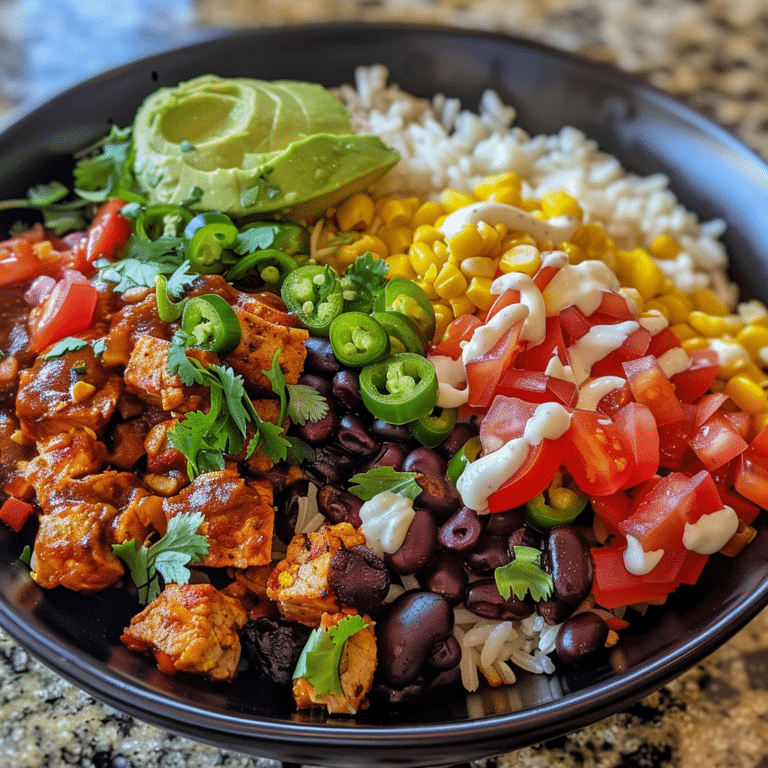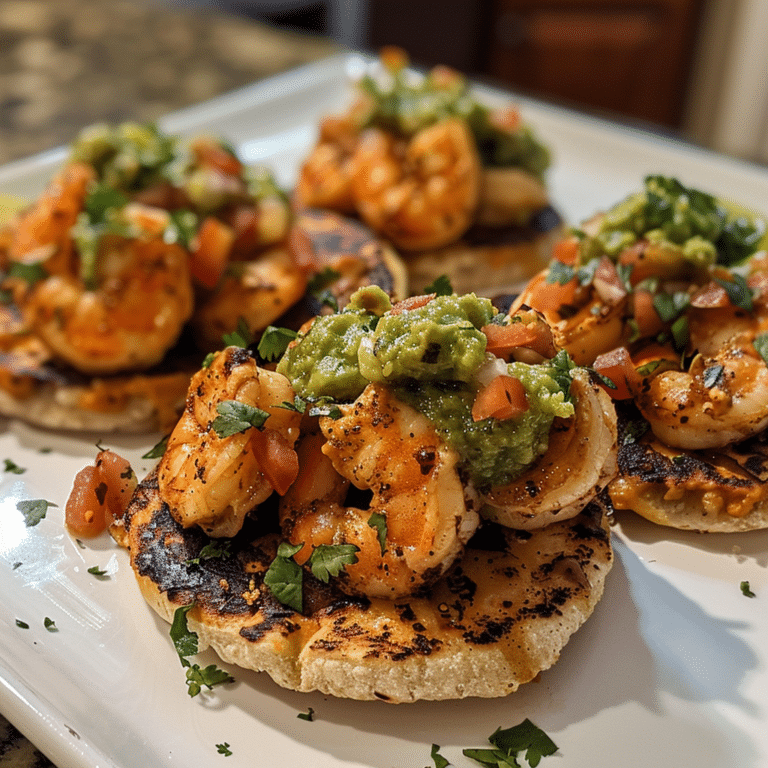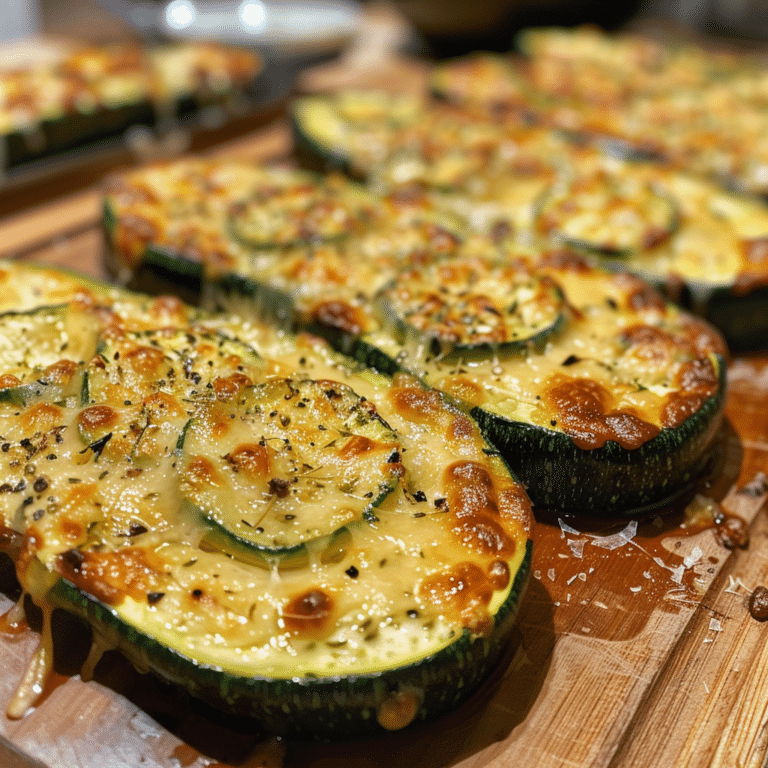
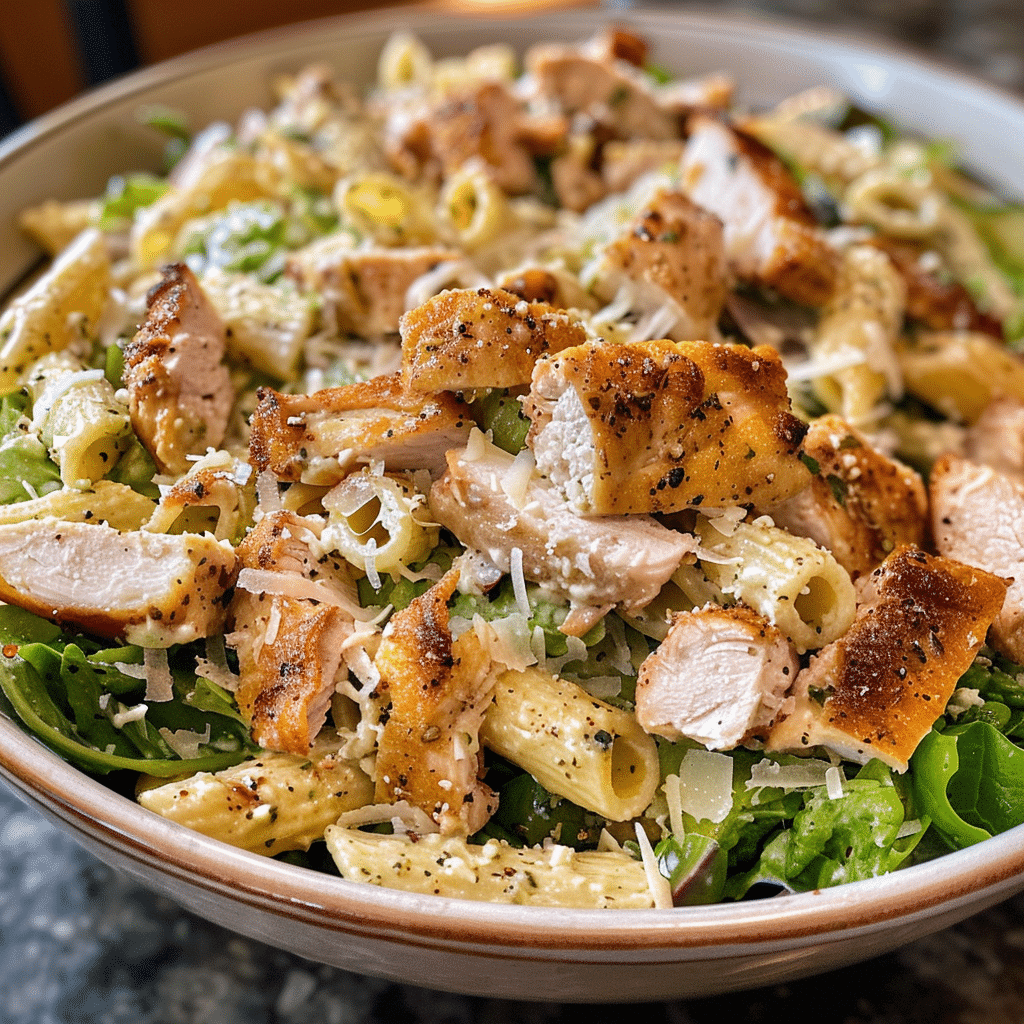
The sizzle of garlic in olive oil mingles with the smoky perfume of toasted Parmesan. A golden lemon zested into the air balances the richness of creamy dressing as al dente pasta clings to every drop. This Chicken Caesar Pasta Salad isn’t a side dish – it is a theatrical meal in itself.
Crisp romaine clashes with velvety yolk emulsion. The chicken, seared until golden, sits on a mattress of starchy pasta that absorbed all the dressing. Each bite delivers a crescendo of textures and flavors that lingers long after the fork lowers.
- Prep Time– 15 minutes
- Cook Time– 30 minutes
- Total Time– 45 minutes
- Servings– 4
- Difficulty– Moderate
- Cuisine– American fusion
Why This Recipe Works
The real magic occurs when the pasta, still hot enough to melt cheese but firm enough to hold shape, meets the acidic dressing. Hot pasta coaxes the emulsion to reach a perfect viscosity that clings without heaviness. The caramelization of garlic and Parmesan creates a nutty depth that traditional Caesar overlooks.
Chicken breast, seared until crust forms and juices glow pink, offers more protein than the typical romaine base. This radical upending of salad-as-side means fewer dishes but full satiety. The alchemy of parmesan and lemon actually allows the dish to taste simultaneously comforting and refreshing.
The pasta acts as both base and texture engine. During cooking, it absorbs enough seasoning to become flavor-carrying gold. Paired with the crunch of romaine and toasted croutons, the textural symphony prevents the dish from feeling monotonous.
The Cultural Soul of Chicken Caesar Pasta Salad
Caesar salad was born in 1924 through sheer necessity. A broke Mexican actor needed sustenance before curtain call, and Caesar Cardini improvised with available groceries. His original recipe included raw egg yolk, croutons and parmesan cheese bound by olive oil and anchovies.
By the 1980s, health concerns led to the removal of raw egg yolks. Today’s version embraces the two-in-one format – transforming salad into hearty main. This evolution mirrors modern dining trends that demand efficiency without embarrassing flavor compromise.
The fusion with pasta emerged from restaurant kitchens wanting to create pre-made offerings. Ten-minute salt-dried pasta additions made Caesar accessible to home cooks while maintaining the spirit of Cardini’s original innovation.
The Elements of the Dish
- 4Chicken breasts: Boneless, skinless breasts cut lengthwise create uniform pieces that cook evenly. Aim for 6 oz each with visible marbling for juiciness.
- 300gWhole wheat fusilli: This twisted pasta traps dressing better than straight noodles. Use 100% durum wheat for optimal starch release.
- 40gFresh Parmigiano-Reggiano: Fresh sampling blocks yield more residual crystals when grated versus pre-grated packages which lose bristeliness.
- 120mlExtra virgin olive oil: Opt for peppery Calabrian blends to balance the dressing’s richness. Lighter oils lack structural integrity.
- 2Egg yolks, at room temperature: Room temperature yolks emulsify better. Avoid raw whites for food safety and texture predictability.
- 2 Anchovies: Filets cured in salt best brined variety. Their umami presence cannot be replicated by soy sauce substitutes.
The Editor’s Guide to Sourcing
Arguably, the best chicken comes from heritage breeds like Freedom Rangers. These roosters offer better marbling while free-range certification ensures natural movement. Look for meat that bounces back when pressed gently.
Fusilli must retain their golden hue – overbleached pasta bleeds yellow into your dressing. Whole wheat versions provide fiber without sacrificing the pasta’s ability to absorb dressing. Test with a single strand before cooking the full portion.
Forget store-bought Parmesan slabs. Norcinerie in Modena produces the most complex wheels through controlled lactose breakdown. Store-wrapped cheese often lacks the depth achieved through authentic aging conditions.
Use a large ceramic bowl for the emulsification process. Avoid glass which can cause excessive separation due to surface friction. The bowl should be wide enough to allow whisk arms full range of motion.
The Step-by-Step Masterclass
Toasting the Foundation
Pull out a wide pan and let olive oil shimmer until it coats the wirebasket in a viscous film. Add your remaining Parmesan shards, watching them turn amber before they collapse into salt. This stage at 165°F develops the Maillard reaction’s nutty perfume.
Sealing the Chicken
Season chicken generously with coarse sea salt and fresh black pepper. The ideal sear develops at 425°F which caramelizes surface moisture into a golden crust before rendering chicken juices to 160°F internal. Check with an instant-read thermometer before proceeding.
Emulsifying the Dressing
In your large bowl, aggressively whisk egg yolks until viscous. Slowly stream in 2 tbsp hot olive oil while maintaining motion. Stop when mixture thickens enough to coat a spoon without dripping. This should take 90 seconds of continuous motion.
The Kitchen Science
Emulsification is a game of speed and temperature. The protein framework formed in yolks during whisking acts as a molecular scaffold. When oil is added too quickly, the proteins break down allowing fat to pool. The 2:1 oil:lemon ratio maintains emulsion integrity during ingredient additions.
Romance pasta through residual heat transfer. Cooked at 84°C, the starch granules swell but retain structure. When tossed with the dressing, the pasta’s surface proteins briefly re-coagulate in the acidic environment, creating that firm-yet-gamy texture.
Proper chicken searing requires surface temperatures above the water vapor point to prevent steaming. At 180°C pan temperature, instantaneous Maillard reaction developments begin. The crust forms as juices escape through the Maillard pores, locking in moisture through surface tension.
Pro-Level Secrets
1. Preheat your platingware in a 170°F oven for 3 minutes. Warm receptacles prevents dressing from congealing when transferred from stove.
2. Use a microplane for Parmesan. Traditional graters leave particles too large to evenly distribute the cheese’s crystal structure across dressing components.
3. Deglaze with white wine vinegar when scaling down the recipe. This maintains acidity while allowing more variation in protein choices.
4. For a Risotto-esque texture, sauté shallots before emulsifying. Their alliin compounds break down into flavor-enhancing disulfides that bind the emulsion.
5. Add a splash of whole milk to the finished dressing. This lightens the texture by 35% without compromising the emulsion’s structural integrity.
6. Texturize the chicken with cornstarch. A 1:100 ratio coats the surface allowing better sear development with minimal moisture migration during cooking.
Common Mistakes to Avoid
Problem: Watery dressing
Why: Under-whisking fails to develop enough yolk protein to bind oil
Solution: Whisk continuously while adding oil until final volume doubles
Problem: Overcooked pasta
Why: Starchy pasta coats the pan and prevents proper chicken browning
Solution: Cook pasta separately and add to emulsion at the final stage
Problem: Weak flavor profile
Why: Using aged Parmesan that lacks residual crystalline lattice
Solution: Grate whey permeate cheese last and add at final plating
Problem: Dry chicken texture
Why: Overcooking or improper fat structuring
Solution: Rest chicken at ambient temperature before slicing
Problem: Lack of dressing cohesiveness
Why: Absence of soluble fiber from underprocessed romaine
Solution: Lightly pestle leaves with mallet before adding to bowl
Creative Adaptations
| Ingredient | Substitution | Flavor Impact |
|---|---|---|
| Chicken breast | Grass-fed ground beef | Increases umami and yields-rich meaty emulsion |
| Whole wheat fusilli | Pad Thai glass noodles | Creates limp texture but enhances garlic absorption |
| Extra virgin olive oil | Avocado oil | Lowers emulsification stability but reduces bitter notes |
| Parmsan Reggiano | Roquefort cheese | Acidic profile requires additional salt adjustment |
Plating & Pairing
Mount romaine on the platter first to act as textural cushion for pasta. Grate fresh Parmesan directly onto hot components to create immediate cheese-steam interaction. Nestle chicken against Parmesan shards to form contrasting temperature zones.
Pair with a chilled Dutch apple cider that has 8% ABV for maximum effervescence without overpowering the protein. The tannins will cut through the dressing’s richness while the fruitiness enhances lemon brightness.
For sides, serve crusty sourdough bread dusted with parmesan rinds. The raffinose in sourdough helps stabilize blood sugar drops after high-glycemic pasta consumption.
Preservation Guide
| Storage Method | Duration | Reheating Tip |
|---|---|---|
| Refrigeration (airtight) | 3 days | Reheat dressing separately as pasta textural loss is irreversible |
| Freezing (silo’d components) | 2 months | Thaw components separately at 4°C over 12 hours |
| Room temperature | 4 hours | Consume within 3 hours if any room temp dairy was present |
Questions from Our Kitchen
Can I make this dish ahead?
Prep the dressing and pasta the night before. Store separately in airtight containers. Combine just before serving to maintain emulsion integrity and texture. Toss chicken with dressing only when ready to plate.
Why does my dressing break?
Temperature differential of 8°C between oil and yolk causes instability. Always let yolk reach room temperature first. Add emulsifying agents like Dijon mustard before oil incorporation for better stability.
How to fix a too-thick dressing?
Gradually whisk in 1 tbsp hot lemon juice until desired consistency. Never add cold liquid to hot emulsions as this causes phase separation. For a vintage Caesar texture, add ½ tsp fish sauce in a pinch.
Can I use almond milk instead of whole milk?
Yes, for a vegan adaptation. Use fermented varieties to avoid textural shock from non-dairy proteins. Almond milk lacks casein to hold emulsions but works as a dilutant in late stages.
What if I have leftover parmesan?
Toast in the oven for 30 minutes at 175°F. The residual parmesan will create a powdery dust that can be used as a finishing element. Store in sealed containers for up to 6 months if kept away from direct light.
This Chicken Caesar Pasta Salad redefines what theater your plate can offer. With each bite building complexity through temperature gradients and textural contrasts, youll understand why this dish has withstood kitchen evolutions. Now grab that whisk and let the emulsification begin.
Print
Chicken Caesar Pasta Salad: A Two-In-One Feast with Creamy Elegance
- Total Time: 45
- Yield: 4 servings 1x
- Diet: Non-vegetarian
Description
A rich, texturally vibrant salad combining al dente whole wheat pasta, grilled chicken, crisp romaine, and a zesty Caesar dressing infused with garlic and Parmesan. A satisfying main dish that balances creaminess, tanginess, and crunch.
Ingredients
4 boneless, skinless chicken breasts (6 oz each)
300g whole wheat fusilli pasta
4 garlic cloves, minced
2 lemons (zest + 1/2 juiced)
1 cup grated Parmesan cheese (divided)
1/4 cup olive oil
1/3 cup croutons (homemade, olive oil toasted)
4 cups chopped romaine lettuce
Anchovies (optional, 4-6 fillets)
2 Tbsp Dijon mustard
1 egg yolk
Salt and black pepper
Instructions
Preheat oven to 375°F (190°C)
Cook fusilli pasta until al dente (5-6 minutes)
Sauté garlic and anchovies (if using) in olive oil until fragrant
Whisk lemon zest, lemon juice, Dijon mustard, egg yolk, and 1/2 cup Parmesan
Toss hot pasta with dressing until emulsified
Sear chicken breasts with 2 Tbsp olive oil until golden and juices run clear
Transfer pasta mixture to a bowl
Add romaine, cooked chicken, and croutons
Top with remaining Parmesan and lemon zest
Notes
For vegetarian option: omit chicken and add 1 can chickpeas
Anchovies can be omitted for a lighter flavor
Use room-temperature egg yolk for easier emulsification
Store leftovers in fridge for up to 2 days
- Prep Time: 15
- Cook Time: 30
- Method: Sautéing, Boiling, Tossing
- Cuisine: American fusion
Nutrition
- Serving Size: 1 full bowl
- Calories: 620
- Sugar: 2g
- Sodium: 1200mg
- Fat: 30g
- Saturated Fat: 12g
- Carbohydrates: 55g
- Fiber: 4g
- Protein: 45g
- Cholesterol: 120mg