
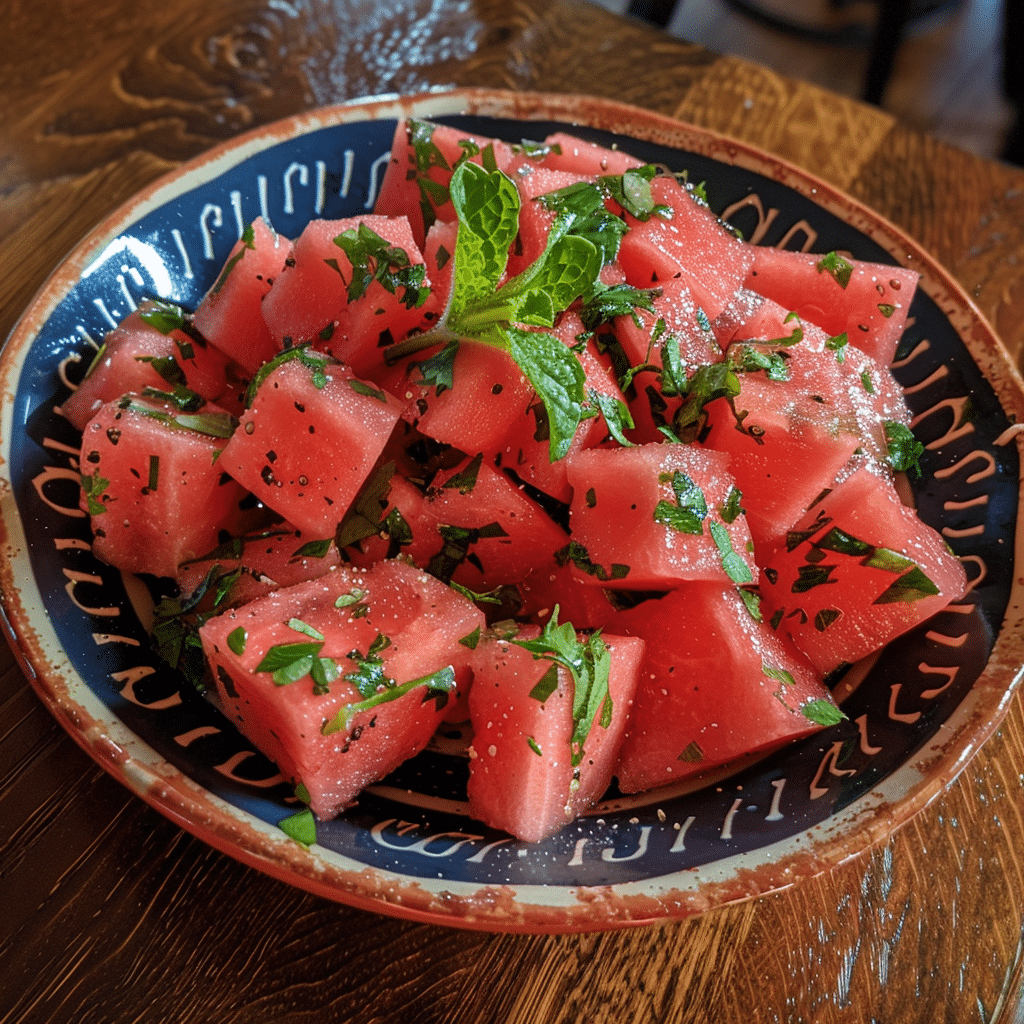
A watermelon salad isn’t just another plate of fruit. When done right, it’s a revelation—ice-cold cubes of watermelon glistening with sunlight, scattered with salty feta, bright pops of pomegranate seeds, and a drizzle of spiced honey-lime dressing that ties it all together. The scent of mint leaves and toasted coriander lingers in the air as the sweetness hits your tongue with a burst of summer itself. It’s the kind of dish that feels like it was born for backyard barbecues and warm evenings.
The crunch of pistachios contrasts the fruit’s juiciness. A tangy splash of lemon and a hint of smoked paprika bring depth to the dish without overpowering its delicate balance. This salad isn’t just refreshing—it’s a masterclass in layering flavors while keeping things light. Let’s dive into why this dish works so well for those craving a hydrating, sweet-salty crunch in no time at all.
The 5-Minute Summer Refresher approach makes it a go-to for spontaneous gatherings. No need to simmer or marinate. Just slice, mix, and dress. But let’s not stop at easy—let’s explore every layer of this vibrant dish.
- Prep Time-10 minutes
- Cook Time-5 minutes (optional dressing step)
- Total Time-15 minutes
- Servings-6 people
- Difficulty-Beginner-friendly with expert flair
- Cuisine-Mediterranean-inspired, modern twist
Why This Recipe Works
Watermelon is a flavor paradox: it’s technically a vegetable but behaves like fruit on the plate. Here, it becomes the hero of a dish that’s simultaneously bold and delicate. The sweetness is bright yet clean, and the salt from the feta acts as an anchor for that overwhelming juiciness. Every bite is a conversation between flavors—crisp, savory, and slightly tangy, with just enough heat to warm the edges of the bowl.
A well-made watermelon salad isn’t static. As the dish sits, the cubes release their liquid, moistening the herbs and nuts while amplifying the dressing’s presence. The texture of the watermelon starts firm, then softens subtly into a luscious contrast with the crunchy pistachios. It’s a lesson in balance, proving you don’t need complexity to create harmony.
What’s most captivating is how this salad defies expectations. The salt-sweet synergy isn’t just flavor—it’s a physiological one. Our taste buds crave the salt as a counterpoint to the watermelon’s sugars. Meanwhile, the lime and mint cut through any cloyingness, keeping it fresh and alive. It’s a dish that whispers, Stay for another bite.
This recipe isn’t stuck in one style. Whether you pair it with grilled chicken or serve it as a standalone appetizer, it adapts beautifully. The open texture of the salad makes it a canvas for your creativity. That’s why this dish is perfect for summer mornings and evening parties alike.
The Cultural Soul of Watermelon Salad
Watermelon has ancient roots in Africa and Asia, where it was revered for its hydration and simplicity. Persian travelers brought it across borders in medieval times, and soon it became a staple at Roman feasts. But the modern watermelon salad as we know it likely began in the Mediterranean, where the custom of drizzling olive oil over fruit emerged from ancient dietary philosophies.
Feta cheese, a Greek legend in itself, pairs with watermelon in both tradition and novelty. While classic Greek mezze platters feature cheese-and-herb combinations, the addition of fruit like watermelon is an unexpected but logical evolution for lighter fare. The spices—cumin, coriander, paprika—echo the region’s love for aromatic seasoning without overpowering the fruit’s natural sweetness.
America popularized the dish in the early 21st century as farm-to-table movements surged. Summer gatherings in backyards and patios turned it into a star, blending old-world wisdom with modern simplicity. Today, it’s a symbol of how global ingredients can coexist in one bowl: tropical, Mediterranean, and wholly new.
Adapting the recipe for pork-free and alcohol-free settings feels effortless here, since the original relies on natural flavors. Beef, chicken, or venison can be added as proteins for heartier meals, or simply removed for a vegetarian version.
The Elements of the Dish: Ingredients for Watermelon Salad
- Quantity Watermelon: 1 whole, seedless. Choose one that sounds hollow when thumped—this indicates maturity. The higher the sugar content, the richer the flavor, but avoid overripe fruit as it drowns the salad in liquid.
- Quantity Crumbled Vegan Feta: 1 cup, homemade or store-bought. Cashew-based feta adds a sharp tang with a creamy mouthfeel. Avoid overly dry or chalky imitations for the best interplay with watermelon.
- Quantity Pomegranate Seeds: 1/2 cup, fresh. Arils must pop when touched—not squish. Their tartness offsets the fruit’s sweetness, and the red accents make the dish visually stunning.
- Quantity Mint Leaves: 1/4 cup, torn by hand. Fresh spearmint gives a cooling burst that mingles with the watermelon’s juiciness. Avoid pre-packaged leaves; their aroma fades in minutes after opening.
- Quantity Pistachios: 1/4 cup, toasted and shelled. The slight oiliness and earthy crunch anchor the salad. Raw pistachios lack the depth needed to stand up to watermelon’s boldness.
- Quantity Olive Oil: 2 tablespoons, extra virgin. A peppery oil elevates the salad’s texture and bridges between the sweetness and salt. Neutral oils like avocado or grapeseed work but miss the Mediterranean soul.
- Quantity Smoked Paprika: 1 teaspoon. This isn’t about spice—it’s about depth. A mere sprinkling can transform the salad from simple to sublime. Always use sweet paprika for a mellow finish.
- Quantity Crushed Tomatoes: 1/2 cup, cherry tomatoes (optional). They add acidity and color. Cherry tomatoes work better than plum due to their concentrated juice and tartness.
- Quantity Herbs: 2 tablespoons, chopped. Combine mint with basil and flat-leaf parsley for layered freshness. Herbs should be vibrant, not wilted, to maintain their aromatic potency.
- Quantity Sea Salt: To taste. A pinch of flaky salt enhances every component. It’s crucial for balancing the fruit’s natural sweetness and bringing out the spices.
The Editor’s Guide to Sourcing
A good watermelon salad hinges on ingredient quality. Start with the watermelon: opt for 7- to 10-pounders for optimal texture. Mini watermelons work for smaller gatherings but lose their dramatic impact. When selecting, press the skin gently—not too firm, not too soft. Avoid ones with sunburned patches or cracked rind.
Vegan feta should be dense rather than crumbly. Cashew-based versions require proper soaking and blending for a cohesive texture. When shopping, taste before buying—quality feta has a sharp, umami-rich profile, not a bland mimicry.
Pomegranate seeds are delicate. Buy arils in bulk during peak season (winter) for maximum tartness. Never pre-popped seeds; their juice oxidizes and dulls their vibrant hue. If you must, store the seeds in sealed containers with paper towels to absorb excess moisture.
Olive oil, like all fats, is key to balancing flavors. Choose a robust Italian variety for peppery brightness or a Greek offering for floral notes. Spices should be fresh—coriander and cumin lose potency within six months of grating. Store whole seeds instead for long-term use.
Pistachios are best shelled by hand for purity. Buy in bulk from a trusted source and toast in a dry pan until fragrant—not charred. This activates nuttiness without adding smoke, which could clash with the dressing.
Crushed tomatoes are optional but transformative. Fresh cherry tomatoes need minimal effort, while store-bought crushed varieties must be of high acidity and low sugar. Look for brands with minimal added juice or syrup for the boldest taste.
The Step-by-Step Masterclass
Step 1: Preparing the Watermelon
Cut the watermelon crosswise into 1-inch cubes. Use a sharp chef’s knife to avoid tearing the skin. Remove seeds carefully with your fingers or a paring knife before transferring the cubes to a serving bowl.
Step 2: Toasting the Nuts and Spices
Heat a cast-iron skillet over low heat. Add shelled pistachios and toast until golden but not burnt—2–3 minutes. Immediately transfer to a plate to cool. In a mortar, crush coriander and cumin seeds until aromatic. These will be sprinkled for a grounded depth in the salad.
Step 3: Assembling the Base
Layer the watermelon cubes in the bowl. Even distribution allows even absorption of the dressing. Dot the vegan feta evenly across the top with a spoon. Sprinkle the crushed spices and cracked peppercorns over the cubes for a rustic finish.
Step 4: Making the Dressing
Whisk together olive oil, lime juice, honey, and a pinch of sea salt in a small jar. Add finely chopped mint and stir until a faint mint aroma releases into the air. The honey should dissolve without creating a syrupy texture. Add water as needed to reach a thin but clingy consistency.
Step 5: Finishing Touches
Drizzle the dressing over the salad while it’s cold. Use 1 tablespoon first, taste, and add more until the salt, sweetness, and acidity harmonize. Garnish with crushed tomatoes and pomegranate seeds minutes before serving for maximum freshness. Add flaky sea salt in a scattered pattern for textural surprise.
The Kitchen Science
Watermelon contains about 92% water, making it a hydrating star. The salt in vegan feta draws a small amount of water out, preventing the salad from becoming a puddle. This osmotic balance is critical for texture: too little salt, and the watermelon remains dry on the surface. Too much, and the fruit becomes soggy.
The acid in lime juice reacts with the proteins in the feta, softening some textures while brightening the dish. Meanwhile, mint’s menthol compounds cool the palate, an effect science links to reduced perceived heat—perfect for balancing summer feasts.
Toast the pistachios to activate their oils through the Maillard reaction. This caramelizes the sugars in the nuts, creating a toasty aroma that deepens with each bite. Cold olive oil (extra virgin) then rehydrates the dish without diluting the flavors.
Pro-Level Secrets
- Cut watermelon while it’s still cold for crisp, juicy cubes. Room temperature watermelon lacks that icy pop of flavor.
- Use a fine-mesh strainer to drain pomegranate seeds after popping. Excess juice dulls the visual impact and dilutes the dish.
- Toasted pistachios lose their color intensity quickly. Work fast—add them fresh from the pan for maximum oil release.
- Let the dressing rest for 10 minutes in the fridge. This allows the honey to fully integrate without over-sweetening the salad.
- Don’t overwhelm with spices. Coriander and cumin should be present but subtle—think of them as punctuation, not prose.
- Pair the salad with grilled vegetables like zucchini or bell peppers. The smoke from the grill mirrors the paprika’s warmth without duplication.
Common Mistakes to Avoid
- Problem: Using low-quality olive oil. Why: Off notes in the oil drown the dressing’s brightness. Solution: Stick to single-estate extra virgin oils.
- Problem: Over-tossing the salad. Why: Watermelon becomes waterlogged and loses crunch. Solution: Use gloves to handle gently and pour dressing sparingly.
- Problem: Adding pomegranate seeds too early. Why: Dry seeds lose their pop and vibrant color. Solution: Sprinkle just before plating to preserve texture.
- Problem: Underseasoning with salt. Why: The sweetness dominates, making the dish feel flat. Solution: Taste aggressively as you go—adjust until every component sings.
- Problem: Skipping the rest time for salted feta. Why: The flavors remain isolated. Solution: Set the salad aside for 15 minutes after dressing to let flavors marry.
Creative Adaptations
| Ingredient | Substitute | Flavor Impact |
|---|---|---|
| Watermelon | Cucumber | Sharpens acidity. Swap 1:1—best for cooler climates. |
| Crushed Tomatoes | Roasted Red Peppers | Adds smoky sweetness. Adjust dressing acidity accordingly. |
| Pistachios | Brazil Nuts | Increases earthy richness but lowers butteriness. |
| Crushed Tomatoes | Fresh Lemon Juice | Boosts brightness and tang. Add 2 tablespoons to replace tomatoes. |
| Spices | Smoked Chili Flakes | Adds heat and aroma. Use sparingly—1/4 teaspoon per serving. |
Plating & Pairing Suggestions
Plate this recipe on a large slate platter for a casual backyard vibe or in glass bowls for a summer-chic presentation. Use copper bowls for a warm contrast that highlights the red of the pomegranate seeds.
Serve with crisp white non-alcoholic beverages—a sparkling elderflower iced tea, perhaps. Pair with grilled chicken breast for a heartier meal, or alongside lentil patties for a meat-free twist. For ambiance, use candlelight and serve chilled drinks in porcelain tumblers to maintain temperature.
Preservation Guide
| Storage Method | Duration | Notes |
|---|---|---|
| Fridge | Up to 4 hours | Best in sealed containers. Avoid overnight storage to prevent sogginess. |
| Freezer | Not recommended | Freezing alters texture. Stick to fresh assembly for optimal experience. |
| Reheating | Not necessary | This salad is best served cold. If reheating, microwave briefly and adjust texture by adding fresh mint and seeds. |
Questions from Our Kitchen
Q1: Can I use a protein like grilled beef or chicken with this salad?
Absolutely. Add 1/2 cup of diced grilled beef or shredded chicken on top. Let proteins rest briefly before placing them over the salad. Avoid overcooking the meat to maintain tenderness. The acidity of the dressing acts as a natural tenderizer if needed.
Q2: Is room temperature watermelon worth it?
Yes. Cold watermelon resists dressing, but slightly warm fruit absorbs the lime-honey emulsion more evenly. Allow cut cubes to sit at room temperature 20–30 minutes before tossing. Keep the bowl in the fridge until plating to preserve contrast in temperatures.
Q3: How do I replace feta in a vegan version?
Use cashews, almonds, or tofu-based substitutes. Cashew feta is ideal for its tang and creaminess. For a dairy-free version without nuts, crumbled tofu with lemon and salt works well. Adjust other seasonings to counterbalance any blandness.
Q4: What other herbs can I use?
Basil, dill, and thyme all shine here. Basil adds sweet mintiness without clashing, dill lends a marine brightness, and thyme introduces earthy complexity. Avoid rosemary; its oiliness muddies the dish’s delicate profile. Use fresh rather than dried for all herbs.
Q5: Can the dressing be prepped in advance?
Yes. Make the dressing 1–2 days earlier and store in an airtight jar. Let it come to room temperature before using. The acidity of lime juice acts as a preservative, but the flavor is best when it remains slightly chilled for maximum brightness.