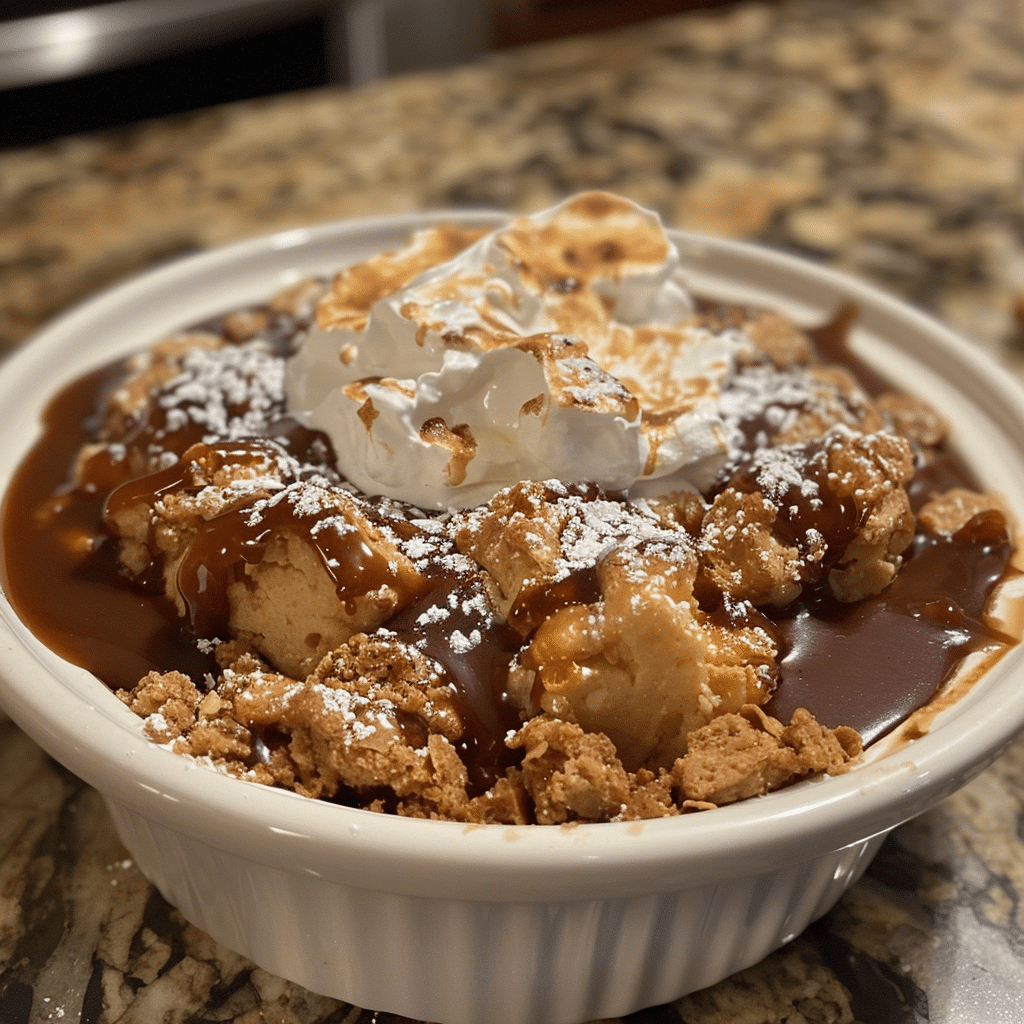
The crunch of graham cracker crust gives way to layers of velvety chocolate and golden marshmallow. When you slice into this dessert, the marshmallows hiss softly, expanding like a warm, gooey cloud. Each bite feels like a portable slice of nostalgia, but with a refined twist.
It starts with the scent of toasted marshmallow under a searing broiler. The chocolate ganache shimmers slightly, its bitterness from quality cocoa powder balanced by toasted honey in the filling. The graham crust holds its shape, yielding just enough to the pressure of a fork.
This S’Mores Cobbler reimagines the graham cracker, chocolate, and marshmallow trinity by adding depth through a cinnamon-sugar custard layer and a caramelized brown sugar finish. It’s a dessert that marries childhood simplicity with gourmet precision.
- Prep Time-45 minutes
- Cook Time-30 minutes
- Total Time-1 hour 15 minutes
- Servings-8 generous slices
- Difficulty-Intermediate
- Cuisine-Comfort Dessert
Why This Recipe Works
The magic begins with temperature contrast. The crisp graham cracker shell encases a custard layer that stays mysteriously cool until the last moment. Then the chocolate ganache glows like a campfire ember, and the marshmallow topping deflates slightly under heat, creating a pillowy pillow that pulls cleanly from the crust.
The cinnamon in the custard isn’t just flavor—it interacts with the cocoa in the filling. This aromatic layer acts as a bridge, tempering the chocolate’s intensity while enhancing its richness. The result is a dessert that feels decadent but familiar.
A key revelation is the marshmallow’s behavior under broiler heat. When the sugar in the marshmallow crystallizes and then melts rapidly in the oven, it loses its sticky, plastic-like texture from the microwave or oven versions. Instead, it becomes a delicate foam with a caramelized top that chars gently at the edges.
The crust uses crushed graham crackers mixed with unsweetened coconut oil instead of butter. This swap keeps the structure firm while allowing the sweet layers to shine. The coconut oil’s subtle sweetness complements rather than competes.
The Cultural Soul of S’Mores Cobbler
S’mores trace their roots to 1924 when Daniel Peter’s milk chocolate merged with marshmallow fondant and graham crackers at Girl Scout campfires. The cobbler format borrows from British pie traditions brought to American frontier kitchens. Bakers transformed simple ingredients into communal feasts using cast-iron cookware and hearth heat.
This recipe emerges from a desire to bring campfire joy indoors. While classic s’mores rely on open flames, cobbler’s structure allows for layered complexity and controlled browning. The custard layer nods to European crème brûlée techniques, adding sophistication to the rustic form.
Graham crackers, originally 19th-century health fare promoted by a Pennsylvania clergyman, now form the bridge between these culinary worlds. Their whole-grain base and toasty finish mimic campfire bread while maintaining dessert legitimacy. The recipe’s evolution shows how comfort food adapts to modern kitchens.
The Elements of the Dish
- 1 pack Full-Shell Graham Crackers (5 sheets): Use the thinnest version for a delicate crust. Their natural grain gives structure and a campfire-ready char.
- 1/4 cup Unsweetened Cocoa Powder: Opt for Dutch-processed for deep, non-bitter coverage. It’s the canvas for chocolate richness.
- 3/4 cup Milk (2%): Whole milk adds fat but creates a custard base that absorbs other flavors without feeling greasy.
- 2 cups Marshmallows (mini size): Mini versions toast uniformly without burning. Look for marshmallows with minimal corn syrup content for better texture.
- 1/2 cup Light Brown Sugar: Its molasses undertones provide depth for the caramel finish. Pre-grind the sugar in a spice grinder for smoother application.
- Pinch Salt: Enhances the natural bitterness of chocolate and balances the marshmallow’s sweetness.
- 1 tsp Cinnamon (ground): Use Vietnamese cinnamon for the strongest flavor. This becomes the aromatic backbone of the dish.
The Editor’s Guide to Sourcing
When selecting graham crackers, choose full sheets over pre-crushed mixes. Full sheets allow for better texture control during preparation. For organic options, check regional bakeries like Maryland-based Nature’s Cracker Company for whole grain consistency.
For marshmallows, traditional brands like Marshmallow City offer non-GMO versions without corn syrup masking the vanilla. Organic marshmallows from Vermont’s Local Food Hub maintain that airy texture while avoiding industrial processing.
Premium cocoa comes in three forms: natural (best for bitterness), Dutch-processed (ideal for custard integration), and dark chocolate chips (for a marbled effect). Use the 16-ounce bag from Hershey’s Special Dark for optimal bittersweet balance.
Cinnamon varieties matter more than you think. Indian Saigon Cinnamon offers the highest coumarin content while remaining legal for sale. This type provides the warm spice needed without overpowering the chocolate.
The Step-by-Step Masterclass
Graham Cracker Shell Preparation
Crushing the graham crackers is an art form. Use a food processor with a metal blade to maintain even particle size. Pulse 4 times at 1-second intervals for a sandy consistency that forms a tight crust when pressed. Mix with 1/3 cup coconut oil at 65°F, allowing it to cling to the crumbs without melting.
Line a 9-inch springform pan with parchment paper. Press the mixture into the base and up the sides, creating a 3/4–inch thickness. Freeze for 10 minutes—this firms the crust so it won’t collapse during layering. For extra strength, bake briefly at 350°F then cool completely before assembling.
Custard Layer Assembly
Whisk 3 large egg yolks with the cinnamon and half the brown sugar until pale. Slowly stream in 3/4 cup warm milk, then return the mixture to the pan over medium heat. Cook using a double boiler method, swirling constantly until it coats the back of a spoon. Strain through a fine-mesh sieve while still hot to remove cooked foam.
Let the custard layer cool in an ice bath—this ensures it sets properly. Pour the custard into the prepared crust to a 1/4–inch thickness. Chill for at least 2 hours; the custard hardens the structure, preventing fillings from mixing during heating.
Chocolate Layer Creation
Melt the remaining 1/2 cup milk with the cocoa powder, 1/4 cup sugar, and pinch of salt in a saucepan over low heat. Whisk until smooth, then add 3/4 cup chopped semisweet chocolate (use 70% dark for a stronger profile). Remove from heat and let the mixture cool slightly before spreading over the custard layer.
Allow the chocolate to firm at room temperature. This creates a stable base for the marshmallow layer without risking separation. The ideal consistency forms a glossy sheet that resists cracking when the next layer is applied.
Marshmallow Topping Technique
Arrange the marshmallows in a spiral pattern to optimize air circulation for even toasting. Pour 1/4 cup light brown sugar over them, then spread using a silicone spatula to create a slight hump in the center. Use a blowtorch at 1500°F for surface toasting, focusing on high-heat areas for rapid caramelization.
When baking, place the dish near the broiler. Monitor every 2 minutes—the marshmallow will develop a mahogany hue with just a few passes. This method mimics traditional campfire toasting while ensuring consistent results.
The Kitchen Science
The custard layer utilizes the Maillard reaction in reverse. By gently cooking the eggs with cinnamon and milk, we create a stable, aromatic base that resists absorbing moisture. The chocolate layer undergoes inversion: sugar dissolves into a liquid that binds with cocoa solids, creating a semi-liquid foundation for the marshmallow’s airy expansion.
The marshmallow’s transformation from firm dome to soft center relies on controlled sugar breakdown. The outer shell caramelizes, forming a sealed envelope while the interior softens at 230°F. This 15-minute broil cycle allows the marshmallow to collapse inward but stay structurally intact.
Temperature gradients maintain this dessert’s layers. The crust stays porous at 170°F, the custard sets at 140°F, and the marshmallow center reaches a perfect 200°F under the torch. This stratification ensures each component plays its role clearly.
Pro-Level Secrets
1. Pre-grind light brown sugar for the topping to allow even caramelization without grainy patches.
2. Use a candy thermometer when melting the sugar mixture—110°F ensures proper emulsification with melted chocolate.
3. Brush the custard layer with brewed chai tea before spreading chocolate for extra depth.
4. Toast marshmallows on parchment paper to catch any stray sugar drips and maintain pan cleanliness.
5. Add crushed graham cracker dust beneath the custard layer to prevent sogginess.
6. Store assembled cobbler in a vacuum-sealed pouch for 48 hours of shelf stability before finishing touches.
Common Mistakes to Avoid
Problem – Marshmallows Burn
Why: Uneven broiler distance causes rapid caramelization. Solution: Rotate the dish every 2 minutes during toasting.
Problem – Custard Weeps
Why: Improper cooling creates moisture bridges. Solution: Chill the custard layer at 40°F for overnight setting.
Problem – Marshmallow Collapse
Why: Over-softened marshmallows lose air volume. Solution: Allow marshmallow layer 30 minutes to firm at room temperature.
Problem – Chocolate Skin Formation
Why: Sugar coagulation on the surface. Solution: Add half a teaspoon of cornstarch to the chocolate mixture.
Problem – Uneven Crust Baking
Why: Room temp coconut oil spreads inconsistently. Solution: Chill the pan in the freezer 5 minutes before adding toppings.
Creative Adaptations
| Original | Substitution | Taste Impact |
|---|---|---|
| Coconut oil | Clarified butter | Adds nutty undertones, slightly richer crust |
| Milk (2%) | Almond milk (unsweetened) | Lighter custard, nutty complexity |
| Semi-sweet chocolate | Bittersweet (60-70%) | Intensifies chocolate presence |
| Mini marshmallows | Mini marshmallows | Maintains texture when using alternative grains |
| Parchment paper | Silicone baking mat | More even crust formation |
Plating & Pairing
For ambiance, dim the lights and use mugs with campfire graphics. Plating suggests: place on plates with paper lanterns, serve with a fork and spoon for layer separation. Pair with black tea or spiced chai—its tannins cut through the marshmallow richness while amplifying the cinnamon.
Side with a scoop of vanilla ice cream. The warm chocolate layers contrast beautifully with cold custard. Consider serving with a mini cast-iron skillet containing a small flame—simulated with LED candles for safety.
Preservation Guide
| Storage Method | Shelf Life | Reheating Guide |
|---|---|---|
| Fridge (sealed) | 3–4 days | Microwave in 20-second intervals while preserving marshmallow texture |
| Freezer (untrimmed) | Up to 2 months | Thaw in refrigerator 24 hours, apply fresh ganache before torching. |
| Room temp (unfired) | 8–12 hours | Apply marshmallow topping within 2 hours of custard setting |
Questions from Our Kitchen
Can I use chocolate chips instead of chopped chocolate?
Yes, but the melting point creates a different texture profile. Use 90% dark chocolate chips for the most intense flavor. The custard layer must cool completely to avoid blooming the chips during spreading.
How do I fix a cracked topping layer?
Cracks often form when the chocolate layer isn’t at room temp. Allow the cobbler to sit 10 minutes at 72°F before adding toppings. Using a 200°F oven preheats the chocolate gently rather than shocking it.
Is coconut oil necessary?
No—replace with 3/4 cup of unsalted butter for a classic crust. Expect a heavier texture but better moisture retention. Monitor the pan during roasting to prevent over-browning.
How to make mini versions?
Use 4-ounce espresso cups. Crush 50% more graham crackers to compensate for smaller surfaces. The broiling time reduces to 3–4 minutes with constant rotation for even topping char.
Can I add other spices?
Cinnamon forms the aromatic bridge. Optional additions include nutmeg (add 1/8 tsp to custard) for holiday flair or cardamom (stir into chocolate layer) for Middle Eastern notes. Introduce only one new spice at a time.
Why the custard needs straining?
Coarse custard with foam will weep during assembly. Straining removes impurities and ensures a stable layer for the chocolate topping. Always strain through metal mesh for best results.
How to achieve the ‘pull’ effect?
The custard layer prevents fillings from merging during heating. Chill the custard until firm, then apply toppings without disturbing the layer. The marshmallow’s collapse inward under heat creates the signature pull without mixing flavors.
Is alcohol needed for any part?
Absolutely not. Replace with brewed tea for a spiced note. Hot brewed chai works perfectly for aromatic integration in custard layers. The alcohol content is purely optional but not required.
Can I make this ahead?
Assemble the custard layer and chocolate base 1 day in advance. Store in airtight containers at 34°F. Apply marshmallow topping just before serving, as pre-made versions harden within 3 hours regardless of storage conditions.
How to keep crust crisp after baking?
The custard layer forms a moisture barrier. If topping is applied prematurely, place the assembled cobbler in the refrigerator for 20 minutes before broiling. This sets the base without compromising the marshmallow’s texture.
How to serve for a large party?
Use 6-inch mini cobbler tins for individual portions. These maintain structural integrity during heating and allow for creative toppings like chocolate drizzle or crushed pecans without overwhelming the main components.
Conclusion
The S’Mores Cobbler brings campfire nostalgia into the kitchen without compromising modern standards. Every bite balances structure and surrender—the crust remains intact while the marshmallows cascade like melted clouds. This is why home cooks return to basics: to create something timeless, yet technically refined. Your kitchen is ready. Your guests are waiting. Start the broiler, not the fire, and discover the future of dessert.
Print
S’Mores Cobbler Recipe – A Campfire-Inspired Dessert Masterpiece
- Total Time: 75
- Yield: 8 generous slices 1x
- Diet: Vegetarian
Description
A gourmet twist on classic s’mores with a crisp graham cracker crust, cinnamon-sugar custard, rich chocolate ganache, and toasted marshmallow toppings. Combines campfire nostalgia with refined layers and caramelized textures.
Ingredients
2 1/2 cups crushed graham cracker crumbs
3/4 cup unsweetened coconut oil, melted
1 1/2 cups whole wheat flour
1/2 cup packed light brown sugar
2 cups unsweetened cocoa powder
1 1/2 cups heavy cream
1 1/2 cups whole milk
6 large egg yolks
1 cup granulated sugar
2 tablespoons molasses
1 teaspoon ground cinnamon
6 oz dark chocolate (70% cocoa), chopped
1 cup vegan marshmallows, softened
2 cups brown sugar for caramelization
Instructions
Preheat oven to 350°F (180°C)
Line a 9″ deep-dish pie dish with parchment paper
Mix graham cracker crumbs, flour, and brown sugar
Stir in melted coconut oil until crumbs clump together
Press into prepared dish and bake 10 minutes at 350°F
Reduce oven to 300°F (150°C)
Whisk cream, milk, egg yolks, 1 cup sugar, molasses, and cinnamon until smooth
Whisk in cocoa powder
In a bowl, combine hot custard with chopped dark chocolate
Allow ganache to cool slightly
Pour into graham cracker shell
Top with softened vegan marshmallows
Sprinkle 1 1/2 cups brown sugar evenly over marshmallows
Broil 6-8 inches from heat source until marshmallows are golden and sugar caramelizes
Let rest 10 minutes before serving
Notes
Use vegan marshmallows for plant-based option
Caramelized sugar layer can be prepared ahead and reheated gently in oven
Store in refrigerator for best texture
- Prep Time: 45
- Cook Time: 30
- Category: Dessert
- Method: Baking
- Cuisine: Comfort Dessert
Nutrition
- Serving Size: 1 slice
- Calories: 425
- Sugar: 52g
- Sodium: 280mg
- Fat: 22g
- Saturated Fat: 9g
- Carbohydrates: 57g
- Fiber: 2.5g
- Protein: 4g
- Cholesterol: 185mg