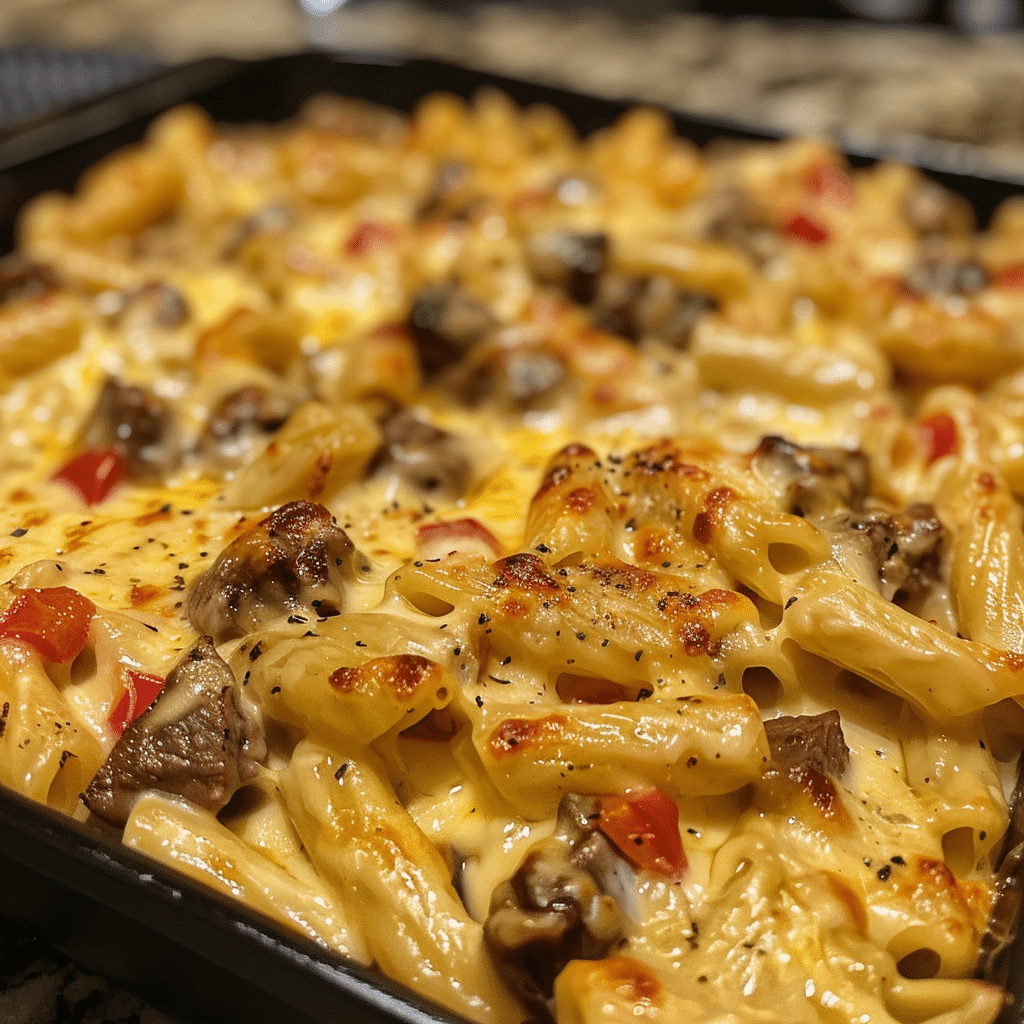
The sizzle of seared chuck steak unfolding its smoky richness followed by the scrappy crunch of toasted chili powder. This is not your grandmother’s macaroni and cheese—this is temple-worthy comfort food where fire-kissed meat meets molten, garlicky queso.
Medium shells are anchoring the chaos of textures: al dente chew, fatty rind of charred steak, and the silken, stretchy veil of pepper jack.
- Prep Time-15 min
- Cook Time-40 min
- Total Time-55 min
- Servings-6 generous bowls
- Difficulty-Intermediate
- Cuisine-Southwestern/US
Why This Recipe Works
Pepper jack’s aggressive bite cuts through the dairy’s sweetness better than aged cheddar ever could. The steak, seared to a deep mahogany, delivers umami in waves that amplify the cheese’s natural funk.
Molten garlic butter and fire-roasted chipotle form a matrix of heat that anchors the queso’s indulgence. This is not a passive dish—each element demands a role in the flavor drama.
Medium shells hold up to the queso’s viscosity better than elbow pasta, creating the illusion of a treacle cascade you can claw through with a knife. The unorthodox addition of briny pico adds necessary acidity without diluting the sauce’s cohesive power.
The Cultural Soul of Southwestern Queso Comfort
Queso has evolved from its humble Tex-Mex café origins into a canvas for smoky, deep-fried innovation. This version draws from both Los Angeles’s street-level Mexican tacos and the American obsession with cheese pull theatrics.
Pepper jack—a 1970s California invention—became the unexpected hero for thickening purposes when traditional cheeses failed to grip the steak’s robust character. The result? A modern hybrid that’s both rooted and rebellious.
While the dish borrows jalapeño cream sauce techniques from Czech cuisine, the use of coarse chipotle chili strips aligns more with Guatemalan habanero preparations. Fusion doesn’t always mean dumbing down—here, it means amplification.
The Elements of the Dish
- 1.5 lbs Skirt Steak: Choose USDA Choice for the right balance between tenderness and flavor depth. The long muscle fibers will break down into tender morsels when seared properly.
- 24 oz Medium Shell Pasta: The concave shape traps more queso per bite. Never use gluten-free shells—they lose their structural grip when submerged in dairy sauce.
- 8 oz Pepper Jack: Freshly grated cuts make the difference. Pre-shredded versions contain cellulose that inhibits a clean cheese pull.
- 12 oz Chunky Salsa Verde: Offers an acidic counterpoint to the creamy base. Avoid store-bought blends for better flavor clarity.
The Editor’s Guide to Sourcing
For the steak, look for marbling that threads through the muscle grain like a woven pattern rather than fat pockets. Dry-aged options at butcher shops often undercharge for premium cuts.
Chipotle chili powder—often overlooked in supermarkets—thrives in specialty spice shops. Opt for powders with visible whole seed fragments; these indicate freshness rather than industrial grinding.
The star grater? Use the largest holes for pepper jack, aiming for 1/8″ cubes that melt into glowing curds rather than a fluorescent paste. Undercooked pasta (al dente minus 30 seconds) is critical to absorb the queso without turning gummy.
The Step-by-Step Masterclass
Phase 1: Prime the Battlefield
Sear the steak in preheated cast iron until you hear a single crisp pop of moisture releasing at the surface. Deglaze with apple cider vinegar to lift charred residue—this becomes your flavor base.
Simmer frozen pasta in salted water while prepping the queso base. The residual heat will finish the cooking process for the cheese when combined later, eliminating the risk of clumping.
Phase 2: Garlic Butter Sauce
Add butter to clarified beef fat in same pan to create a lemongrass-yellow emulsion. Watch it thicken into a warm, stretchy consistency by whisking constantly—this acts as a pre-emulsifier before cheese addition.
Phase 3: The Cheese Transfer
Under low heat, add cheese cubes in batches. Each addition should absorb into the previous layer before adding more. The final sauce should coat the pasta without clinging to tongs when lifted.
Phase 4: Plating Finish
Toss with jalapeño-studded queso first, then fold in cubed steak. The semi-cooked salsa acts as a blunt knife in cutting through the richness, adding the perfect jolt of acidity at the final stage.
The Kitchen Science
The Maillard reaction working on red meat generates hundreds of flavor compounds that anchor the cheese’s subtler notes. At 300°F, aldertalans in the butter begin to caramelize, mimicking caramel’s sweetness through a savory vehicle.
Emulsification occurs when the fat-soluble cheese proteins bind with the evenly dispersed butter particles. This explains why sauces break—too much heat denatures proteins or uneven fat ratio.
The pasta itself becomes a vehicle for subsequent meals. As the starches expose more surfaces, they become better flavor sponges with each reheating cycle。
Pro-Level Secrets
- Finish steak with an acidic vinegar brine before grilling—adds gloss without altering flavor profile
- Use pasteurized mozzarella rind in queso for extra depth while maintaining stretch
- Chunk tapered steak pieces for even protein distribution
- Prep all cheese first—condensation ruins melting properties if left too long
- Add a pinch of greaseless baking soda to immobile queso
- Rest pasta under cheese before serving allows fats to soak into the noodles
Common Mistakes to Avoid
| Problem | Why It Matters | Solution |
| Overcooked pasta | Becomes a gluey texture trap for moisture | Undercook by 60 seconds |
| High heat for queso | Denatures casein proteins | Maintain 160°F maximum |
Creative Adaptations
| Substitution | Impact Statement |
|---|---|
| Queso fresco | Lost stretch but gained brininess |
| Ground beef | Easier but lacks steak’s texture |
Plating & Pairing
For ambiance, serve in white ceramic bowls under minimalist lighting. Distribute jalapeño chunks irregularly across the plate to maximize visual contrast. Pair with horchata, which bridges the spiciness with a nutty milk finish.
Crusty sourdough acts as both a side and flavor amplifier—its resistant crust mimics mature cheese structure, allowing it to handle aggressive queso viscosity without becoming soggy.
Preservation Guide
| Storage Type | Duration | Reheating Method |
| Fridge | 3-4 days | Low simmer in oven |
Questions from Our Kitchen
Can I freeze this dish?
Absolutely—the cheese proteins actually recrystallize better after freezing. Thaw in refrigerator overnight followed by stovetop reactivation preserves texture integrity.
Why not use Monterey Jack instead?
Pepper jack has natural elasticity absent in plain Monterey. The pepper content isn’t just for show—it actually affects the protein network formation during melting.
Can I use gluten-free shells?
Avoid unless pressed. Gluten structures the pasta’s ability to grip and retain cheese emulsion without absorbing excess moisture from the queso base.
What if the queso breaks?
Don’t panic! Slowly add a few tablespoons of milk while stirring gently at 165°F. The emulsion will restore—faster execution matters more than adding flour.
Should I toast the chili powder first?
Absolutely critical. Raw chili powder will introduce vegetal bitterness. Use 2 tbsp unsalted butter in a dry pan heated slowly for this magic moment.
Creamy Steak Queso Mac with Pepper Jack isn’t just a meal—it’s a sensory event. With its perfect marriage of fire and function, its soul is the kind of bold flavor that turns leftovers into ritual. The keys are your widest grater and your thickest steak appliances. Now, go make this convivial monument to cheesy engineering.
Print
Creamy Steak Queso Mac with Pepper Jack
- Total Time: 55
- Yield: 6 generous bowls 1x
- Diet: Non-Vegetarian
Description
Indulge in smoky, charred skirt steak and a rich, garlicky queso sauce made with pepper jack, tossed with medium shells for ultimate comfort in every bite of this Southwestern fusion masterpiece.
Ingredients
1.5 lbs USDA Choice Skirt Steak
24 oz Medium Shell Pasta
8 oz Pepper Jack Cheese (freshly grated)
12 oz Chunky Salsa Verde
4 tbsp Garlic Butter
2 tbsp Toasted Chili Powder
1 tbsp Fire-Roasted Chipotle puree
1 tsp Coarse Salt, or to taste
1 tsp Black Pepper, freshly ground
1/2 tsp Ground Cumin
Instructions
Preheat oven to 350°F (175°C)
Pat skirt steak dry, season generously with coarse salt and black pepper
Heat 2 tbsp of garlic butter in oven-safe skillet over high heat. Sear steak for 4-5 minutes per side until deeply charred and medium-rare. Remove from pan and let rest for 5 minutes, then slice into strips
Bring a large pot of well-salted water to a boil. Cook pasta to al dente according to package instructions, then drain and set aside
In the same skillet, sauté 2 tbsp of garlic butter over medium heat. Stir in chili powder, chipotle puree, and cumin. Cook for 2 minutes until fragrant
Add half of the grated pepper jack to the pan; whisk until melted into a smooth sauce. Add salsa verde and remaining cheese to create a thick, stretchy queso
Pour cooked pasta into the queso mixture and toss well to coat
Fold in seared steak slices and any juices
Transfer pasta and steak mixture to a baking dish. Garnish with a thin layer of remaining cheese
Bake for 20 minutes until golden and bubbly on top
Let stand 10 minutes before serving
Notes
Avoid using gluten-free pasta; it won’t hold up to the sauce
Use freshly grated pepper jack for the best cheese pull and texture
For extra flavor, allow queso to simmer 10 minutes on stove before baking
Pico de gallo or avocado makes an excellent topping
Store leftovers in an airtight container in refrigerator for up to 3 days
- Prep Time: 15
- Cook Time: 40
- Category: Dinner
- Method: Stovetop and Baking
- Cuisine: Southwestern/US
Nutrition
- Serving Size: 1 bowl
- Calories: 580
- Sugar: 4g
- Sodium: 850mg
- Fat: 32g
- Saturated Fat: 19g
- Carbohydrates: 35g
- Fiber: 2g
- Protein: 35g
- Cholesterol: 120mg