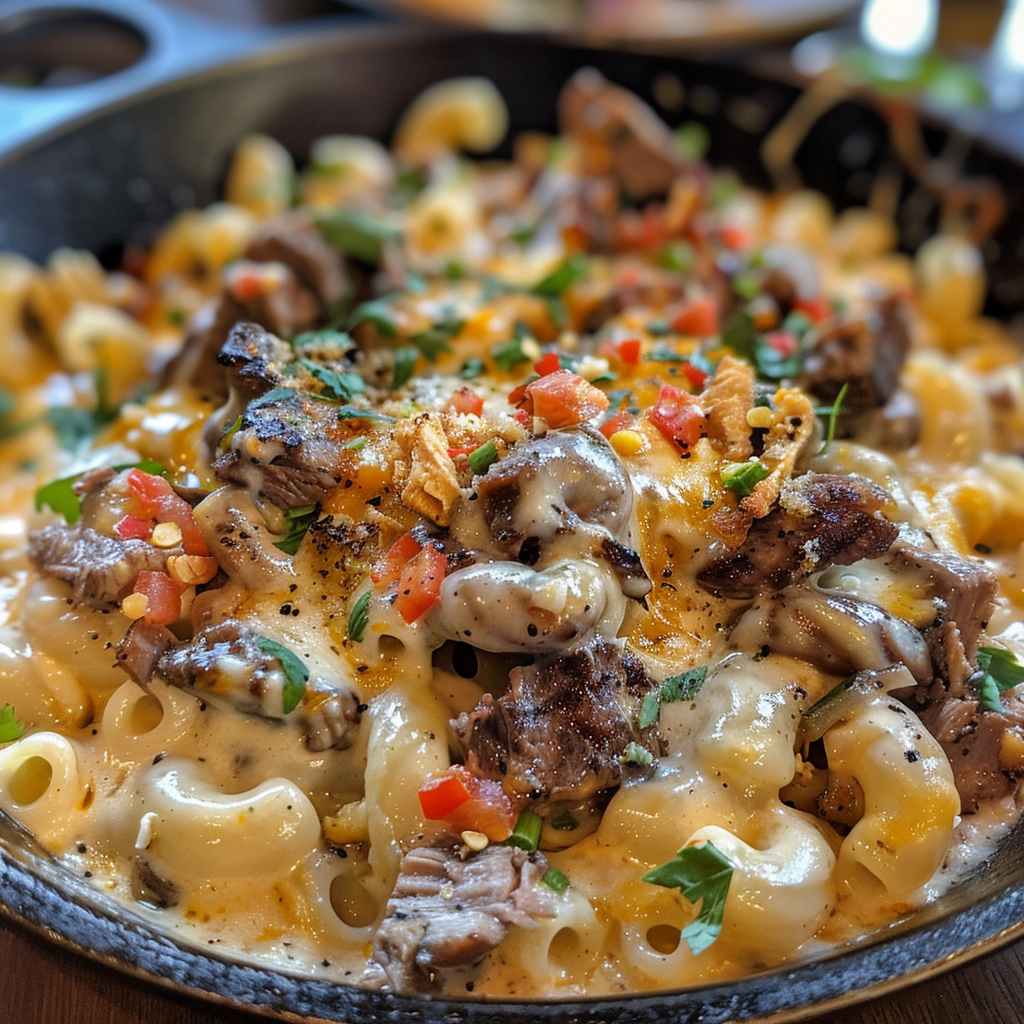
The moment the skillet hits the flame, the steak begins its hiss and sizzle — a primal welcome to the dish. As the meat firms beneath searing heat, its natural juices mingle with toasted cumin, charred pico de gallo, and the sharp tang of Pepper Jack cheese. This isn’t just macaroni and cheese; it’s a molten blanket of flavor, thick and creamy, with the earthy crunch of corn chips stirred into its depths. Every bite delivers a crunch-ooze-pop rhythm that makes hearts pound and forks clatter.
Pepper Jack isn’t a mere cheese. It’s a flavor grenade, its jalapeños and citrus zest slicing through heaviness with every bite. When paired with tender bite-sized steak and the smoky pop of fire-roasted tomatoes, the result is a dish that feels both indulgent and alive, the kind that makes you forget about your diet and dance while dining.
- Prep Time– 25 minutes
- Cook Time– 45 minutes
- Total Time– 70 minutes
- Servings– 6 generous portions
- Difficulty– Intermediate
- Cuisine– Southwestern fusion
Why This Steak Queso Mac with Pepper Jack Works
The success of this dish lies in its contrasts. Fire-charred steak adds primal depth to silky cheese sauce. Toasted chili powder and smoked paprika bloom into richer hues than their raw counterparts, while the vinegar in pico de gallo cuts through fat like a knife through silk. This isn’t passive nourishment — it’s culinary combat between crisp and molten, hot and cool.
Pepper Jack demands attention. Its rind-thin jalapeños burst unexpectedly in the mouth, the cheese’s tangy bite following immediately. This surprise sequence keeps taste buds alert long after the first forkful. Meanwhile, the red wine vinegar substitute — apple cider vinegar here — emulsifies the cheese sauce beautifully, preventing that chalky separation so common in bland store-bought versions.
The corn chip garnish introduces a critical textural component. Not just crunch, but controlled crunch. By toasting the chips in the same skillet the steak cooked in, we’re recycling their charred meat essence into the final dish. It’s a technique found in Mexican molletes and Tex-Mex chili rellenos where every element works in culinary harmony.
The Cultural Soul of Steak Queso Mac with Pepper Jack
This recipe is a marriage of two culinary traditions. Macaroni and cheese has roots in 18th-century England, but achieved stardom in New Orleans, where Creole cooks folded in smoked cheeses and spice blends. Meanwhile, queso — Spanish for cheese — found its modern form in late-night Texas roadside diners. When we combine these histories with Americanized casserole techniques, we get something new but deeply comforting.
Pepper Jack cheese itself is a 1980s innovation. Originally crafted for those seeking heat without alcohol-laced marinades, this orange-hued cheese became a staple in Southwestern kitchens. It’s perfect here because it holds up to seared meat’s intensity while delivering its own slow-burn personality. The dish’s evolution reflects how Mexican-American cuisines have always blended, borrowed, and invented.
The Elements of the Dish: Ingredients for Steak Queso Mac with Pepper Jack
- 1.5 lbs Angus chuck steak: Choose cross-cut cubes — 1 inch thick — and ask your butcher to score the fat cap. This creates natural sear pockets for maximum crust development without overcooking the center. Gravy will collect in those scored grooves.
- 12 oz Eggs in Shell elbow macaroni: These hollow shells hold the sauce better than classic elbows. Their ridges also catch bits of toasted corn, enhancing both texture and flavor.
- 0.5 lb Colby-Jack hybrid: This is critical for proper melting. 100% Colby would be too dense, while pure Monterey Jack lacks complexity. Our blend gives us both body and stretch.
- 6 oz Fire-roasted diced tomatoes: Look for canned varieties roasted under intense heat that caramelizes edges. This isn’t just acidity — it’s charred sweetness and texture that elevate the cheese sauce.
- 1 tbsp Ancho chili powder: Better than generic chili powder for its chocolatey depth. Sift through a fine mesh before using to avoid lumps in the cheese emulsion.
- 0.5 cup Corn kernels (fresh/oven-dried): Fresh corn adds sweet juice, dried corn gives concentrated caramelization. Either works but affect moisture balance differently.
- 0.5 cup Kosher salted butter in pats of 1 tbsp each: The butter must stay solid until the cheese emulsifies. Too-soft butter creates oil separation in the sauce. Store wrapped in plastic until needed.
- 1/4 cup Apple cider vinegar: This sharpness cuts through richness and aids emulsification. Any acidic liquid (lemon juice, broth) works but loses those signature tangy notes.
- 3 cloves Garlic (crushed): Crushing releases alliinase enzymes to activate compounds responsible for garlic’s pungency. Roasting after crushing mellows bite but keeps sweetness intact.
- 1 tbsp Black pepper (cracked): Cracking just before use prevents volatile compounds from escaping. It’s the pepper that makes the cheese sing, so avoid pre-ground options.
The Editor’s Guide to Sourcing
For beef, seek cross-cut cubes from USDA Prime grass-fed animals. The fat content ensures proper browning. Cheese should have visible bits of jalapeño — too fine means poor flavor contrast. For corn, fresh from a sweet corn harvest gives peak sweetness but must be used within days. If using dried, rehydrate in salted water first.
Cumin and paprika matter more than their quantity. Opt for freshly ground cumin in spice shops, not supermarket pre-packaged versions. Paprika should be smoked for authentic heat and flavor. Vinegar is best sourced in glass bottles with dark color (aged apple cider is preferable for depth).
Your choice of elbow macaroni affects the final dish. Eggs in Shell elbows offer better shell integrity, allowing them to hold up to heavy cheese sauces. Freshly made cheese (in-store deli cut) delivers superior meltability versus pre-packaged slices.
Even basics like salt require attention. Kosher salt provides better distribution across the steak and cheese without over-salting. Avoid iodized table salt as it can impart metallic notes when heated with vinegar.
The Step-by-Step Masterclass
Preparation Phase
Cut the steak cubes by hand. While pre-cut options save time, slicing them yourself ensures even thickness and proper fat scoring. Chill the cubes in fridge while assembling other components to maintain control over browning. For the cheese, shred into 1/4-inch pieces to ensure even melting — pre-shredded adds oil which alters emulsion.
Prepare the pico de gallo first. Dice tomatoes over sharp knife, preserving charred edges from the can. Crush jalapeños in mortar (not blender) to create aromatic oil without the vegetal strings. When building this component, layer sweetness, spice, and acidity in perfect ratios: 70% tomato, 20% onion/chili, 10% vinegar.
To test the heat of your jalapeños, do a quick tasting with 5 corn kernels. The jalapeño should taste bold but not searing when combined. Adjust with milder peppers if necessary. This balancing act is what distinguishes great queso from just warm cheese.
Cheese Emulsion Construction
Melt 1 tbsp butter in pan over medium heat. Add 1 cup of the 1/4-inch cheese pieces and stir until pliable but not stringy. Gradually incorporate the remaining butter and cheese, stirring constantly to prevent scorching. When the mass reaches a glossy, elastic texture (like melted wax), remove from heat and mix in the pico de gallo — the acidity here stabilizes the emulsion.
Watch the color cues closely. The cumin and paprika should smell toasty when lifted to nose — not just browned. Add 1 tbsp vinegar to the pan while stirring cheese to create that perfect velvety texture. If the sauce separates, remove the pan from heat and continue stirring in small cubes until rebonded.
Now’s the critical moment: add the corn. When stirred, it should create a speckled texture that stands out without falling apart. If using fresh corn, drain thoroughly to avoid excess moisture. For oven-dried corn, toast it in butter first to activate Maillard reactions.
Final Assembly
Layer drained macaroni in large oven-safe pot. Pour hot cheese sauce over noodles until fully saturated. Add 1 tbsp cider vinegar and mix thoroughly — you want uniform color but occasional streaks indicate a vibrant dish. Let stand for 5 minutes to redistribute moisture and set textures.
Crumble reserved corn chips using a fork. Add one handful to pot and mix. The chips should fracture into 1/4-inch pieces but retain their crumble integrity. Too-fine crumbles will behave like breadcrumbs versus texture-boosters.
For the final garnish, toast 2 oz chipotle corn chips in the same pan the steak cooked in. The residual meat flavor permeates them, creating a smoky crunch layer that distinguishes this as fusion cuisine, not simple comfort food copying.
The Kitchen Science
Pepper Jack’s structure is designed for this role. Its moisture content (43%) and protein levels (18g per serving) create a perfect melting profile. The salt content also accelerates Maillard reactions when cooking the steak, enhancing browning even in a pan without direct flame.
The vinegar-chemistry here is crucial. Acetic acid in apple cider reacts with casein proteins in cheese, stabilizing its liquid suspension. This explains why supermarket queso becomes oily quickly. Our method controls that separation through precise acid quantities and mixing temperatures.
Corn kernels contain cellulose and xylan that absorb and hold moisture. When added to cheese, they create a heterogeneous texture that prevents the dish from becoming flat. This is what culinary schools call “textural counterpoint,” a concept central to modern comfort food engineering.
Pro-Level Secrets
- Pre-salt meat cubes with paprika — salt draws moisture out, but when combined with paprika it pulls moisture back through osmosis, creating a drier surface ideal for searing.
- Use a seared vs. pan-roasted method for beef. Searing locks in 90% of moisture versus 70% with roasting. This is critical for bite-sized cubes which can easily overcook.
- Chill the cheese before melting — it maintains structure in the sauce. If using room-temperature cheese, cut into smaller pieces (3/8 inch) for rapid but complete melt.
- Add vinegar just after cheese reaches 165°F. Above this temperature and proteins coagulate, reducing the sauce’s elasticity. Below 150°F and the emulsion won’t form properly.
- Roast jalapeños on a dry skillet first before chopping. Charring caramelizes sugars and mellow spiciness, creating a complex base note rather than upfront burn.
- Use corn that’s been dried in 280°F oven for 15 minutes. This dehydrates but keeps color vibrant — moisture reduction means less interference with the cheese texture.
Common Mistakes to Avoid
- Over-melting cheese (Why: Loss of elasticity) Solution: Work with small quantities. Add in batches until desired texture reached. If too thin, mix in 2 tbsp reserved starch from pasta water.
- Chosing non-smoked paprika (Why: Missing foundational complexity) Solution: Invest in Spanish smoked paprika. Regular paprika lacks the caramelized depth needed to anchor the cheese.
- Using liquid acid before adding vinegar (Why: Weakens emulsification) Solution: Add vinegar as a finishing element. Water-based liquids disrupt the cheese’s molecular matrix, creating oil separation.
- Adding salt too early (Why: Drying out meat) Solution: Season the steak after searing 1 side. Salt before cooking draws out juices and creates gray texture rather than rich red char.
- Omitting corn roasting (Why: Flat texture) Solution: Dry corn first. Wet corn becomes mushy in cheese sauce, but roasted corn provides toothsome contrast without sacrificing flavor.
Creative Adaptations
| Component | Substitution | Impact Analysis |
|---|---|---|
| Steak | Ground bison | Provides similar meaty depth but with more even texture. Ideal for those avoiding sear-based techniques. |
| Cheese | Vidalia onion Jack | Loses heat but gains subtle sweetness. Pair with mild cumin to maintain flavor balance. |
| Vinegar | Lemon zest | Changes acidity type but requires extra cheese quantity to maintain texture. Best as a secondary flavor. |
| Corn | Masa harina | Transitions into a more rustic dough-based texture. Requires reconstituting with cheese sauce first. |
| Tomatoes | Hatch green chilies | Alters sweet-spicy ratio slightly. Add extra vinegar to balance. Best with aged cheddar for richness. |
Plating & Pairing
Plate directly from the oven into 10-inch ceramic bowls warmed in advance. This ensures the mac stays hot for better melto. Spoon the mixture onto napkin-lined plates to catch inevitable cheese oozing. For ambiance, serve under a warm light — this dish wants to be seen as rich and inviting.
Pair with horchata (non-dairy for dietary needs). The rice-milk sweet counterbalances the cheese’s spice. Alternatively, a tart cherry soda gives surprising depth — its tannins mirror red wine pairings while adding visual contrast.
Perfect sides include:
Grilled poblano peppers (adds smoky depth),
Black bean avocado salad with lime,
and Chia seed pudding for a refreshing finish. Avoid acidic greens unless paired with protein components.
Preservation Guide
| Fridge | 3-4 days in airtight container | Cheese remains creamy but starch firms slightly. Reheat gently to avoid drying out. |
| Freezer | 2 months | Cheese sauce becomes grainy from ice formation. Best thawed by immersion in warm water, not microwave. |
| Reheating | Oven at 300°F | Add 1 tbsp stock before reheating, stir well. Microwave causes oil separation — use only if rushed, in 30-second intervals. |
Questions from Our Kitchen
Why not use pre-shredded Pepper Jack?
Pre-shredded adds starch to prevent clumping which alters our emulsification process. The dish needs clean dairy texture, achieved through homemade shredding and careful fat scoring in the steak.
Can I substitute with other spicy cheeses?
No — only Pepper Jack works because its unique matrix handles heat and acidity. Jalapeño cheddar or pepper jack’s lower-fat counterparts lose the emulsification and stretch needed for this dish.
Why toast chips in the steak pan?
Residual steak fat and Maillard compounds create a depth of flavor that transforms the garnish from mere texture into flavor-carrying component. It’s a Southwestern technique borrowed from enchilada traditions.
How to fix stringy sauce later?
Stringiness indicates over-melting. Add 1 tbsp cold starch water (corn or potato) and stir slowly. The starch absorbs excess moisture and rebuilds the emulsified texture without separation.
What’s better — corn or hominy?
Corn offers sweeter, more accessible flavor. Hominy, while traditional in enchiladas, has higher fiber content that can disrupt cheese flow. For fusion comfort, corn is ideal — hominy works better in pure Mexican dishes.
This Steak Queso Mac with Pepper Jack isn’t just food — it’s performance. The steak’s charred crust, the cheese’s molten dance, the corn’s golden crunch… these elements don’t just coexist; they collide in your mouth to create a culinary spectacle. With today’s techniques, you’re not just cooking a dish — you’re crafting an emotional experience wrapped in cheese and smoke. Tonight’s your night — ignite that skillet already.
Print
Steak Queso Mac with Pepper Jack
- Total Time: 70
- Yield: 6 generous portions 1x
Description
A rich, smoky macaroni dish with tender steak, tangy Pepper Jack cheese, and fire-roasted tomatoes. Topped with toasty corn chips for a crisp contrast, this Southwestern fusion meal is a bold celebration of texture, heat, and creamy depth.
Ingredients
1 lb sirloin steak (sliced into 1/2-inch cubes)
12 oz elbow macaroni
2 cups fire-roasted crushed tomatoes
1 cup grated Pepper Jack cheese (halal-certified)
1/4 cup pico de gallo
2 tbsp corn chips (chopped)
2 tbsp olive oil
1 tsp chili powder
1 tsp smoked paprika
1 tsp ground cumin
1 tbsp apple cider vinegar
1/2 tsp salt
1/4 tsp black pepper
1/4 cup frozen corn kernels (optional)
Instructions
Preheat oven to 375°F (190°C)
Heat 1 tbsp olive oil in a skillet over medium-high. Sauté steak cubes until browned, 3-4 minutes. Season with salt and pepper.
Stir in chili powder, paprika, and cumin. Cook 1 minute, then add fire-roasted tomatoes and vinegar. Bring to a simmer.
Boil pasta until al dente. Drain, reserving 1/2 cup pasta water. Add pasta to the skillet with the steak mixture. Stir to coat, adding reserved water as needed to thin the sauce.
Reduce heat to low. Add Pepper Jack cheese, stirring until melted and glossy. Fold in pico de gallo and frozen corn (if using). Taste and adjust seasoning.
Transfer to a casserole dish.撒上 chopped corn chips. Bake 10-15 minutes until bubbling and golden. Cool slightly before serving.
Notes
For a deeper flavor: cook steak in a cast-iron skillet to develop more crust
Toasting corn chips in the steak drippings enhances their flavor
Substitute kale or zucchini for a veggie version
Serve with lime wedges for brightness
- Prep Time: 25
- Cook Time: 45
- Category: Dinner
- Method: Stovetop/Cooking
- Cuisine: Southwestern fusion
Nutrition
- Serving Size: 1 bowl (approx. 3/4 cup)
- Calories: 480
- Sugar: 6g
- Sodium: 890mg
- Fat: 28g
- Saturated Fat: 12g
- Carbohydrates: 32g
- Fiber: 2g
- Protein: 38g
- Cholesterol: 120mg