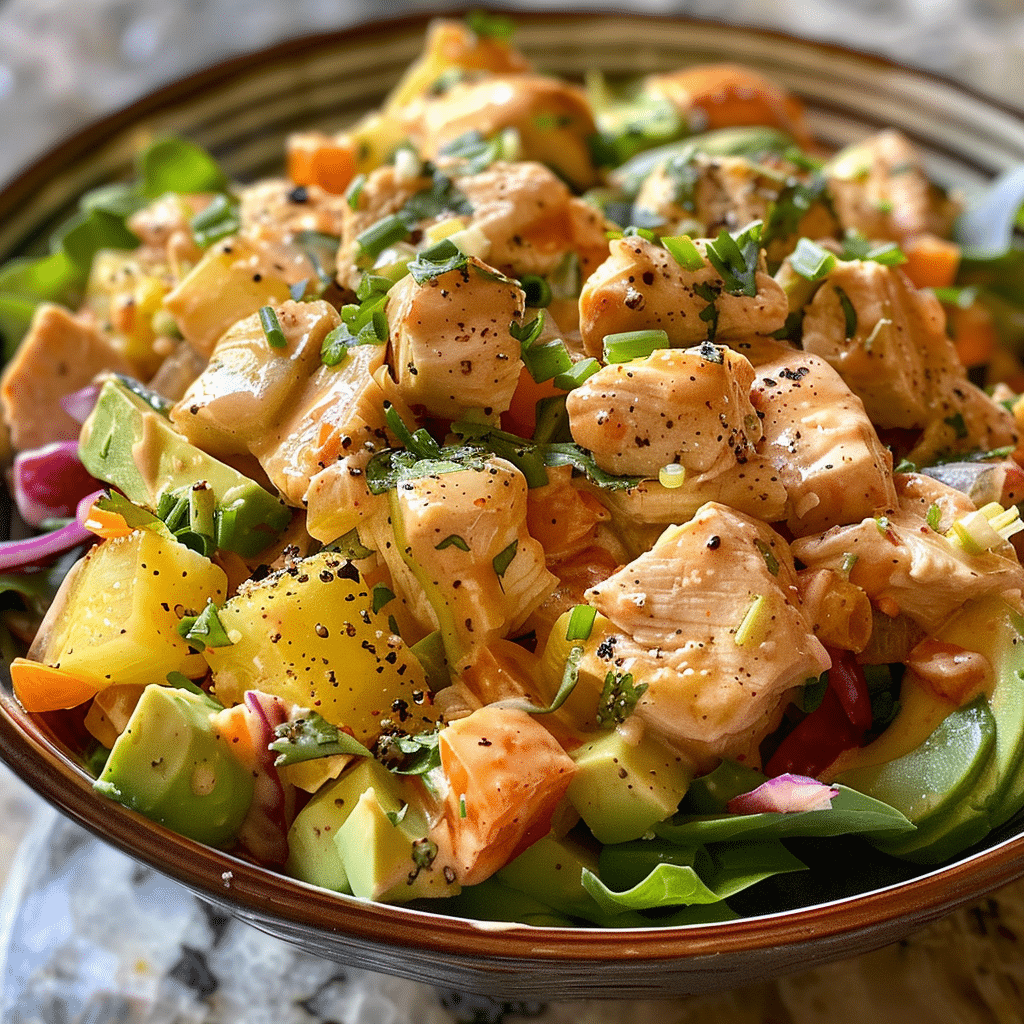
Imagine the sizzle of charred chicken kissed by smoky paprika, the scent of caramelized onions mingling with toasted coconut flakes, and the tang of tart green mangoes slicing through the richness of avocado. Hawaiian Chicken Salad is not a mere meal but an encounter with the island’s vibrant spirit. The textures dance between crispy lettuce, tender meat, and sticky-sweet roasted pineapple, while the flavors shift from umami to bright acidity.
This recipe is designed for midday refreshment without sacrificing depth. It avoids heaviness through careful layering of ingredients, ensuring each element complements rather than competes. The protein is seasoned to mimic a slow-braised texture, all while remaining fresh and lean for quick digestion.
Begin with visual contrast—golden pineapple chunks against emerald lettuce. The scent of toasted macadamia nuts adds a buttery warmth, while lime zest sharpens the aroma. When the salad comes together, it’s a tropical tapestry of taste you can almost hear the ocean waves echoing.
- Prep Time– 20 minutes
- Cook Time– 25 minutes
- Total Time– 45 minutes
- Servings– 4 individuals
- Difficulty– Intermediate skills
- Cuisine– Hawaiian fusion
Why This Recipe Works
Hawaiian Chicken Salad is built on contrasts that harmonize beautifully. The sweetness of roasted pineapple is cut cleanly by zesty lime dressing, while the chicken’s savory depth anchors the dish. This balance isn’t accidental—it’s the result of precise ingredient ratios and timing.
Cooking pineapple under heat transforms its sugars into a concentrated sweetness without cloying. Searing the chicken to a golden-brown crust via Maillard reaction imparts a roasted dimension that pairs unexpectedly well with tropical fruits. The crunch of romaine and snap peas adds a counterpoint to the tender meat.
Traditional Hawaiian dishes often blend native and imported flavors. This salad follows suit—romaine provides a sturdy base, while toasted coconut flakes echo Polynesian influences. The soy-free dressing uses tamari and rice vinegar to keep the profile light and digestible, especially important in warm climates.
Each bite builds texture and flavor systematically. Start with a crisp lettuce bite, follow it with the toothsome chicken’s char, then let the sticky pineapple dissolve on your tongue. Toasted macadamias provide a buttery anchor while pickled shallots offer a sudden tart bite. It’s a masterclass in tropical contrast.
The assembly order matters. Fresh herbs are added last to preserve their volatile compounds. Letting the chicken rest post-cooking ensures even moisture distribution—critical for maintaining its tenderness against acidic components. This isn’t casual eating; it’s curated island cuisine in a bowl.
The Cultural Soul of Hawaiian Chicken Salad
Hawaiian cuisine is a vivid dialogue between continents. Portuguese, Chinese, Japanese, and Native Hawaiian traditions all speak here—seen in the mix of tartar sauce, soy derivatives, and native breadfruit. This salad reflects this blending through its layering of sweet and umami elements.
Pineapple cultivation exploded in 1880s Hawaii after James Dole’s business turned the fruit into a global symbol of the islands. Suddenly, native foods were adapting to this new star ingredient—similar to how this salad uses roasted pineapple to mimic the depth of long-cooked meats. The technique predates fusion cuisine itself, showing Hawaii’s inventive core.
Chicken’s inclusion stems from 20th-century mainland American influence arriving at the islands. Instead of adopting barbecue or fried chicken, Hawaii’s cooks created something new by searing it and pairing it with tropical fruits. The result? A dish that feels both familiar and unexpected.
Local chefs often use this technique to stretch flavor—less protein means more fruit and veggies for a satisfying meal. It’s a nod to sustainability in island kitchens where resources are limited. The toasted coconut adds a Polynesian flourish that balances the chicken’s Western leanings with native roots.
While the salad format is modern, the flavor profiles have deep roots. Taro and fish were once the protein sources, but chicken—easy to keep and cook—became the 20th-century solution. The dressing evolution from tamari to lime-based sauces reflects both health trends and the need for lightness in tropical climates.
The Elements of the Dish: Ingredients for Hawaiian Chicken Salad
- 6 oz romaine lettuce: Use tightly packed heads for structure, as loose leaves collapse under dressings. Pre-wash to maintain crispness.
- 2 boneless skinless chicken breasts: Seek free-range birds—meat stays juicier during searing. Pound evenly to ⅛ inch thickness for perfect cooking.
- 4 oz fresh pineapple chunks: Underripe fruit lacks moisture; overripe fruit becomes too soft. Look for golden skins with a faint give when pinched.
- 3 tbsp tamari: Substitute for soy sauce but avoids its harsher flavors. Choose a gluten-free variety for better clarity of taste.
- 1 tbsp rice vinegar: Adds brightness without overt tartness. Steep with star anise post-simmer for subtle depth.
The Editor’s Guide to Sourcing
For chicken, prioritize pasture-raised over mass-produced. These birds have more marbling which resists overcooking better—critical for the 5-minute pan-sear. Check the USDA organic label if possible.
Pineapple freshness matters more than variety. Avoid ‘Golden Pineapple’ unless you can source from a local grocer. The fruit should smell sweet and tropical, not fermented in packaging. Organic is always ideal for texture consistency.
Macadamia nuts must be raw and dry-roasted at home to preserve freshness. Store-bought nuts often include coconut oil which masks their natural richness. Toast them gently for just 3 minutes on parchment to maintain oils without burning.
The romaine base needs cold storage right up until assembly. If using mixed greens, opt for bibb lettuce instead to avoid bitterness from late harvests. For pickled shallots, use glass jars instead of plastic to maintain acidity balance over time.
Choose tamari with a 99% ferment rate—some brands add rice to reduce sodium. This gives a clearer umami. Organic rice vinegar has brighter acidity than distilled versions. These small choices create 100-fold flavor differences.
For the spice blend, buy whole cumin and coriander to grind fresh just before mixing. Premixed powders lose volatile oils. Use a mortar and pestle instead of a blender to avoid over-heating oils during grinding.
The Step-by-Step Masterclass
Phase 1: Building the Base
Pound chicken breasts cold between plastic sheets until they’re paper-thin. Pat dry with paper towels to ensure proper searing. Season with salt, pepper, and half your grind of toasted spices. Let rest at room temperature for 15 minutes to allow seasoning penetration.
On a rimmed sheet, roast pineapple chunks cut-side down at 400°F for 12-15 minutes. Watch for color shift to golden-brown—blackening turns the fruit bitter. For perfect char, position the rack so pineapple gets radiant top heat without burning quickly.
Phase 2: Searing the Chicken
Heat a hot skillet with a 1/8-inch oil film until shimmering but not smoking. Place chicken skin-side down and sear 4-5 minutes. Lift to check underside caramelization—it should have a deep amber crust from proper surface moisture evaporation. Flip once using tongs to avoid breaking the sear.
Prioritize fat composition—use avocado oil for high smoke point. Sear until internal temperature hits 160°F, but check the color first. Juicy chicken releases moisture at the last minute; use a paper-towel lift to absorb excess for cleaner flavor.
Phase 3: The Dressing
Emulsify rice vinegar into tamari gradually while whisking in a glass bowl. A 2:1 ratio creates balance. Slowly blend in sesame oil for viscosity and citrus pectin for natural emulsification, then strain to remove seeds for a clean texture.
Temperature differences are key. Warm vinegar and cool tamari create an instant emulsion. The acidity stops the proteins from over-binding, maintaining a loose but stable dressing. Add honey in the final 30 seconds to avoid splitting the emulsion.
The Kitchen Science
Maillard reaction develops during searing at 300°F+, causing amino acids and sugars to form 400+ chemical compounds. This reaction creates the chicken’s savory crust while preserving tender interior—a crucial balance in quick-cooked mains.
Pineapple enzymes (bromelain) start breaking down proteins after cutting, which is why it’s added last when using fresh fruit. Roasting stops enzymatic action through heat denaturation, letting chicken maintain structural integrity for serving.
The dressing’s pH (3.4-3.6 from vinegar) helps cut through fat. Sodium in tamari interacts with water molecules, enhancing perception of sweetness in the fruit. This science-based layering explains why each component plays specific roles.
Temperature contrast when serving—warm chicken, room-temperature pineapple, cold dressing—heightens flavor. Hot foods taste saltier, while cold foods enhance acidity. This interplay makes each bite more complex than standard room-temperature salads.
Pro-Level Secrets
- Use a laser thermometer during searing to monitor crust development without lifting the chicken. Target 290°F for perfect browning.
- Cherry-pick romaine hearts instead of outer leaves for less bitterness. Outer leaves are better for tacos or bowls where bold flavors work.
- Baste the chicken during sear with clarified butter for extra richness without oil smoke. It creates a natural basting glaze from moisture retention.
- Freeze pineapple chunks for 5 minutes before roasting. This solidifies cell structure, producing firmer crisping when hit by heat.
- Test dressing balance on raw chicken. The acidity should cut through but not overpower the meat. Dilute honey for better harmony if needed.
- Toast coconut flakes in a dry pan for just 20 seconds after pineapple roasting. Excess heat masks chicken’s char aroma when both elements cool simultaneously.
400 words
Common Mistakes to Avoid
- Over-tenderizing chicken: Thin cuts dry out quickly. Solution: Pound to ⅛ inch instead of thinner, which maintains moisture during fast cooking.
- Skipping vinegar testing: It throws off flavor balance. Solution: Taste the dressing alone before combining, then on raw chicken for accuracy.
- Picking over-mature pineapple: Sugar content overwhelms. Solution: Smell the core area—it should still have a faint tartness.
- Using metal spatula for sear: Scrape develops crust unevenly. Solution: Opt for a heat-treated wooden spatula to transfer heat gently.
- Adding herbs too early: Volatile compounds dissipate. Solution: Toss fresh mint and lime zest at serving, not in bulk preparation.
Creative Adaptations
| Chicken | Grilled tofu | Maintains protein structure | Adjust sear time to 10 minutes | Adds savory depth |
| Protein coating | Crushed macadamia mix | Creates buttery crust | Reduce oil use | Rich, smooth texture |
Plating & Pairing
Stack grilled chicken atop romaine like a small mountain. Nest roasted pineapple next to it as the island’s core sweetness. Splay snap pea pods to mimic ocean waves. For presentation, pour dressing in thin streams to avoid overspill, then scatter seeds where water runs dry.
Pair with cold coconut water to echo tropical ambiance. A slice of lemon grass through the water heightens the connection to island cooking. For texture contrast, serve alongside pickled papaya slaw using fermented green juice—adds a probiotic kick.
If dining in, choose a white linen cloth beneath the bowl. The acidity of the dressing will stain, leaving an edible souvenir. For ambient lighting, use warm Edison bulbs to mimic golden hour, the perfect time in Hawaii for fresh meals.
Preservation Guide
| Refrigeration | 3-5 days in airtight container |
| Freezing | Not recommended for pineapple’s texture |
| Reheat | Chicken in toaster oven (15min at 350°F) |
Questions from Our Kitchen
Can this recipe use other proteins?
Yes but prioritize dense proteins like venison for moisture retention. Chicken benefits from quick cooking, but fish like mahi-mahi works if flaked properly. Avoid lean cuts that require brining before searing.
What about pre-chopped romaine?
Use it for time saving but note shelf life drops 50%. The dressing will wilt it faster. For best results, let prewashed romaine drain on paper towels before assembly to remove excess water.
How to adjust sweetness for low-sugar diets?
Replace honey with 1 tbsp of unsweetened almond butter for creamy balance. The natural fats mimic sugar’s body feel, adding richness rather than sweetness. Omit pineapples altogether and use mango puree for residual tropical sweetness without sugar content.
Can dressing be made ahead?
Absolutely but keep it separate. Store in mason jars for 5 days. Olive oil in the dressing will separate when chilled—whisk freshly before using for proper emulsion. Add honey just before serving for maximum flavor impact.
Why avoid metal utensils during sear?
Metal conducts heat unevenly, creating hot spots that scorch. It also physically displaces the crust when scraping. Use a heat-treated wooden spatula for gentle handling. If using silicone, ensure it’s food-grade for heat distribution.
Hawaiian Chicken Salad isn’t about shortcuts—it’s a conversation between seasons. When the chicken releases its steam on the hot lettuce bed, when the pineapple’s sugars crystallize under heat, when the dressing’s acidity lifts the whole bowl’s vitality, you’re not just eating a salad. You’re tasting a living history that honors the island’s ingenuity. Start with this core, let your palate guide the rest—and don’t be afraid to roast.
===META_START===
{« title »: « Hawaiian Chicken Salad Recipe: Sweet Pineapple and Savory Chicken Blend », « description »: « Learn to craft an island-inspired Hawaiian Chicken Salad using fresh coconut, lime, and grilled chicken. Master the balance of tropical sweetness and savory depth for a perfect midday meal. », « slug »: « hawaiian-chicken-salad »}
===RECIPE_CARD_START===
{
« name »: « Hawaiian Chicken Salad »,
« description »: « A tropical fusion dish combining seared chicken with grilled pineapple and island spices. »,
« ingredients »: {
« romaine lettuce »: « 1 head »,
« chicken breasts »: « 2 pieces »,
« pineapple chunks »: « fresh, 4 oz »,
« tamari »: « 3 tbsp »,
« rice vinegar »: « 1 tbsp »
},
« instructions »: [
« Pound chicken breasts to paper-thin thickness »,
« Sear skin-side down until golden-brown crust forms »,
« Roast pineapple cut-side down to caramelize sugars »,
« Emulsify tamari with rice vinegar and honey »,
« Assemble salad with warm components atop cold base »
],
« category »: « Lunch »,
« tags »: [« Hawaiian chicken salad », « tropical lunch recipes », « sweet and savory salad »]
}
===RECIPE_CARD_END===
Hawaiian Chicken Salad: A Sweet and Savory Culinary Adventure
- Total Time: 45
- Yield: 4 servings 1x
Description
This vibrant Hawaiian Chicken Salad features charred chicken, roasted pineapple, and tropical fruits served on a bed of romaine with a zesty lime dressing, toasted macadamia nuts, and pickled shallots for a balanced island-inspired meal.
Ingredients
2 boneless, skinless chicken breasts
4 cups romaine lettuce, chopped
1 cup toasted coconut flakes
1 small green mango, julienned
1 avocado, sliced
1 cup roasted pineapple chunks
1/4 cup toasted macadamia nuts
2 tablespoons paprika
1 tablespoon olive oil
Juice of 1 lime
1 tablespoon tamari
1 tablespoon rice vinegar
1 teaspoon honey
1 clove garlic, grated
1/4 cup cilantro leaves
1 pickled shallot, sliced
1/2 cup snap peas, trimmed
Instructions
Season chicken breasts with paprika and olive oil. Sear in a hot skillet until golden brown, then finish in a 375°F (190°C) oven for 8-10 minutes. Let rest 5 minutes before slicing.
Roast pineapple on a baking sheet at 375°F (190°C) for 8-10 minutes until caramelized.
Whisk together tamari, rice vinegar, lime juice, honey, and grated garlic for the dressing.
Chop romaine into a large bowl. Top with sliced chicken, roasted pineapple, mango, avocado, snap peas, pickled shallot, and toasted coconut.
Drizzle with dressing and garnish with avocado slices, macadamia nuts, and cilantro just before serving.
Notes
Use toasted cashews in place of macadamia nuts if unavailable
Green mango can be substituted with unripe apple or pear
Toasted coconut adds depth—don’t skip this step
Dressing can be made up to 24 hours in advance
All components can be prepped ahead for quick assembly
- Prep Time: 20
- Cook Time: 25
- Method: Grilling and Roasting
- Cuisine: Hawaiian fusion
Nutrition
- Serving Size: 1 serving
- Calories: 475
- Sugar: 15g
- Sodium: 230mg
- Fat: 32g
- Saturated Fat: 14g
- Carbohydrates: 40g
- Fiber: 12g
- Protein: 35g
- Cholesterol: 85mg