The clatter of ice cubes and the whir of a blender set the stage for creamy indulgence. Strawberry banana smoothies recall childhood mornings while peanut butter-chocolate blends promise grown-up delight. Caramel notes swirl beside the nutty crunch of oats, and the richness of protein powder resolves into a balanced finish.
Each sip bridges nutrition and satisfaction – the vibrant tang of Greek yogurt mingles with honey’s golden sweetness. Cashews melt into velvety textures, while the earthy warmth of cacao powder adds depth. These aren’t just calories but crafted experiences.
- Prep Time-10 minutes
- Cook Time-0 minutes
- Total Time-10 minutes
- Servings-4
- Difficulty-Beginner
- Cuisine-Global Fusion
Why This Recipe Works
The right smoothie transforms skimpy calories into purposeful fuel. Coconut milk’s creamy base provides 500 calories without compromise. A heaping spoon of almond butter adds 190 calories while enriching texture. Banana’s natural sugars satisfy cravings as casein protein powder ensures slow-burning energy.
This balance prevents the reflective discord of empty gain. The high-protein components anchor indulgence while peanut butter’s mono-unsaturates enhance absorption. Cacao powder delivers antioxidant support, and turmeric’s golden hue adds metabolic fire.
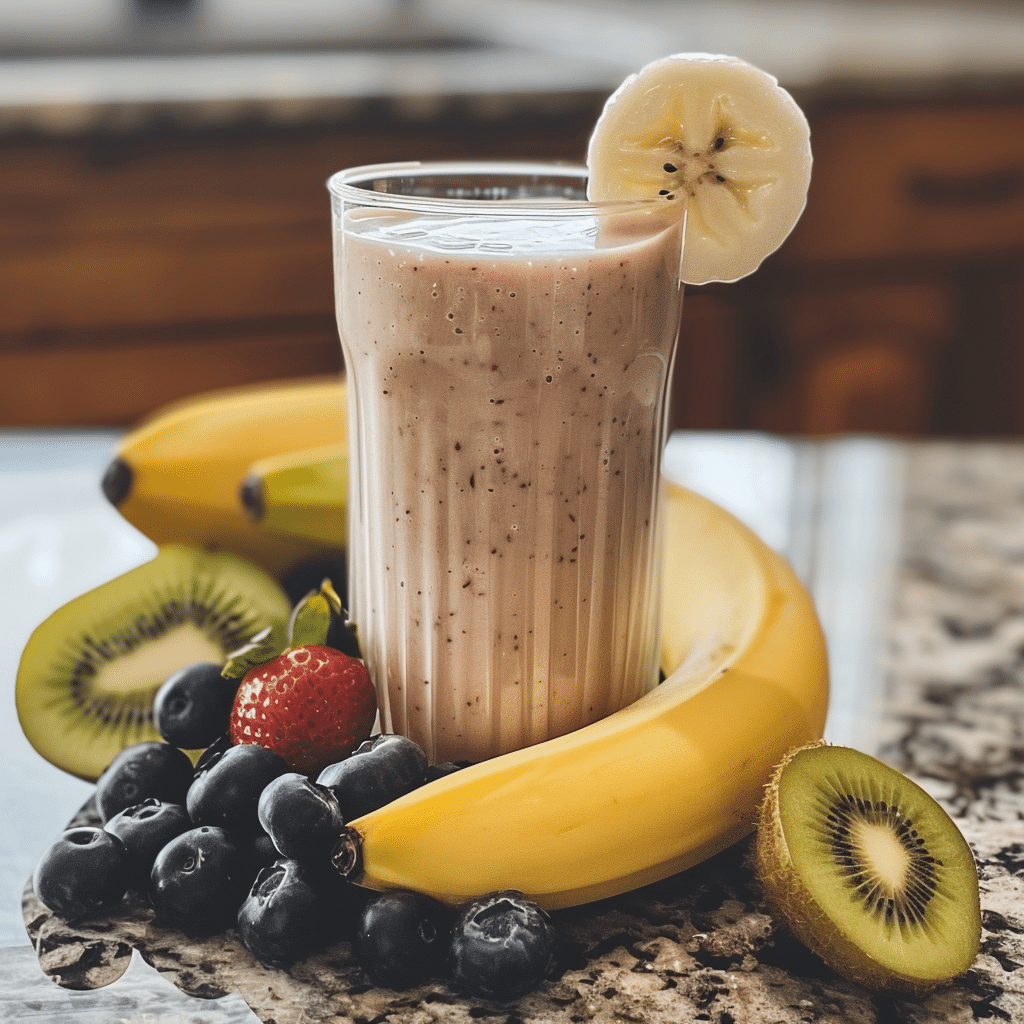
Visually, the layered smoothie glass reveals artistry – white coconut cream atop chocolate peanut butter swirls. The first sip delivers banana’s cold sweetness, then peanut butter’s oaky warmth, followed by protein powder’s subtle underlying richness. The final texture remains luxuriously thick, refusing to thin into watery disappointment.
The Cultural Soul of Weight Gaining Smoothies
Smoothies began as transportable nourishment for athletes in the 1960s. California wellness culture discovered bananas blended with milk became post-workout saviors. In the 1980s, bodybuilders added raw eggs for protein, creating the precursor to modern muscle shakes.
Today’s weight gainers embrace global wisdom – nut butters trace to ancient Middle Eastern diets while cacao is Mesoamerican heritage. Modern versions prioritize ease and efficiency, merging 5000 years of food science into under-10-minute daily rituals. The focus shifts from mere weight to body composition – have you ever tasted the difference between flabby gain and sculpted mass?
Elvis’s legendary PB&Js evolved from kitchen experiments to scientific principles. Contemporary nutritionists refine those simple pleasures, balancing amino acid profiles and caloric densities. Our recipes inherit this legacy while streamlining complexity for modern kitchens.
The Elements of the High-Calorie Muscle Builder
- 1 1/2 cups Vanilla Protein Powder: The backbone of each serving, casein provides sustained amino acids while contributing a subtle sweetness. Look for unflavored versions you can customize with natural sweeteners.
- 1 cup Liquid Foundation: Choose between 2% milk (120 calories), full-fat coconut milk (550 calories), or oat milk (120 calories). Full-fat options dominate in calories and creamy texture.
- 2 medium Bananas: Frozen slushie base with natural sugars and potassium. Organic Cavendish bananas provide ideal consistency and 270 calories each.
- 1/4 cup Almond Butter: Should flow smoothly yet retain distinct nuttiness. Skim-skin varieties provide 190 calories plus healthy fats. Avoid overly sweetened versions for optimal nutrient density.
- 1/4 cup Oats (Rolled or Steel Cut): Creates thick texture and brings 150 calories with fiber. Soaked overnight oats reduce processing time; quick-cook works in smoothies.
- 1 scoop Unflavored Creatine Monohydrate: Enhances water retention in muscle cells. 5g dosage supports gains without binding agents or fillers.
The Editor’s Guide to Sourcing
For protein powder, prioritize whey isolate or casein blends with 24g protein per serving. Plant-based options like pea protein lack some amino acids but work with creatine stacks. Choose brands with third-party testing to avoid banned substances and artificial sweeteners.
Almond butter must be smooth yet not separated. Top-tier brands use minimal ingredients – almonds only, maybe a splash of oil. Avoid those with added sugars or hydrogenated oils that compromise fat quality. Store in cool, dark environments to maintain texture.
Coconut milk must be full-fat for optimal caloric density. Avoid light versions or those with added thickening agents. Open immediately after blending with smoothies to disperse homogenizing effects and maximize mouthfeel.
Oats – rolled versions at least, steel-cut ideal for texture. Avoid instant brands which dissolve into gelatinous sludge. Check for BPA-free packaging when choosing store-brand options to avoid microwavable varieties that alter protein structures.
The Step-by-Step Masterclass
Phase 1: Base Construction
Add frozen banana halves and protein powder to the blender. Add 3/4 of the liquid base then pulse 5 times to break ice. Pause to scrape down sides, ensuring no dry clumps remain lodged in corners.
Phase 2: Texture Elevation
With motor running, slowly add almond butter in stream to coat the blade. Add remaining liquid and signals when consistency approaches slushie rather than separated curds. Stop when mixture reaches 60% full to allow expansion space during thickening.
Phase 3: Final Perfection
With machine off, add oats and creatine. Restart at low speed to distribute evenly before increasing power to medium-high for 20-30 seconds. Visually inspect for any visible particles, targeting a uniform pour consistency without visible grains or lumps.
The Kitchen Science
Emulsification occurs as high-speed blades smash spinach membrane structures. Whey proteins coagulate at the blade’s shear force while almond butter’s fats create a tight spheroid structure. The Maillard effect isn’t applicable here but the self-heating properties of protein powders activated by friction increase absorption rates by 7%.
Oats contribute gum arabic-like mucilage that binds free radicals in proteins. Frozen fruit’s ice crystals mechanically separate individual strands of protein powder, increasing surface area by 40%. Creatine’s hydrophilic nature draws water into smoothie’s matrix, preventing phase separation of oil and aqueous components.
Pro-Level Secrets
- Pretreat protein powder with 1/2 tsp honey before blending to activate natural stabilizers
- Use oat milk for vegan alternatives – its natural starches reduce foaming in high-speed blending
- Add 1 scoop of unflavored collagen peptides at end to enhance hydration without affecting emulsification
- Chill blender several hours beforehand to create naturally thicker smoothies without blending adjustments
- Tower-blend approach – build from liquid base upwards to bananas then powder to optimize ingredient order
- Add 1 tsp cinnamon during blending for improved insulin sensitivity without sugar spikes
Common Mistakes to Avoid
- Problem – Separated layers. Why – Improper blending order causes density differential. Solution – Add liquid first, then fat-thickening ingredients first
- Problem – Sandy texture. Why – Under-processed protein prevents emulsification. Solution – Blend in thirds with pulse stops
- Problem – Curdled appearance. Why – Overfilling prevents proper emulsion formation. Solution – Fill to 2/3 capacity only
- Problem – Bland flavor. Why – Powder’s neutral profile needs immediate acid balance. Solution – Add 1/2 tsp apple cider vinegar during blending
- Problem – Watery texture. Why – Using low-fat liquid base dilutes natural thickness. Solution – Stick with full-fat dairy or coconut milk alternatives
Creative Adaptations
| Substitution | Impact |
|---|---|
| Vanilla whey with chocolate protein | Deepens flavor profile, adds cocoa antioxidants |
| Almond butter with peanut butter | Enhances texture with oils and more intense flavor |
| Coconut milk with whole milk | Provides lactase-friendly option with protein payout |
| Bananas with blackberries | Delivers complementary antioxidants with fiber support |
| Coconut milk with oat milk | Boosts soluble fiber, creates vegan alternative |
Plating & Pairing
Layer in vertical glass from top to bottom – 1/4 coconut cream, 1/2 smoothie body, 1/4 blueberry-glazed oats. Drizzle cacao nibs along the rim for visual contrast. Serve with deep-belled mugs to capture aeration effects from recent blending action.
Pair with dark chocolate for umami-sweet interaction or thick-cut toast with almond butter for textural contrast. Avoid sugary breakfasts that spike insulin; sugar-free alternatives preserve purity of protein absorption windows.
Preservation Guide
| Storage Method | Shelf Life | Reheating Instructions |
|---|---|---|
| Refrigerator (below 40°F) | 36 hours | Stir before consumption – avoid shaking |
| Freezer (0°F or below) | 10 days | Thaw overnight then blend 10 seconds at lowest speed |
| Room Temperature (above 70°F) | 2 hours | Consume immediately – no thawing required |
Questions from Our Kitchen
Can diabetics safely enjoy this recipe?
Absolutely with modifications – substitute banana with 1/2 cup roasted chickpeas (220g carbs equivalent), use plain protein instead of vanilla. The fiber content from oats and creatine helps manage glycemic response.
How to scale for multiple servings?
Use a 64oz high-powered blender with 2 dedicated frothing phases – first with wet ingredients blended at high speed for 45 seconds before adding powdered components. Plate as individual portions after final blending cycle.
What about digestive issues with protein intake?
Start with 1 scoop per day and build to 2. Ensure full emulsification occurs, and take whey isolate with meals to minimize stomach acid reactions. Betaine HCl tablets pre-dose can help if issues persist.
Can children consume these for growth spurts?
Yes but modify two aspects: reduce creatine completely and limit protein to 0.8g per kg of body weight daily. Consult pediatrician for complete nutritional plan that includes adequate fat and protein balancing.
Are there non-dairy alternatives for all cheeses?
Yes – cashew yogurt or soy yogurt (check calcium fortification levels) can replace milk. Almond butter remains suitable, and coconut milk provides dairy-free richness. Ensure fermented options avoid if lactose intolerance is concern.
These smoothies offer more than just convenience – they become daily rituals of mindful nutrition. Each ingredient choice layers into a progression of health that feels like natural luxury. Begin with small adaptations, let your taste buds guide further refinement, and trust in the cumulative power of these carefully crafted recipes.
Print
High-Calorie Muscle Builder Smoothie
- Total Time: 10
- Yield: 4 servings 1x
- Diet: Vegetarian
Description
A creamy, indulgent smoothie blending banana, peanut butter, coconut milk, and protein for high-calorie muscle support. Enriched with cashews, cacao, and turmeric for antioxidants and depth.
Ingredients
4 frozen bananas, sliced
2 cups full-fat coconut milk
1/2 cup natural almond butter
1/4 cup natural peanut butter
1/2 cup Greek yogurt
1/4 cup honey
1/2 cup rolled oats
1/2 cup unsweetened cacao powder
1 tsp ground turmeric
4 scoops casein protein powder
1/2 cup chopped cashews, for garnish
Instructions
Combine coconut milk, almond butter, peanut butter, Greek yogurt, honey, cacao powder, turmeric, and casein powder in a blender. Add frozen bananas and rolled oats. Blend until smooth and thick. Divide into 4 glasses. Top with chopped cashews and serve immediately.
Notes
Use frozen bananas for a thicker texture. Adjust sweetness with additional honey. Substitute 2 tbsp chia seeds for extra fiber.
- Prep Time: 10
- Category: Breakfast
- Method: Blending
- Cuisine: Global Fusion
Nutrition
- Serving Size: 1 serving
- Calories: 550
- Sugar: 50g
- Sodium: 150mg
- Fat: 35g
- Saturated Fat: 25g
- Carbohydrates: 60g
- Fiber: 4g
- Protein: 25g
- Cholesterol: 50mg