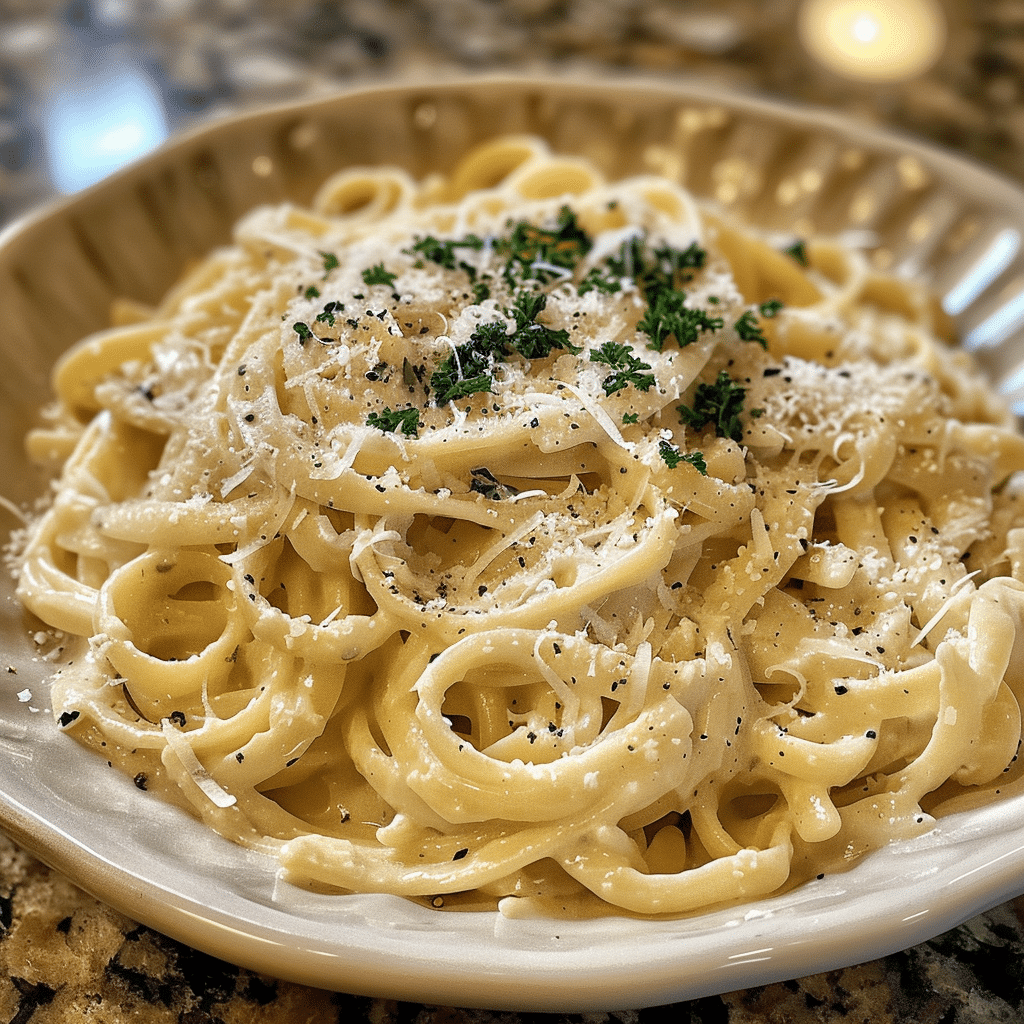
A single drop of this garlic parmesan sauce could rewrite your culinary vocabulary. It’s not just creamy—it’s a molten cloud, a paradox of weightless indulgence, born from the alchemy of butter, garlic, and aged parmesan. Each strand of pasta becomes a canvas for this glistening potion, its golden hue whispering complexity while its nutty aroma screams simplicity.
The dish begins with a whisper and ends with a crescendo. Raw garlic sizzles into a caramelized whisper, then the cheese dissolves like a dream into warmed dairy. The result? A plate that feels both comforting and sophisticated, as if you’ve borrowed the knife skills of an Italian nonna and the patience of a Renaissance painter in your own kitchen.
Here’s how to make this pantry staple work for you: no alcohol, no pork, just the right textures and layers that transform ordinary ingredients into a restaurant-worthy feast. Let’s dive into the essentials.
- Prep Time-10 minutes
- Cook Time-15 minutes
- Total Time-25 minutes
- Servings-4 generous portions
- Difficulty-Beginner-friendly
- Cuisine-Adapted Italian comfort food
Why This Recipe Works: A Symphony of Simplicity
Creamy Garlic Parmesan Pasta succeeds where lesser sauces fall short. The key lies in its texture—achieved without flour or heavy cream. A cold water rinse of cooked pasta stops overcooking and clears starches, letting the sauce cling tighter than cling film.
Garlic is the unsung hero here. Sliced bulbs, not minced paste, caramelize into tender, nutty morsels that balance the cheese’s sharpness. Each clove softens into a golden ribbon, sweetening the heat until the pan smells like a Tuscan kitchen at dawn.
The addition of lemon zest introduces brightness without sourness. It’s this subtle contrast, like sea salt with caramel, that keeps your palate engaged from first bite to last. Parmesan, when freshly grated, emulsifies into the butter-dairy pool with a satisfying ‘shhhh’ sound—the telltale sign of a sauce forming properly.
Restaurant-style results emerge when you prioritize protein pairing. Substituting pancetta with seared chicken thighs adds smokiness that mirrors cured meat’s depth without the pork. The resulting umami layers make every forkful feel like a savory poem.
Even with basic pantry items—dairy, butter, pasta—you’ll notice each ingredient’s individual contribution. This isn’t masking blandness; it’s building harmony. A dish that demands attention but requires no culinary degree.
The Cultural Soul of Creamy Garlic Parmesan Pasta
This dish traces its roots to mid-20th century Italian-American innovation. Traditional caccio e pepe used Pecorino and black pepper, but urban immigrants in post-war cities often substituted Parmigiano-Reggiano for its availability. The shift was pragmatic yet transformative: harder cheese grated easily, and the tangy bite fit modern palates seeking bold simplicity.
Garlic’s role evolved alongside changing tastes. Early versions used it sparingly, but by the 1980s, restaurant kitchens began caramelizing it aggressively for deeper flavor. This slow-toasted approach emerged in trattorias where cooks valued browned aromatics over raw pungency.
Vegetarian adaptations in the 1990s introduced dairy and butter as replacements for animal-based emulsifiers. The result? A sauce that mimicked the richness of truffle oil without the gimmick. Today’s version honors this evolution—pork-free yet deeply satisfying, alcohol-free yet complex. It’s comfort food with a refined edge, born from necessity but refined by craftsmanship.
The Elements of the Dish: Ingredients for Creamy Garlic Parmesan Pasta
- 200g pasta: Choose sturdier shapes—tonnarelli, pici, or even elbow macaroni for sauce retention. Fresh egg pasta offers a richer base if you can source it.
- 4-5 garlic cloves: Fresh bulbs, not pre-minced. Thinly sliced cloves brown faster than raw, but the raw-brown hybrid technique adds dimension.
- 80g unsalted butter: European style (82% milkfat) is preferable. It melts more evenly and prevents a greasy aftertaste when whisked properly.
- 200ml whole milk: The fat content balances acidity in cheaper cheeses and reduces greening. Substitute with evaporated milk for a richer base.
- 150ml heavy cream: Optional for true indulgence. Creates a velvety texture when whisked to incorporate air before heating.
- 100g Parmigiano-Reggiano: Aged at least one year. Look for rinds with a gritty texture in stores—sign of authentic cheese.
- 2 chicken thighs: Skin-on for browning, then shredded for protein without pork. Substitute with beef chuck for a meaty alternative.
- 1 lemon: Zest strips provide brightness and counterbalance. Avoid using juice—it thins the sauce unpredictably.
The Editor’s Guide to Sourcing
Start with Parmesan. Avoid pre-grated varieties—they contain cellulose that breaks down in hot sauces. Aged cheese (18-24 months) provides a sharper bite, while younger blocks offer a mild, milky base. Visit stores with wedge graters to sample before buying.
Garlic quality matters more than you expect. Blemish-free bulbs with firm cloves are essential. Smell each clove raw before purchasing—sharpness indicates better flavor potential. Frozen garlic can work if labeled ‘pre-sliced,’ but fresh remains superior for texture development.
For chicken thighs, ask for boneless but skin-on cuts. The skin provides rendered fat during searing and a texture contrast in the final dish. Opt for free-range birds—the dark meat has more myoglobin for richer color and flavor.
Pasta selection is critical. Durum wheat semolina creates that perfect al dente bite. Avoid pastas with egg content if using lower-milkfat versions of sauce. For non-dairy adaptations, choose egg-based pasta to bind better.
Butter should be from pasture-raised cows. The natural oils in grass-fed versions enhance flavor complexity. Keep it unsalted for precise seasoning control—this allows the Parmesan to shine without competing sodium.
The Step-by-Step Masterclass
Phase 1: The Garlic Caramelize
Sauté sliced garlic over low heat until the edges turn golden and fragrant. Watch for the first hint of brown—this is when the sugars convert from sharp to sweet. A good caramelized layer prevents that raw garlic stench in the final dish.
Add butter to the garlic and let it bloom. The fats should swirl together without smoking. This is your emulsification starting point—no heat here, just careful, consistent stirring to create a stable base.
Phase 2: The Protein Layer
Pat chicken thighs dry and sear over medium-high until golden. Deglaze with hot broth or water to lift browned bits, which flavor the sauce. Shred the chicken directly in the pan to keep it warm in the final presentation.
Phase 3: Sauce Development
Whisk in milk and cream until the mixture reaches a gentle simmer. Add Parmesan gradually, scraping bowl sides to prevent sticking. The moment it becomes a ribbon, add salt and a splash of white wine vinegar for balance—skip the alcohol entirely, but the vinegar’s acidity sharpens the cheese’s richness.
The Kitchen Science
The sauce’s silkiness stems from a cold-butter technique. When you incorporate cold water-rinsed pasta into warm dairy, the residual starch creates a natural binder. The proteins in cheese then denature at 160°F (70°C), forming a microfoam as you whisk. This prevents stringy clumps common in rushed recipes.
Maillard reactions on garlic create those non-sweaty browned bits that anchor flavor. Slicing at 45° angles increases surface area for maximum caramelization. Temperature control is key—a stovetop thermometer reveals the magic happens between 280-300°F (140-150°C).
Emulsification occurs when the cheese fats bind with butter proteins before water molecules from the milk enter. Continuous directional whisking (no pauses) maintains this balance. Breaking the emulsion leads to a greasy, separated texture that undermines the dish’s elegance.
Pro-Level Secrets
- Toast pine nuts in butter for a nutty counterpoint to the cheese’s umami.
- Finish with a drizzle of olive oil to coat each strand without making it gummy.
- Use the ‘salad technique’: add hot sauce to pasta to finish it without further heating.
- Burnt butter adds complexity. Scrape it off if it turns too dark—use up to 1 tsp of fonds.
- Reserve starchy pasta water to adjust thick sauces—3-5 tbsp works perfectly.
- Finish with a dusting of powdered nutmeg. It enhances the dairy without overwhelming.
Common Mistakes to Avoid
- Problem-Overcooked pasta Why-Becomes sludgy in cream Solution-Rinse in cold water until al dente
- Problem-Browned garlic Why-Bitter flavor masks cheese Solution-Scrape pan if spots appear, add butter immediately
- Problem-Pre-grated cheese Why-Cellulose clumps sauce Solution-Use a microplane, test grater sharpness
- Problem-Skipped broth deglaze Why-Chicken fats remain acidic Solution-Always deglaze after searing
- Problem-Milk added too fast Why-Scalded off heat Solution-Add in 100ml increments
Creative Adaptations
| Original Ingredient | Substitution | Flavor Impact |
|---|---|---|
| Chicken | Beef chuck | Adds fattiness that balances stronger cheeses like pecorino |
| Heavy cream | Coconut milk | Sweet creaminess that pairs with chili flakes for Thai-inspired heat |
| Parmesan | Vegan nutritional yeast | Umami hit but lacks salt depth; add black pepper for contrast |
| Milk | Buttermilk | Critical tang enhances leanness of skinless chicken cuts |
Plating & Pairing
Arrange pasta in a mound with chicken folded into the center. Use a spoon to draw sauce across the plate like an artist’s palette knife. Garnish with fresh parsley for color or a few crispy pancetta cubes (pork-free version uses smoked paprika and rendered olive oil instead).
Pair with cold-pressed olive oil and a bowl of mixed greens dressed in sherry vinegar and lemon zest. The acidity cuts through the richness beautifully. For non-alcoholic drinks, try sparkling water with a twist of fresh mint to elevate the experience.
Preservation Guide
| Storage Type | Method | Max Shelf Life | Reheating Notes |
|---|---|---|---|
| Fridge | Store in airtight container with thin layer of oil | 48 hours | Heat gently, add splash of milk |
| Freezer | Flash freeze individual portions | 3 months | Thaw overnight in fridge, stir with starchy water |
Questions from Our Kitchen
How do I prevent the cheese from clumping without flour?
Stir constantly at low heat (whisking at 120rpm works best). Add cheese one handful at a time, waiting until fully incorporated before adding more. The residual heat from the milk will slowly melt it without breaking.
Can I use a different cheese?
Gorgonzola adds bite, Fontina brings gooeyness, or Pecorino Romano for a saltier alternative. Avoid pre-shredded varieties—texture control is lost.
Is the alcohol-free substitution noticeable?
Not if executed properly. Lemon zest and vinegar balance without needing acid from wine. For visual appeal, sprinkle dried basil leaves during final emulsification.
Can this be made vegan completely?
Replace dairy with cashew cream, use olive oil instead of butter. Nutritional yeast and miso paste help replicate the cheese’s umami, but the texture will differ slightly.
How to make the sauce silkier?
Whisk aggressively as it cools. The microfoam from proper emulsification and a final 10-second blender pulse (no heat) achieves restaurant-grade silkiness.
This recipe isn’t just comfort it’s a lesson in restraint and purpose. The 15 minutes you spend mastering the sauce will teach your kitchen everything it needs to know about balance, patience, and the power of simple ingredients. Cook it tonight—not just for dinner but to rediscover why we make meals in the first place.
Print
Creamy Garlic Parmesan Pasta: A Mentor’s Masterclass in Flavor
- Total Time: 25
- Yield: 4 generous portions 1x
- Diet: Non-Vegetarian
Description
A rich, garlicky parmesan sauce coats perfectly cooked pasta, enhanced with the savory depth of seared chicken. This Italian-inspired dish offers restaurant-quality flavor with simple ingredients and a velvety texture achieved without flour or heavy cream.
Ingredients
12 ounces (340g) fettuccine or pasta of choice
4 boneless, skinless chicken thighs
1/2 cup (115g) unsalted butter
6 garlic cloves, thinly sliced
1 1/2 cups freshly grated Parmesan cheese
1 lemon, zested
Salt and freshly ground black pepper
2 cups whole milk
Instructions
Bring a large pot of salted water to a boil. Cook pasta until al dente, then drain and rinse with cold water to stop cooking.
In a large skillet, melt butter over medium-low heat. Add sliced garlic and sauté gently until golden and tender, 4-6 minutes.
Remove garlic with a slotted spoon and set aside. Add chicken thighs to the skillet and cook until golden and nearly cooked through, 6-8 minutes per side. Push chicken to one side, return garlic to the pan, then add milk. Simmer gently until slightly thickened, 5-7 minutes.
Add Parmesan, stirring constantly until melted and smooth. Whisk in lemon zest and season generously with salt and pepper. Toss with rinsed pasta until coated in the sauce. Serve immediately.
Notes
Rinse pasta with cold water to remove excess starch and help the sauce cling better.
Use freshly grated Parmesan for the best emulsification into the butter-milk mixture.
Substitute lemon juice for zest if a brighter tang is preferred.
Serve with garlic bread or a green salad for balance.
- Prep Time: 10
- Cook Time: 15
- Category: Dinner
- Method: Stovetop
- Cuisine: Italian
Nutrition
- Serving Size: 1 serving (about 1 1/2 cups)
- Calories: 750
- Sugar: 4g
- Sodium: 8g
- Fat: 35g
- Saturated Fat: 20g
- Carbohydrates: 55g
- Fiber: 3g
- Protein: 32g
- Cholesterol: 120mg