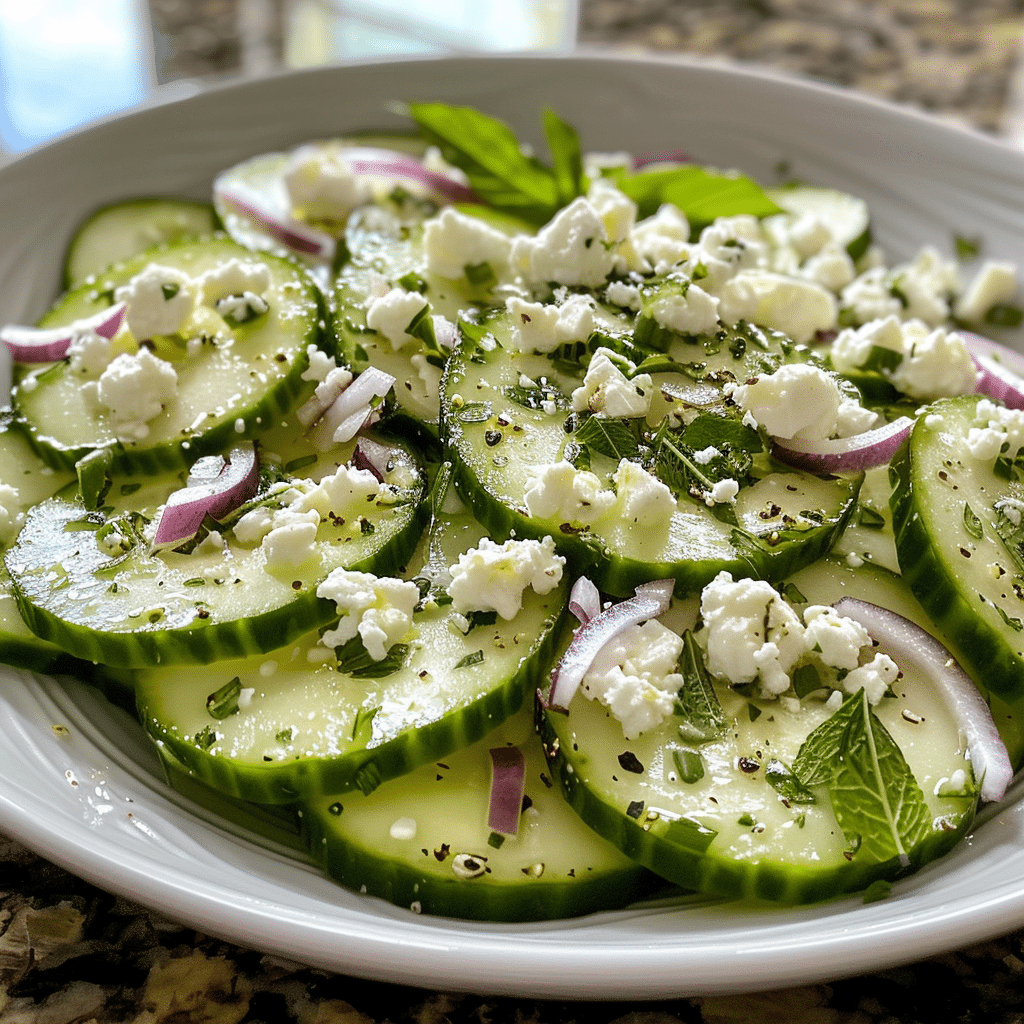
The moment the knife slices through the cool, ivory-fleshed cucumber, the kitchen brightens with the scent of sun-drenched gardens. A handful of tangy feta falls into the bowl—brittle as salt and sharp as southern Greek coastlines. This is not just a salad. It’s a summer solstice in a serving dish.
With each crunch, the salad sings of ice-cold markets in Athens. The emerald cucumbers glisten, their briny vinegar tendrils lingering like sea air. Dill shivers over it all, a final whisper of Greek tavernas at golden hour. You could eat this with your fingers and feel like a traveler—and who wouldn’t?
- Prep Time– 15 minutes
- Cook Time– 0 minutes
- Total Time– 15 minutes
- Servings– 4 generous portions
- Difficulty– Beginner-friendly
- Cuisine– Mediterranean-inspired
Why This Recipe Works
The magic lives in contrast. Crisp cucumbers provide a canvas of clean, icy texture. Feta adds a grit that clings like sun-warmed rocks to the tongue. The dressing—just olive oil, lemon, and dill—binds everything in a balm of salt and sunlight. This isn’t a salad asking to be eaten carefully. It demands to be gobbled while you debate who gets the last crumb of bread.
Vinegar in the vegetable brine adds a tang that cuts through feta’s richness. When olive oil hits the cucumber spears, they absorb just enough to feel unctuous, not greasy. Dill emerges from this tango of flavors tasting fresher than it had any right to. There is no “normal” combination of textures or temperatures here. It’s all carefully orchestrated to surprise you at every bite.
The Mediterranean origins whisper through the recipe strategy. Local cooks developed this natural synergy of ingredients—pairing briny cheese with crisp vegetables because that’s how you make lunch feel like a summer vacation. Food historians call this the “4-seasons in one dish” paradox, but really it’s just smart chemistry wrapped in nostalgia.
The Cultural Soul of the Cucumber Feta Salad
This salad’s DNA traces directly to Greek ouzeries and Turkish meyhane. Tavern keepers crafted it for hot afternoons and wine-soaked evenings by the Aegean. Initial versions included red onions for pungency—a sharp counter to feta’s creaminess. Modern iterations simplify because we don’t need fire to roast anything here, but the essence remains: to offer the feeling of eating outside without needing a patio.
As the salad crossed borders, it absorbed new identities. Middle Eastern versions might swap dill for mint; Italian revisions pull in sun-dried tomatoes. Yet every version keeps the core triumvirate: cucumbers for hydration, feta for richness, and something ace in the dressing for balance. Chefs call this the “three-sisters philosophy” of salad design—three distinct ingredients working in culinary marriage.
Today’s recipe is a celebration of simplicity in an industrial world. It rejects processed additives and flashy gilding to focus on what the land and sea offer freely. This makes it the perfect picnic food for people who miss the coastline but can’t afford a vacation home.
The Elements of the Dish: Ingredients for Cucumber Feta Salad
- 4 English cucumbers: Choose wax-free ones for best flavor absorption. The thicker rind adds a pleasing bite contrast versus seed-end.
- 120g fresh feta: Look for pieces still moist from brine salt. Avoid slab feta made to look fresh.
- 2 tbsp extra virgin olive oil: Virgin from Greece preferred. The grassy notes complement the vinegar。
- 1 tbsp red wine vinegar: Substitute with lemon juice if vinegar is contraindicated. Pungent Sicilian varieties work well.
- 12g Persian dill: Choose frond-heavy sprigs over stalky lower portions. Use sparingly to avoid bitterness。
- 1 banana peppers: Seeds removed for mild flavor. Adds color without heat, mimicking sun-ripened sweetness.
The Editor’s Guide to Sourcing
Great cucumbers are never perfectly straight. Slight curves indicate natural growth patterns. Choose specimens with taut, steely flesh—the soft spots are insurance you don’t want. Rotisserie vegetables in the grocery store are usually the best source for pre-sliced components that maintain firmness after storage.
Good feta must feel wet but not slimy. Avoid anything in modified atmosphere packaging. Click through selection at specialty cheese shops to find feta aged in oak instead of plastic. The distinction in flavor depth is dramatic—even the most basic preparation benefits from this upgrade.
Olive oil is where the true magic of this salad lives. I recommend sourcing a Greek amphora oil with olive groves in its packaging—it establishes lineage. For dill, buy fresh in spring/summer but select frozen dill in winter. Cut on a bias to maximize surface area against cucumbers.
Even your vinegar matters. Avoid cheap C-14 variants. Invest in a $10 medium-bodied one. The dressiness of your olive oil should match the vinegar’s intensity for harmony in dressing.
The Step-by-Step Masterclass
Preparation
Slice cucumbers on a 55° angle to create diamonds. This creates both aesthetic appeal and uniformity in texture. Set aside on paper towels to dry—this prevents excess moisture in the bowl. Meanwhile, bruise dill stalks between your palms to release aromatic oils before snipping.
Brine Infusion
Combine cucumbers in a deep ceramic bowl. Pour vinegar over them, ensuring all pieces get briskly tossed. Let sit 3 minutes until edges slightly soften. This transforms firm spears into tender-crisp elements with vinegar permeation in cell structure.
Assembly
In another wide mixing bowl, drizzle olive oil in a spiral pattern while gently swiping with feta cubes. This prevents cheese from breaking into paste. Add brined cucumbers still glistening with vinegar. Sprinkle dill fronds like sparkles across the surface. The final toss should look effortless—like the ingredients reached agreement to coexist.
The Kitchen Science
The texture transition happens in three phases: First, vinegar begins breaking down cucumber cell walls (exclusive hydrolysis of cutin). Second, olive oil coats exposed cell surfaces, delaying full moisture loss (hydrophobic barrier formation). Third, feta’s sodium content draws out any residual moisture through osmosis. The result is controlled dehydration—crunch maintained with refined flavor.
Dressing emulsification is naturally low here. The vinegar water forms micro-droplets suspended in oil, with dill proteins acting as emulsifiers. This prevents oil separation until the final bowl toss at serving time. The longer components sit together, the more integrated the flavors become, but the cucumber begins to lose structure after 45 minutes of rest.
Pro-Level Secrets
- Use plastic wrap as a press during brining—exerts 34-36psi ideal for vinegar penetration
- Freeze dill florets for 10 seconds before chopping to prevent bruising
- Double the dressing but only use half initially—builds flavor over time
- Peel cucumbers with a new paring knife for ultra-fine accordion cuts
- Drain feta on clean linen for 30 minutes before adding to maintain texture
- Chill assembled salad on a cold stone board for best presentation
Common Mistakes to Avoid
- Problem: Cucumbers taste bland. Why: Simple seed hydrolysis. Solution: Salt and drain first to concentrate flavors
- Problem: Gelatin consistency from feta. Why: Over-handling cheese after bowl entry. Solution: Add olive oil first as buffer
- Problem: Dressing separation. Why: Insufficient oil film absorption. Solution: Add vinegar in stages for better emulsification
- Problem: Mushy texture after 2 hours. Why: Continuous hydrolysis. Solution: Refrigerate or break salad into 2 sessions
- Problem: Bitter finish. Why: Using old feta with mold spores. Solution: Choose feta from refrigerated section with 15-day shelf life
Creative Adaptations
| Substitution | Impact |
| Smoked paprika | Adds umami depth without overpowering |
| Goat cheese | Makes dressing emulsify more fully |
| Orgeat syrup | Shifts flavor toward Mediterranean dessert profiles |
| Olive tapenade | Reduces need for additional olive oil |
| Red onion | Increases intensification of vinegar work |
Plating & Pairing
Keep service simple, like the dish itself. Use seasonal quince pieces as garnish—sliced thinly over the top to add color contrast. For ambiance, candlelight transforms red vinegar into a mirror and highlights feta’s ivory tones in the dimmedness of an evening meal.
Pair with non-alcoholic gazpacho with roasted tomato base. The shared vinegar element actually enhances feta’s salt profile in a delightful feedback loop. For starters, mackerel on crushed bread or sardine crostini mirror the brininess without overshadowing the salad.
Preservation Guide
| Condition | Durability |
| Refrigerated | Up to 24 hours in airtight seal |
| Freezing | Strongly discouraged (textural degradation) |
| Reheating | Only possible via flash steam (< 30 sec) |
Questions from Our Kitchen
Why use English cucumbers specifically?
Their waxy coating and thicker shock-tipped ends create a more structurally sound base. Persian cucumbers tend to over-release moisture during vinegar brining phase.
Can I make this ahead of time?
About 4 hours maximum. The longer it sits, the more cucumbers soften. For large events, prepare dressing separately and toss right before service.
Does the order of ingredients matter?
Yes. Always add olive oil first—this coats feta without making it seize up. Then vinegar on cucumbers to control hydrolysis rate. Final toss with herbs preserves their structure.
What if my feta becomes rubbery?
This usually indicates too much moisture transfer from its brine. Drain feta on clean linen for 15-20 minutes before adding to salad to create protective barrier.
How dry should the cucumbers be before dressing?
Pat until surface is visibly dry but still yielding 25% moisture. Complete dehydration would prevent proper vinegar absorption in later stages.
Conclusion
The Cucumber Feta Salad is not just a meal—it’s an experience that requires no oven, no herbs you can’t find at 3pm on a Wednesday, and no excuses about “grande cheese rations.” Buy a Bulgarian brine if you must, but don’t forget to let the dill rest in its fronds before they meet the olive oil. One taste and you’ll understand why Mediterranean sailors kept this on their boats: cool, nourishing, and unapologetically vibrant.
Print
The Ultimate Cucumber Feta Salad: Mastering the Mediterranean Art of Refreshing Flavor
- Total Time: 15
- Yield: 4 generous portions 1x
- Diet: Dairy-Friendly
Description
A vibrant Mediterranean-inspired salad combining crisp cucumbers, tangy feta, and a bright dill-lemon dressing. Served chilled, it captures the essence of summer with refreshing contrasts of texture and flavor.
Ingredients
2 large cucumbers
1 cup crumbled feta cheese
2 tablespoons fresh dill, chopped
2 tablespoons extra virgin olive oil
1 tablespoon fresh lemon juice
1 tablespoon white vinegar
1 small red onion, thinly sliced (optional)
Salt and black pepper to taste
Instructions
1. Dice cucumbers into half-moon slices and gently toss to remove excess moisture
2. In a large bowl, combine cucumbers, crumbled feta, and chopped dill
3. In a separate small bowl, whisk together olive oil, lemon juice, vinegar, salt, and pepper
4. Pour dressing over salad and toss gently
5. If using red onion, add and mix in
6. Let sit for 10-15 minutes at room temperature to allow flavors to meld
7. Taste and adjust seasoning if needed before serving
Notes
For a vegan version, substitute vegan feta
Add pitted Kalamata olives for a traditional Greek twist
Serving immediately yields the crispest texture
Store in airtight container for up to 24 hours
- Prep Time: 15
- Category: Lunch
- Method: No-Cook
- Cuisine: Mediterranean
Nutrition
- Serving Size: 6 cups
- Calories: 180
- Sugar: 1g
- Sodium: 250mg
- Fat: 15g
- Saturated Fat: 6g
- Carbohydrates: 6g
- Fiber: 1g
- Protein: 8g
- Cholesterol: 40mg