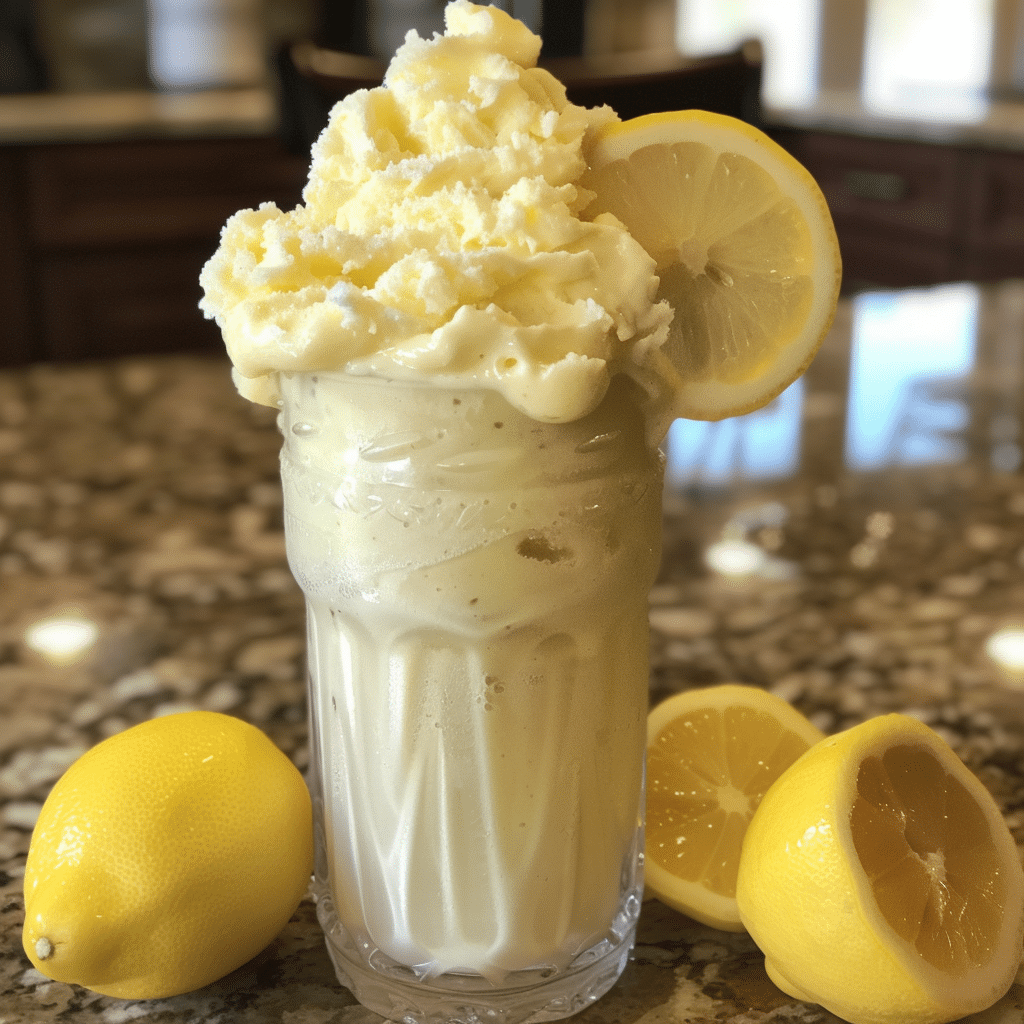
The clink of ice cubes, the sharp citrus aroma, and the silken melt of chilled cream merging with tart lemon juice—this is not just a drink. This is an experience that balances the wild vibrancy of summer with the cool indulgence of a velvet-smooth treat.
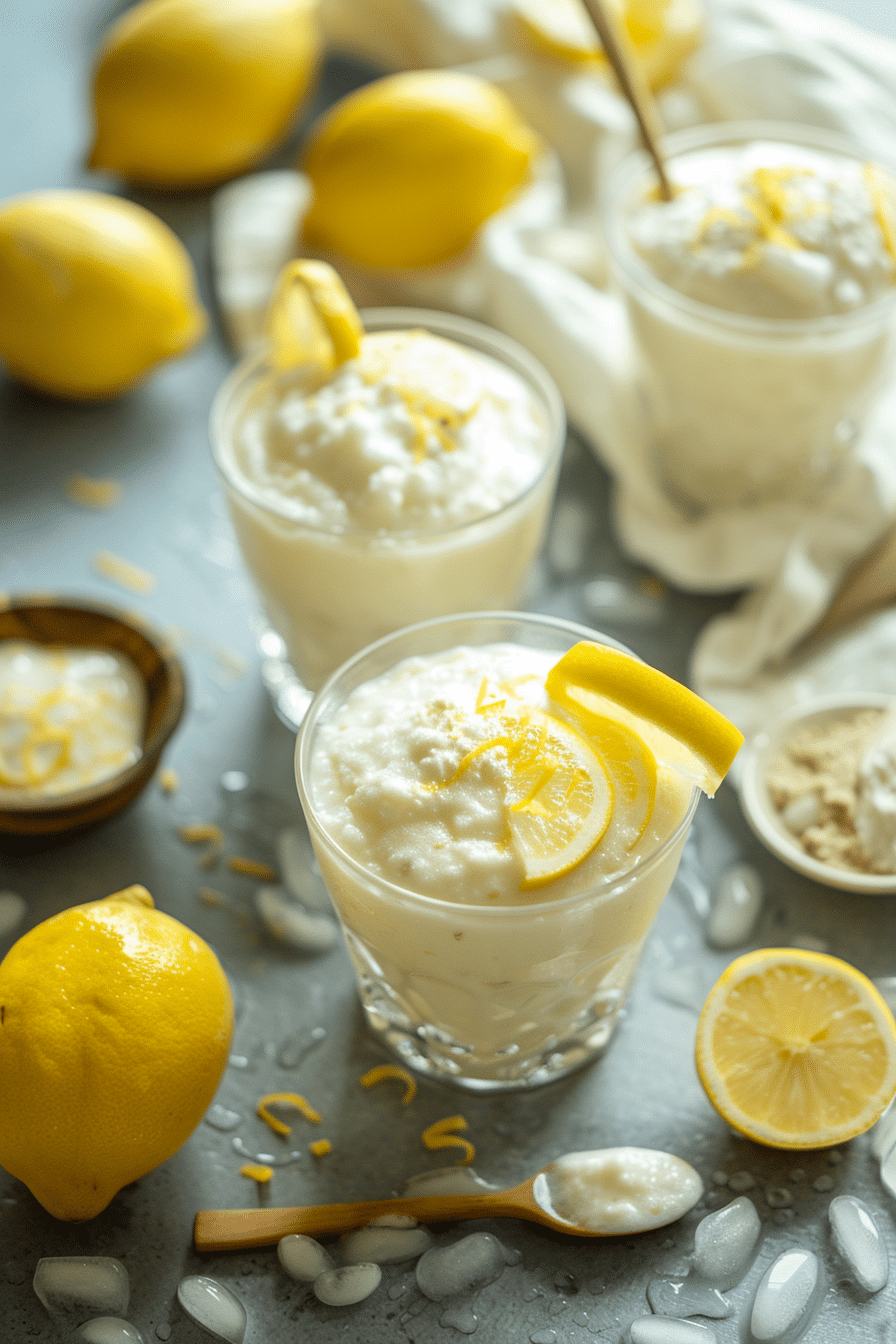
Frozen Creamy Lemonade reimagines the classic with a modern flair. Unlike traditional lemonade, this version layers the brightness of fresh lemons with the smooth texture of yogurt or custard. It’s a drink that sings of backyard barbecues and sizzling markets, yet fits perfectly in your favorite bowl as a sweet-and-sour parfait.
- Prep Time– 10 minutes
- Cook Time– 20 minutes
- Total Time– 30 minutes
- Servings– 4 servings
- Difficulty– Easy
- Cuisine– Modern American
Why This Recipe Works
The first spoonful reveals why this drink defies seasonality. Fresh-squeezed lemon juice provides a zesty burst, while chilled yogurt or custard adds a creamy counterpoint. This balance isn’t accidental—it’s the result of culinary chemistry where opposing textures harmonize.
The texture is the secret star. Cold fruit purée forms ice crystals that mimic the softness of shaved ice, while the air-whipped base gives it mousse-like volume. When you taste it, it’s smooth without being cloying—clean and cooling, like a citrus snow cone dressed in a silk handkerchief.
For the curious experimenter, this recipe invites customization. Swap lemons for limes or oranges, or fold in pureed berries. But the core remains unchanged: a celebration of simplicity with maximum sensory impact.
The Cultural Soul of Frozen Creamy Lemonade
Traditional lemonade dates back to 17th-century Europe, where street vendors sold lemon water sweetened with marmalade. Modern versions emerged in the US as motorcars became widespread—drivers needed quick refreshments on sunny drives. This frozen adaptation captures that same utility but elevates the drinking experience.
What makes it truly modern is the fusion with frozen desserts. The technique mirrors Italian frullati or Vietnamese ice-blended coffees, where fruit purées and chilled bases create hybrid beverages. It’s a drink that nods to convenience while demanding quality ingredients—fresh citrus, full-fat dairy, and clean water.
The viral version trending globally swaps artificial sweeteners for real yogurt, adding sustainability and nutrition. It’s a recipe that bridges generations: parents remember the classic, while kids crave the frozen mousse-like texture.
The Elements of the Dish: Ingredients for Frozen Creamy Lemonade
- 180g fresh lemon juice: Use Meyer lemons for softer flavor or Eureka for brightness. Juice by hand for pulp texture.
- 120ml full-fat plain yogurt: Greek or Bulgarian varieties yield the richest, velvety base.
- 60g caster sugar: Adjust based on lemon tartness. Dissolve in warm water beforehand.
- 240ml whole milk: Full fat ensures a smooth emulsion with fruit purée.
- 400ml fresh ice cubes: Homemade ice removes mineral aftertaste and avoids clouding the drink.
- 15g chopped basil: Oils from fresh leaves infuse minty brightness after final blending.
The Editor’s Guide to Sourcing
Begin with your citrus. Organic lemons free of wax coatings release cleaner flavor. Squeeze each fruit at the moment of freshness—its oils and pulp carry complex acids that commercial zests lack. When selecting dairy, check for a thin skin on the yogurt’s surface; this indicates active cultures for a tangy finish.
For milk, opt for shake-specialty blends with pre-mixed stabilizers. These keep the drink from waterlog during freezing. Ice? Make it at least 24 hours in advance to develop maximum crystalline clarity. Avoid commercial ice cubes, which leach chlorine notes.
Herbs matter too. Basil picked within the last 24 hours will exude essential oils during blending. If local basil is unavailable, substitute fresh mint or calamansi peel. Always taste-test a sprig first—flavor variance between batches can skew the balance.
The Step-by-Step Masterclass
1. Juice Extraction
Roll each lemon on a cutting board until the peel cracks. Squeeze by hand using a citrus press, adding pulp for texture or removing it for a smoother result. Strain through cheesecloth to catch any large fibers you didn’t want in your final product.
2. Sweet Baseline
Dissolve sugar in 60ml warm water. Let cool. In a sealable jar, layer lemon juice, sugar syrup, and yogurt. Shake vigorously until sugar is fully dissolved. Chill ingredients in the refrigerator for at least 30 minutes to set cool temperatures before freezing.
3. Churn the Cream
Add chilled milk and ice to a blender. Purée until thick and smooth. If the texture feels gritty, run through a fine-mesh sieve. Fold in herbs just before serving to preserve volatile oils. Return to freezing for 10 minutes before serving for final firmness.
The Kitchen Science
Ice crystals form when water molecules align in identical structures. Commercial lemonade engines control this with industrial temps, but home blenders achieve similar through density. The more fat in your mix (from whole milk and yogurt), the smaller the ice crystals created during freezing—resulting in a smoother texture.
Emulsification occurs when lemon juice and milk bind imperfectly. This is why you need a stabilizer like yogurt—its proteins marry with sugars and acids to prevent phase separation. The outcome is a drink that holds shape in the freezer without weeping liquid when served.
Flavor volatility matters too. Basil’s oils evaporate at 312°F but release their essence at refrigerator temps. Add it last to preserve maximum aroma on the spoon’s first contact.
Pro-Level Secrets
- Chill all liquids before blending to achieve denser, longer-lasting ice crystals.
- Use a violin technique to test when the mixture is ready—fold knife through it like lathering soap.
- Flash-freeze add-ins in individual sealing bags to maintain chunky textures when stirred in.
- Adjust sugar in 10g increments to balance lemons on the day. Taste before final blending.
- For vegan versions, substitute yogurt with coconut cream. Add 1g agar-agar to help binding.
- Keep lemon zest on hand to amplify citrus intensity without altering color.
Common Mistakes to Avoid
- Overblending: Causes excessive air which destabilizes structure. Blend until thick but work with high-pitch hum, not longer.
- Skipping pre-chilling: Turns final result slush-like. Ice crystals form faster when base is already cold.
- Using bottled lemon juice: Loses volatile compounds and acidity balance mid-blending. Fresh only.
- Under-sweetening: Lemon’s bitterness overwhelms. Taste-test and double your sugar if frozen.
- Omitting resting time: Needs 30 minutes to stabilise textures before serving for final thumbnail qualities.
Creative Adaptations
| Substitution | Flavor Impact | Texture Effect |
|---|---|---|
| Coconut milk | Adds tropical sweetness and mild floral notes | Imitates dairy richness without traditional mouthfeel |
| Mint leaves | Sharpens citrus with menthol clarity | Maintains delicate velvety texture |
| Cinnamon | Warms tartness with spiced honey finish | Helps stabilize frozen base from weeping |
| Oats | Lowers acidity with earthy bitterness | Increases thickness like grain suspensions |
Plating & Pairing
Serve in clear glass bowls to showcase its glowing frost. Garnish with edible flowers or lemon twists studded with sugar. For ambiance, chill serving bowls in the freezer beforehand so the drink maintains its shape on the tablespoon edge.
Pair with anything dense and savory—barbecue meats or grilled nuts—to let its brightness balance richness. Future party staples: serve in cone forms or layered in mason jars as ice cream substitutes. Don’t forget bittersweet chocolates for contrasting flavors.
Preservation Guide
| Storage Method | Durability | Quality Notes |
|---|---|---|
| Refrigerator | 48 hours | Texture separates over time; stir to recombine |
| Freezer | 14 days | May weep liquid; freeze in single servings |
| Reheating | Not recommended | Loss of structure and fibrous texture development |
Questions from Our Kitchen
Can I make this sugar-free?
Replace sugar with 120ml of honey or maple syrup. Adjust by 30ml increments, as fruit purees also contain natural sugars. The base will thicken faster at zero°- so add extra milk if you want to maintain flowability before freezing.
How do I prevent a sour aftertaste?
Use equal parts lemon juice and zest for rounded acidity. The peel’s oils (limonene) temper sharpness while maintaining brightness. Try an 18% acid lemon juice concentration for best results in tropical regions.
Can I keep it frozen for parties?
Freeze in log form inside parchment paper rolls. When needed, cut 2cm slices to serve immediately à la bâton de beurre. This technique maintains crystallinity and clean cuts across the surface.
How do I revive a defrosted batch?
Blend with 10ml filtered water and 5g sugar to re-establish emulsion. Chill for an hour then recap. This working revival technique stabilizes qualities lost during defrost but must be done within 48 hours from initial freezing echo.
Is this suitable for large events?
Yes—multiply the recipe 2–4x and use industrial ice blenders. The key challenge is maintaining cold chain consistency; all ingredients must hit 34°F before pre-blending, ideally chilled in metal buckets with ice chests.
Frozen Creamy Lemonade isn’t just a drink; it’s a conversation starter wrapped in a citrus shell. With its smooth texture and vibrant flavors, it’s a testament to the power of simple ingredients done right. Gather your lemons, press that juice, and let the magic begin. Whether you’re sipping it at sunrise or hosting an impromptu summer party, this recipe is sure to leave a lasting impression.
Print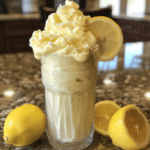
Frozen Creamy Lemonade: A Modern Twist on a Classic Refresher
- Total Time: 30
- Yield: 4 servings (1 large bowl or 4 cups) 1x
- Diet: Vegetarian
Description
A velvety, citrus-soaked frozen treat that balances zesty lemon juice with the cool thickness of custard or yogurt. Perfect for summer or as a dessert parfait, this modern twist on traditional lemonade is a creamy, no-alcohol refreshment with customizable flavor variations.
Ingredients
180g fresh lemon juice
4 cups heavy cream
1 1/2 cups whole milk yogurt (or custard-like base)
3/4 cup granulated sugar (adjust to taste)
1 tablespoon arrowroot powder (or cornstarch, for non-GMO)
1 teaspoon vanilla extract
Fresh lemon zest (for garnish)
Optional: 1/2 cup pureed berries or citrus slices (for variation)
Instructions
Combine lemon juice, sugar, and arrowroot powder in a saucepan over low heat, stirring until sugar dissolves
Remove from heat and whisk in vanilla extract and lemon zest
Chill the mixture for 1 hour
Fold in yogurt and heavy cream, ensuring a smooth consistency
Churn in an ice cream maker according to manufacturer instructions until frozen and airy
If no ice cream maker, transfer to a shallow container and freeze while agitating every 30 minutes for a dense texture
Freeze until firm (2–3 hours)
Serve in bowls or mason jars, topped with fresh berries or lemon slices if desired
Notes
For a dairy-free option, substitute heavy cream with coconut milk and yogurt with coconut or oat yogurt
Arrowroot powder ensures a silky texture without graininess
Add 1/2 cup honey or maple syrup if desired—adjust sugar quantity
Store in airtight containers for up to 3 days
- Prep Time: 10
- Cook Time: 20
- Category: Dessert
- Method: Freezing
- Cuisine: Modern American
Nutrition
- Serving Size: 1 cup
- Calories: 320
- Sugar: 40g
- Sodium: 50mg
- Fat: 20g
- Saturated Fat: 12g
- Carbohydrates: 30g
- Fiber: 0g
- Protein: 4g
- Cholesterol: 65mg