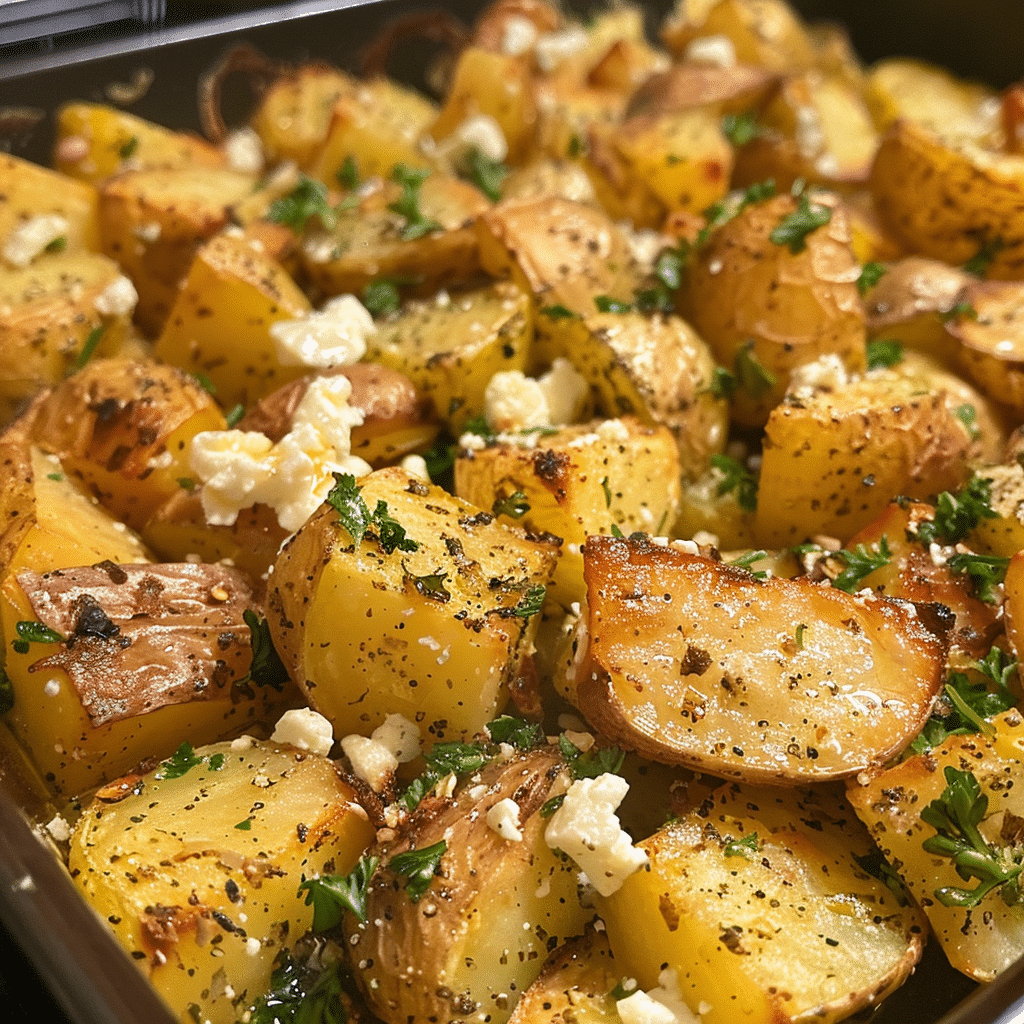
The kitchen fills with the warm, toasty scent of rosemary and garlic as the oven hums to life. Peeking inside, golden potatoes curl at the edges, their skins crisped to a buttery finish. This is no ordinary roast—it’s Mediterranean alchemy. The briny tang of feta slices sharpens the air, a salty counterpoint to the sweet caramelization below.
Every bite offers a textural journey. The potatoes crackle under pressure, releasing a soft, flourished interior seasoned with lemons and thyme. It’s a dish that dances; salt meets sweetness, crisp yields to tender, smoke weds citrus. This roast demands attention—not just on your plate, but in the choices you make while crafting it.
From the Aegean coasts to the hearths of modern home chefs, Greek feta and roasted vegetables have defined Mediterranean simplicity for centuries. Today, this dish becomes your canvas—one where technique and history blend seamlessly.
- Prep Time– 20 minutes
- Cook Time– 45 minutes
- Total Time– 65 minutes
- Servings– 4
- Difficulty– Intermediate
- Cuisine– Greek
Why This Recipe Works
The magic begins at 425°F (220°C). Here, each potato becomes a vessel for transformation. The Maillard reaction turns their skin from pale to amber, while their centers soften to a creamy melt. This is the science of comfort, rendered in golden edges and warm spice.
Feta arrives with a crunch of salted crumbles, its brininess cutting through the roast’s mild garlic. The cheese doesn’t merely sit atop the potatoes—it marries with them. As it softens, fat from the cheese seeps into the vegetable’s crevices, amplifying both flavor and texture.
The herb crust—rosemary, thyme, and smoked paprika—offers a third layer. These ingredients are chosen not for trendiness but balance. Rosemary’s piney freshness offsets feta’s boldness; paprika adds a subtle smokiness that echoes open-fire cooking.
A lemon-olive oil emulsion keeps the roast from drying out. You’ll strain the zest first, its oils mingling with the fat. This liquid becomes a brine of sorts, coaxing moisture from the potato without weighing it down. The result? Crispy skin, tender core, and a seasoning that clings like a seasoned waiter’s recommendation.
The Cultural Soul of Greek Feta Roasted Potatoes
Feta is the heart of Greece’s culinary identity. Forged from sheep and goat’s milk for centuries, its crumbly texture and briny finish are a hallmark of Dalmatian islands and mainland taverns alike. Traditionally aged in salt brines, modern mass-produced versions fall short—unless you seek artisanal wheels with a slight white dusting of rind.
Potatoes arrived in Greece via Spanish traders in the 16th century. They weren’t immediately embraced. The locals, after all, had olive groves and vineyards. But by the 19th century, roasted vegetables with feta became a staple—especially in Aegean regions. The dish symbolized resourcefulness: hearty, affordable, and packed with coastal flavors.
Today’s recipe is a tribute to that tradition. It’s not a replica but a conversation between old and new. The addition of a lemon-herb crust nods to modern Mediterranean fusion while honoring ancestral techniques. It’s about respecting time-tested methods while inviting creativity into the mix.
The Elements of the Dish: Ingredients for Greek Feta Roasted Potatoes
- 2 lbs russet potatoes: These skin-on beauties roast with unmatched resilience. Look for small to medium tubers—larger ones require slicing. Wash but don’t peel for natural texture.
- 1 large lemon: The acidity sharpens the cheese’s salt. Use a sharp knife to scrape zest before juicing. Avoid bottled zest—for freshness.
- 1/4 cup extra virgin olive oil: A high-oleic oil withstands roasting without bitterness. Greek or Californian oils work best; avoid blended supermarket varieties.
- 1 tbsp fresh rosemary: Crush the leaves against your palm to awaken terpenes. Substitute with oregano only if rosemary is unavailable—use half the volume.
- 1 tbsp crushed flake sea salt: This is not table salt. Coarse grains cling to the potatoes during roasting, forming a subtle crust. For non-sea salts, mix 1 tsp with 1 tsp feta brine to replicate texture.
- 4 oz block-style feta cheese: Opt for cheese in its natural state, not crumbled packages. Greek or Cyprus feta delivers the perfect moisture-to-salt ratio. At least 300 days aged for complex notes.
- 3 cloves garlic: Press into the oil directly for raw garlic’s pungency. Avoid pre-minced versions—they oxidize before you reach the oven.
- 1/2 tsp smoked paprika: Adds warmth without overpowering. Choose sweet over hot unless you seek a smolder. Apply sparingly—it’s a background flavor, not a lead.
- 1 sprig fresh thyme: Used whole—its aroma steeps into the potato flesh. Strip the leaves for side dishes but save stems for compost; they intensify flavor in roasting.
The Editor’s Guide to Sourcing
Feta: Seek wheels aged in salt chambers. These cheeses maintain a crumbly structure, resisting sogginess during roasting. Avoid soft, wet varieties—they’ll drown the herb crust. Fresh is preferable to dried, which becomes a dry paste.
Potatoes: Russets, not Yukons. Their starchy composition caramelizes cleanly, avoiding greasy pitfalls. Buy from vendors that sort by size for consistency; mixed batches turn your dish into a mosaic of doneness.
Herbs: Rosemary thrives in Mediterranean climates but struggles in foggy regions. Look for bright, pliable stems. Avoid wilted or brittle leaves—they’re past their peak. Frozen thyme loses potency unless it’s vacuum-sealed at flash points.
Oil: Olive oil’s quality defines the roast. Test for a peppery aftertaste—a sign of polyphenol content. Avoid refined oils; they mute flavor. Opt for cold-pressed varieties, ideally with a slight haze indicating recent pressing.
The Step-by-Step Masterclass
Preparation: Building the Foundation
Heat oven to 425°F (220°C). Line a rimmed baking sheet with parchment for even heat and easy cleanup. This isn’t just convenience—it’s control. Uneven baking can turn a side dish into a lesson in char.
Scrub and quarter the potatoes. Uniform cubes guarantee simultaneous doneness. Toss with olive oil immediately—this locks in moisture without pooling. The oil should coat, not coat excessively. Aim for a sheen, not a lake.
Herb Crust Assembly: A Flavor Bomb in Every Grain
Mince rosemary with a garlic press. Work quickly—rosemary oxidizes swiftly after exposure. Squeeze the lemon half over the mound. This isn’t just for juice; the expressed oils enhance the crust’s aroma.
Grind the thyme stems (saved from the herb list) in a mortar with cracked peppercorns. This coarse blend clings to the oil. Add smoked paprika and crushed flake salt to the mix. The result is a seasoning that won’t slide during roasting.
Sprinkle generously over the potatoes. For a rustic texture, keep some herb clusters intact. This isn’t for show—it’s for pockets of concentrated flavor. Let the potatoes rest 5 minutes to absorb oils before roasting.
Roasting and Feta Integration: A Dance of Heat and Time
Place the tray in a preheated oven. Roast for 25 minutes, turning once. The potatoes should glisten with rendered oil but retain their form. Check the edges—they should brown without blackening. If too crisp, cover with foil and continue.
After 25 minutes, top with feta slices. Arrange in an even layer for full coverage. The cheese begins to weep at 140°F (60°C); this happens in the last 10 minutes. Avoid moving the cheese—its fat will pool if disturbed.
Roast 10-15 more minutes. The edges curl like parchment, the center gives under a gentle press. The feta becomes firm but not chalky, its salt diffusing into the potato skins. You’ll hear a crackling rhythm as the moisture exits—it’s the dish announcing its readiness.
Finishing Touch: The Art of Presentation
Remove from oven immediately. The residual heat continues cooking—your window to perfect crispness. Drizzle with a final glug of olive oil, then scatter whole thyme leaves on top. This garnish isn’t decoration; it’s a flavor beacon for the plate’s aroma trail.
The Kitchen Science
At 350°F (175°C), starch granules in the potato absorb water. By 400°F (205°C), the Maillard reaction begins—a complex chemical ballet. Enzymes like oxidize amino acids, forming brown pigments. This is how flavor depth multiplies, turning simple salt and oil into a layered masterpiece.
Acidity (from lemon juice) lowers the Maillard threshold. It accelerates caramelization, ensuring crisp exteriors without overcooking the interior. The feta’s salt further aids this process, drawing moisture to the surface for faster browning.
Contrary to myths, high heat works best. Low-temperature roasting takes hours but sacrifices texture. The 425°F (220°C) method optimizes time and flavor—crunch develops in 25 minutes, while moisture balance holds in the final 15. It’s not just a recipe; it’s a physics lesson in fat and fire.
Pro-Level Secrets
- Parboil first for 5 minutes: This reduces variance in tuber sizes. The outer layer softens instantly, allowing even roasting.
- Use a wire rack: Elevate the sheet 2 inches from heat source. This creates a convection layer, preventing soggy bottoms.
- Toast the herb crust separately: 30 seconds in a skillet deepens their flavor profile. This step is crucial for rosemary—avoid skipping.
- Layer feta after 25 minutes: Adding it too early creates a spongy texture. The potatoes must establish moisture barriers first.
- Salt the olive oil before roasting: This allows the seasoning to form a thin crust immediately. Use the crushed flake salt for best results.
- Rest for 10 minutes: The oil redistributes, locking in crispness. This is non-negotiable for restaurant-quality texture.
Common Mistakes to Avoid
- Under-seasoning: Feta balances salt but needs support. The rosemary and thyme must be bold enough to compete with its tang.
- Over-roasting: Check for blackened edges early. Potatoes can go from golden to burned in 2 minutes at high heat.
- Too much cheese: Feta’s brininess can overwhelm. Use 4 oz for 2 lbs potatoes—the balance is delicate but precise.
- Skipping parchment: Direct contact burns the herbs unevenly. The parchment also prevents stickage, a hidden time saver.
- Wrong potato size: Uniform cubes roast predictably. Varying sizes become a jumble of textures, defeating the dish’s purpose.
Creative Adaptations
| Ingredient | Substitution | Impact |
|---|---|---|
| Feta | Goat cheese | Softens the salt, adds a tangier finish. Use 50% less for similar seasoning. |
| Russets | Sweet potatoes | Introduces caramel notes. Add paprika to emphasize spiciness. |
| Rosemary | Cumin | Builds smoky warmth. Reduce oil volume slightly to avoid overpowering. |
| Sea salt | Parmesan | Offers umami crunch. Use 1/4 cup, crushed for texture balance. |
| Olive oil | Baked chicken thighs | Shifts to a main dish. Add thyme and lemon zest for cohesion. |
Plating & Pairing
Pile onto a large wooden board for rustic charm. This isn’t just a serving vessel—it’s a textural cue. The wood warms the dish slightly while contrasting with the feta’s metallic sharpness.
Non-alcoholic pairings: A chilled lemon-infused water with a slice of cucumber. The briny feta needs a reset between bites. Avoid sugary options—they mute the cheese’s character.
Side dishes: Grilled asparagus with a tahini drizzle, or a red onion marmalade. Both complement the roast without clashing. Reserve heavier sides (grains, bread) for larger gatherings where this shines as a starter.
Preservation Guide
| Storage Method | Duration | Best Reheat |
|---|---|---|
| Refrigerated (airtight container) | 4 days | Cast iron skillet over medium heat |
| Freezersafe (zip bag with parchment layers) | 3 months | 350°F (175°C) oven with brief pan sear |
| Room temperature (parchment packet) | 2 hours | Cast iron dish directly from room temp |
Questions from Our Kitchen
Can I use a block of feta from the fridge?
Absolutely. Allow the cheese to sit at room temperature for 15 minutes before slicing. Cold blocks crack unpredictably, creating uneven coatings. Block consistency ensures even fat integration during roasting.
Why toast the rosemary first?
Toast releases terpenes—the organic compounds that smell like a forest. These volatile oils cling to the oil better than raw herbs. Think of it as pre-flavor extraction for maximum impact.
How to fix soggy potatoes mid-recipe?
Preheat the oven for 5 extra minutes. Moisture from wet ingredients or parchment can lower internal heat. A hotter start forces even roasting. Avoid over-tossing the tray during this period.
Can I skip the paper for a cast iron pan?
Yes, but clean the pan thoroughly first. No oils or residues can compromise the herb flavors. Cast iron offers superior heat retention but lacks parchment’s even barrier. Test pan temperature before adding ingredients.
What if the feta dries out during roasting?
That’s the ideal state. Over-moist feta will not crisp but wilt. The drying phase begins at 140°F (60°C); this is when salt diffuses. Remove once feta becomes translucent to the touch—it’s at full flavor efficiency.
As the oven cools and your hands brush flour from the apron, take a moment. The potato skins have transformed, crusted with herbs and kissed by smoke. This is more than a side dish—it’s a story of fire, salt, and earth. Bring it to the table, and you’re not just serving food. You’re inviting people to taste centuries of Mediterranean simplicity. Tonight, the fire is lit. Now pass the feta.
Print
Greek Feta Roasted Potatoes: A Mediterranean Masterpiece Unveiled
- Total Time: 65
- Yield: 4 servings 1x
- Diet: Vegan
Description
Crispy, caramelized potatoes meet briny feta and aromatic herbs in this Mediterranean-inspired dish. Golden potatoes, roasted to perfection, are finished with a tangy lemon-olive oil emulsion and a herb crust of rosemary, thyme, and smoked paprika. A textural and flavor-packed side or vegan meal companion.
Ingredients
2 lbs (900g) russet potatoes, peeled and cubed
1/2 cup extra virgin olive oil
1 cup crumbled Greek feta cheese
4 garlic cloves, minced
1 tbsp fresh rosemary, chopped
1 tbsp fresh thyme, chopped
1 tsp smoked paprika
Zest of 2 lemons
2 tbsp fresh lemon juice
Salt and black pepper to taste
2 tsp balsamic glaze (optional, for finishing)
Instructions
Preheat oven to 425°F (220°C) and line a baking sheet with parchment paper.
Toss potato cubes with olive oil, garlic, rosemary, thyme, smoked paprika, half the lemon zest, and salt and pepper.
Spread in a single layer and roast for 35 minutes, flipping halfway through, until golden and crispy.
Add feta cheese on top during the last 5 minutes of roasting.
In a small bowl, whisk lemon juice with remaining lemon zest. Brush over hot potatoes after roasting.
Sprinkle with additional herbs and drizzle balsamic glaze (if using).
Notes
For extra flavor, add 1/2 tsp dried oregano or a splash of white balsamic vinegar. Serve warm or at room temperature.
Use a heavy-duty roasting pan for even heat distribution.
Pair with grilled zucchini, crusty bread, or a fresh arugula salad.
- Prep Time: 20
- Cook Time: 45
- Method: Roasting
- Cuisine: Greek
Nutrition
- Serving Size: 1 serving (approx. 2 cups)
- Calories: 450
- Sugar: 3g
- Sodium: 1200mg
- Fat: 25g
- Saturated Fat: 8g
- Carbohydrates: 35g
- Fiber: 2g
- Protein: 10g
- Cholesterol: 500mg