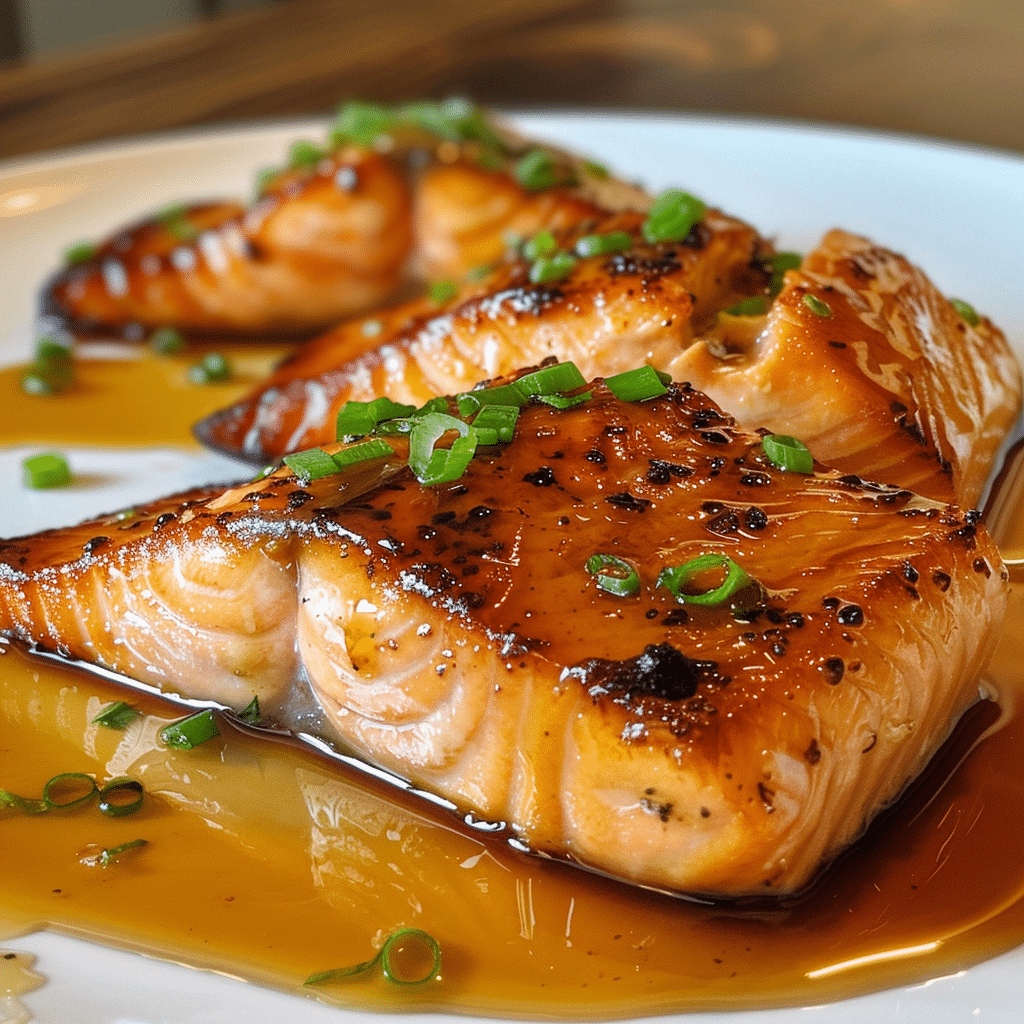
A pan crackles as flames lick the bottom, the scent of smoldering pineapple and caramelized honey blooming into the crisp kitchen air. The glaze thickens into a golden lacquer, its tangy brightness dancing with the umami depth of the salmon. This is food that sings with intention, where tropical acidity meets the ocean’s richness in one bite.
Salmon skin becomes crisp armor beneath the sticky embrace of the pineapple-honey reduction, while the flesh remains buttery and tender. The balance here matters: sweetness never cloying, smoke never overpowering. A culinary bridge between backyard grilling and fine dining.
By the time you plate this dish, you’ll understand why it’s become a modern classic. Precision? Yes. But also warmth—the kind that invites someone to lean across the table and ask for seconds.
- Prep Time-10 minutes
- Cook Time-15 minutes
- Total Time-25 minutes
- Servings-4
- Difficulty-Beginner-friendly
- Cuisine-Tropical fusion
Why This Recipe Works
The magic lies in the glaze’s paradox: sweet without being syrupy, tangy but never sharp. Honey’s natural sugars lock into the salmon proteins during the Maillard reaction, creating a crust so glossy it glistens like oil on a summer pond.
Pineapple juice adds wild acidity. It slices through the richness of the fish but also tenderizes it, ensuring each bite releases flakes that hold their flurried texture. The ginger and garlic? Essential for aromatic contrast, keeping the mouth guessing between savory, sweet, and fire.
Quick to assemble, this dish rewards deliberate technique. A sear at 450°F ensures skin perfection while the internal temp of the salmon hits 125°F—juicy without being undercooked. No long marinades, no tricky steps. Just controlled heat and patience in the final minutes.
Texture is the unsung hero. Caramelized glaze forms pools of syrup on the plate. Salmon dapples with flecks of color from the smoke. Sides—crisp greens or warm rice—complement without overpowering. It’s a harmony of elements, not just another “sweet and sour” combination.
The Cultural Soul of Honey Pineapple Glazed Salmon
This is a recipe of unlikely kinship. Salmon, native to icy streams and celebrated in Pacific Northwest traditions, meets pineapple in a twist that emerged from the 20th-century American appetite for tropical fusion. Early Hawaii-based chefs experimented with island flavors applied to North America’s culinary staples, and the marriage proved electrifying.
While modern interpretations borrow from Chinese black bean sauces and Japanese unagi influences, the pineapple twist is uniquely Mid-20th Century. Tiki bars and air travel to Southeast Asia introduced new flavor profiles, and chefs began testing citrusy reductions against fatty fish. The result? Salmon transformed into a sweet-and-smoky jewel.
Today’s cooks embrace this fusion with more sophistication. No longer just a novelty, the glaze highlights the fish’s natural oils with precision. The addition of soy sauce echoes Chinese black-bean glazes, though we temper it with citrus for brightness. It’s a recipe that tells a story while filling the plate.
The Elements of the Dish: Ingredients for Honey Pineapple Glazed Salmon
- 4 fresh salmon fillets (6 oz each): Skin-on center-cut fillets ensure crisp exterior contrast. Choose wild-caught for firmer texture and cleaner taste compared to farmed salmon’s marbled fat.
- 1 ripe pineapple: Fresh pineapple yields more vibrant enzymes for tenderizing fish. Look for fruit with yellow rind and a slightly soft crown.
- 1/4 cup raw local honey: Raw honey retains floral notes that complement the fish rather than mask it. Organic varieties prevent chemical undertones.
- 2 tbsp rice vinegar: Acidity brightens the glaze. Use aged vinegar for mature sharpness or unaged for a crisper bite.
- 3 tbsp low-sodium soy sauce: Provides depth without salt shock. Opt for naturally brewed varieties with no added alcohol.
- 1 tbsp fresh ginger: Grate immediately before use to release aromatic oils. Dried ginger never achieves the same piquant lift.
- 2 cloves garlic: Clove size matters—larger cloves add bolder notes. Toast the cloves first to mellow their bite, or mince raw for sharper savoriness.
- 1 tbsp toasted sesame oil: Just a touch, to add woodsy nuance. Add post-pasteurization to preserve its delicate aromatics.
- 1 tsp fresh lime zest: Microscopic oils from the zest inject tropical brightness, while lime juice later balances the glaze.
- 2 scallions bright green tops: Thinly sliced over the top post-cooking for eye appeal and mild onion crunch. Avoid over-charring on the pan.
- 1 tbsp toasted coconut flakes: Adds a subtle caramel note and visual texture. Use unsweetened flakes for unadulterated flavor integration.
The Editor’s Guide to Sourcing
Start with the salmon. Opt for wild-caught Sockeye or Coho—farmed salmon often masks its buttery nature behind richer fat. Choose fillets with firm texture and no fishy scent. Fresh skin should have a waxy sheen, not a slimy one.
Pineapple matters. Avoid canned or pre-cut varieties; their enzymes degrade over time. Eye a fruit with plump, unblemished skin and a sweet, unfermented aroma. For convenience, use a whole pineapple: cut it vertically to extract juice, then dice a portion for final garnish.
Spices must be uncorrupted. Ginger should be bright and knobby, not dry and stringy. Garlic? Firm and papery. Soy sauce requires care—if your local brand lists “alcohol” in ingredients, substitute tamari or a gluten-free soy alternative.
The coconut is often overlooked. Choose unsweetened flakes labeled “toasted” at the grocery level but not at home. Their natural sugars enhance the glaze’s caramelization, and they contribute essential visual contrast. For the most intensity, source from Asian grocery stores in vacuum-sealed packs.
Dried spices (like chili flakes) can be replaced with fresh alternatives to avoid earthy stale notes. And for the glaze’s final texture, opt for a saucepan with a thick, heavy base to ensure even browning and precise reduction control.
The Step-by-Step Masterclass
Prep Like a Pro
Pat salmon fillets thoroughly dry with paper towels. This is vital: moisture inhibits proper searing. Use a sharp chef’s knife to score the underside of the fillets—three parallel slashes—so the glaze can penetrate without overcooking.
Pile pineapple chunks in a medium bowl. Add 1 cup water and a few ice cubes to preserve fruit firmness until you’re ready to extract juice. Muddle the chunks gently for maximum liquid yield without turning to pulp.
Craft the Glaze
In a saucepan, combine raw honey, rice vinegar, soy sauce, half the pineapple juice, grated ginger, and minced garlic. Simmer over low heat until the liquid reduces by half. It should coat a spoon without sliding—thicker, not sticky.
Strain the glaze to remove texture and impurities. Stir in toasted sesame oil and lime zest off heat. Let cool slightly to avoid shocking the salmon later, adjusting for richness by adding a splash more vinegar if needed.
Cook with Intention
Prewarm oven to 450°F. Season fillets with salt and pepper, placing them skin-side down in a preheated oven-safe skillet. The skin browns first; we’ll finish the fillets in the oven for even doneness.
After 4 minutes, pour glaze over the salmon. Rotate the pan to redistribute sauce and return to oven. Watch the glaze carefully—within 2 minutes, it will shift from amber to burnt if left unchecked. Remove when glaze bubbles in thin veins and darkens to mahogany.
The Kitchen Science
At 450°F, proteins in salmon skin undergo the Maillard reaction—browning in a 180–190°C window. This creates that irresistible, slightly smoky crust while the moisture in the flesh remains locked in. Pineapple’s bromelain enzymes gently tenderize the fish as it cooks, a phenomenon observed when using raw juice in marinades.
The glaze is a chemical ballet. Honey’s fructose caramelizes slowly when exposed to high heat; rice vinegar’s acetic acid prevents seizing while amplifying flavor. Gingerol from the fresh ginger binds with fish oils during cooking, infusing the glaze with a citrusy warmth.
Finally, resting is key. For 5 minutes, let the salmon sit on the countertop—its internal temperature will rise by 5°F as juices redistribute. A step many rush, but the payoff is flaky, moist filets that maintain their shape during plating.
Pro-Level Secrets
- Rest your honey in the fridge before using. Chilled honey thickens the initial glaze layer, preventing it from running prematurely.
- Toasted sugar works better than raw. Sprinkle a pinch of light brown sugar in the pan when heating—creates a base crust that the honey adheres to better.
- Use vertical space. A fish fillet placed in a hot cast-iron skillet benefits from radiant heat transfer—critical for even skin browning.
- Test glaze consistency. Dip a spoon into the reduction and let it drip—ideal thickness allows one continuous drip every second.
- Finish with fresh fruit. Topp a cooked fillet with a pineapple slice to create a contrasting texture on the plate.
- Don’t skip the toast. Toasting coconut in a dry pan for 30 seconds caramelizes its natural sugars, adding complexity to the final dish.
Common Mistakes to Avoid
- Problem: Over-reducing glaze; Why: Thickens unevenly, burning before salmon cooks; Solution: Taste early, adding 1 tsp extra pineapple juice if needed.
- Problem: Overhandling fillets; Why: Damages delicate flesh; Solution: Use a silicone spatula, or better still, fish slices for perfect plate transfers.
- Problem: Ignoring salmon’s thickness; Why: Thin fillets dry out faster; Solution: For portions under 1 inch, reduce oven time to 12 minutes.
- Problem: Using frozen pineapple; Why: Dulls flavor with added sugar; Solution: Opt for fresh even if it means peeling a whole fruit—juice will concentrate flavors.
- Problem: Skipping pan preheating; Why: Cold metal cools the fish too fast; Solution: Heat skillet 8 minutes with a thermometer—aim for 400–450°F before adding salmon.
Creative Adaptations
| Ingredient | Substitution | Texture/Flavor Impact |
|---|---|---|
| Pineapple juice | Mango puree (thinned with broth) | Brighter citrus tones replaced by tropical sweetness |
| Honey | Pineapple nectar (for lighter sweetness) | Less caramel depth; better for diabetics |
| Coconut | Crushed cashews (toasted) | Extra creaminess and richness |
| Garlic | Scallion whites and olive oil | Subtle onion flavor with herbal note |
| Ginger | Green tea leaves (steeped) | Crisp vegetal bitterness balances sweetness |
Plating & Pairing
Plating is about restraint. Use white ceramic for the glaze to pop. Rest salmon skin-side down, then gently lift it with fish slices before serving. Garnish with toasted coconut flake curls and a thin ring of lime zest for visual contrast.
Pair with jasmine white rice to absorb the sauce. Add pickled radishes for acidity and warm steamed bok choy for texture. Beverage-wise, try a ginger-carrot iced tea with fresh mint and lemon—zero-alcohol but full of tropical intrigue.
Create ambiance by using ceramic bowls that echo the dish’s earthiness. Avoid metallic cutlery that clashes with the glaze’s golden hue. And serve the salmon directly from your pan to the table, a dramatic presentation that emphasizes fresh-off-the-stovetop appeal.
Preservation Guide
| Storage Method | Duration | Notes |
|---|---|---|
| Fridge (airtight container) | 2 days | Glaze separates slightly—rewhisk before reheating |
| Freezer (portioned bags) | 3 months | Cook salmon skin-side up first for better freezing structure |
| Reheating | Oven: 300°F for 10 minutes | Avoid microwave—resurrects glaze into a sticky film |
Questions from Our Kitchen
How to Adjust Cooking Time for Different Salmon Sizes?
Thicker fillets (2–3 inches) require 4–5 extra minutes in the oven. Thin portions (under 5/8 inch) need only 8–10 minutes total. Use an instant-read thermometer in the thickest part—target 125°F for perfect doneness.
Can I Use Frozen Salmon?
Only thawed salmon with no icy surface. For best results, pat dry for 10 minutes beyond usual thawing. Avoid using partially frozen fillets—leads to uneven cooking and rubbery textures.
Why Fresh Pineapple Specifically in the Glaze?
Canned fruit contains bromelain inhibitors from the processing. Fresh pineapple keeps enzymes active, which both brighten the glaze and tenderize the fish slightly. If using canned, supplement with extra lime juice.
Best Non-Alcoholic Sides for This Dish?
Serve over coconut rice with lemongrass. Pair with a watermelon-cucumber salad for freshness. Avoid heavy pasta dishes, which overwhelm the glaze’s subtlety. For balance, include pickled vegetables to contrast the sweetness.
Can the Glaze Be Prepared in Advance?
Up to 3 days ahead. Reheat briefly to evaporate excess moisture before cooking. Add fresh lime zest on the day of service for peak brightness. Never store with raw salmon—bacteria risks from acidic marinades.
A Final Word
This Honey Pineapple Glazed Salmon isn’t just a meal—it’s a conversation between fire and fruit, salt and sweet. With one bite, you’ll understand the power of deliberate contrast. Grab your pan, master the glaze, and let this dish redefine your idea of a simple seafood dinner. It’s time to cook, not just follow steps.
Print
Honey Pineapple Glazed Salmon
- Total Time: 25
- Yield: 4 servings 1x
- Diet: Halal
Description
Tropical fusion at its finest: tender salmon glazed with sweet, tangy honey-pineapple reduction. Crisp skin, buttery flesh, and vibrant acidity create a harmonious balance of flavors and textures perfect for any occasion.
Ingredients
4 (6-ounce) salmon fillets, skin-on
1 cup fresh pineapple juice (or canned, drained)
1/3 cup pure honey
2 cloves garlic, minced
1 tbsp grated fresh ginger
1 tbsp sesame seeds
2 tbsp vegetable oil
Kosher salt and black pepper to taste
Instructions
Preheat oven to 450°F
Pat salmon fillets dry with paper towels; season with salt and pepper
In a small saucepan, combine pineapple juice, honey, garlic, and ginger. Simmer over medium heat until reduced to a glossy syrup (about 8-10 minutes)
Heat oil in an oven-safe skillet over high heat until shimmering. Sear salmon skin-side down for 3 minutes until golden and crisp
Pour glaze over salmon; transfer skillet to oven. Roast 7-9 minutes until salmon reaches 125°F internally
Sprinkle with sesame seeds before plating
Notes
For best results, use fresh pineapple juice for brighter flavor
Let salmon rest 5 minutes before serving to retain juices
Pair with jasmine rice or a citrus-green salad to balance the sweetness
Leftovers refrigerate up to 2 days
- Prep Time: 10
- Cook Time: 15
- Category: Dinner
- Method: Pan-searing and roasting
- Cuisine: Tropical fusion
Nutrition
- Serving Size: 1 salmon fillet
- Calories: 450
- Sugar: 18g
- Sodium: 350mg
- Fat: 22g
- Saturated Fat: 4g
- Carbohydrates: 22g
- Fiber: 0g
- Protein: 40g
- Cholesterol: 120mg